
Summer UV
Sun yellows and clouds the vinyl. Film that crackles to the touch is at end of life.
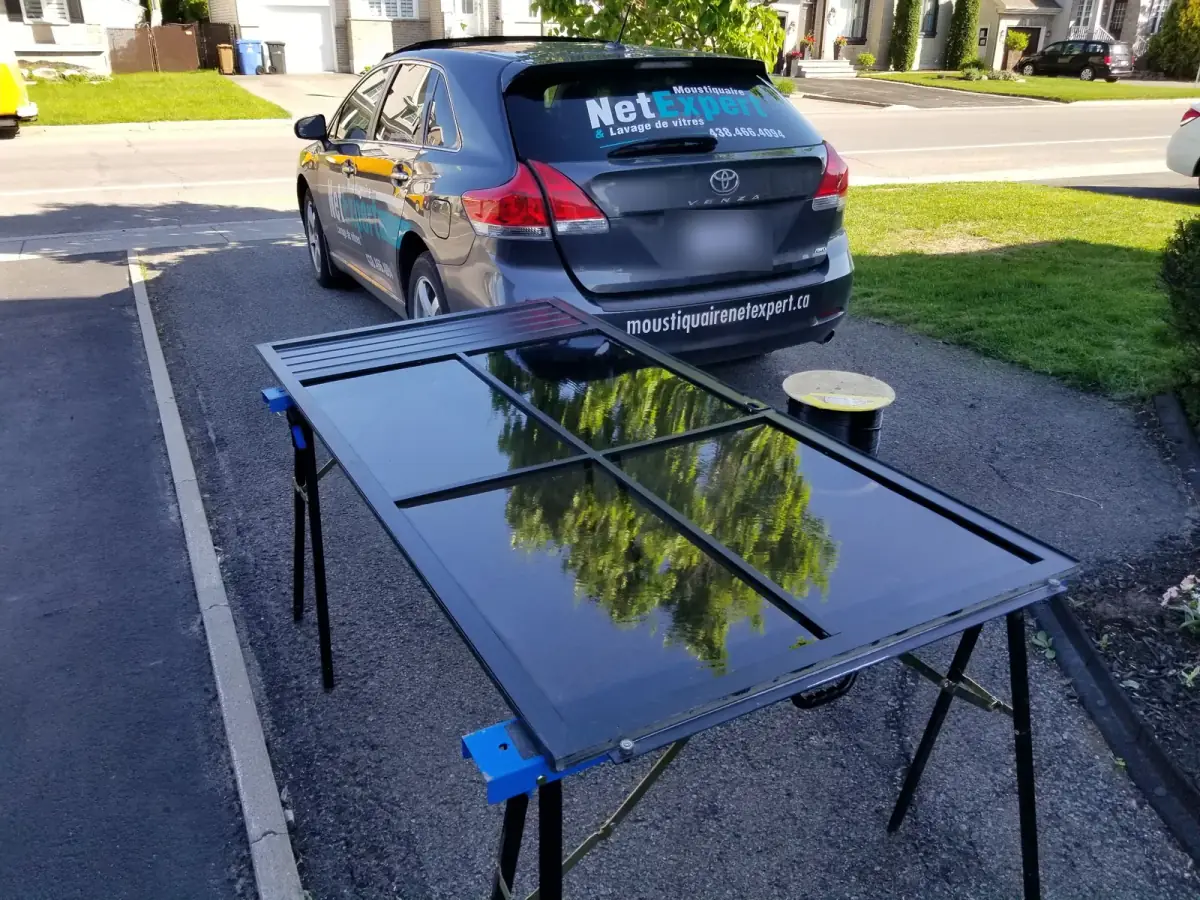
Gazebo and sun shelter specialty
Clear vinyl yellowed or torn? Replaced at your home in Beauharnois, in the original frames — gazebos and sun shelters.
Three questions are enough to start. The official measurement is taken on site.
Whatever your retailer calls it — MICA film, clear vinyl, clear plastic, sun-shelter transparent fabric — it is the same material, and we replace it in Beauharnois in your existing panels.
Sun yellows and clouds the vinyl. Film that crackles to the touch is at end of life.
Below freezing, MICA turns brittle — one handling or one gust splits it outright.
Slack vinyl flaps like a sail and eventually tears at the seams.
The old part of Beauharnois, the one along the canal, is not retailer-gazebo country. The pre-war workers' houses there are modest and close together, with narrow yards where a standard-size shelter fits badly; where there is one, it is small, tucked near the house, and its panels catch the wind that funnels between the buildings. The real gazebo country starts a little further out, among the post-war bungalows: open back yards, flat ground, room for an aluminum or steel structure with standard-size panels — the kind of structure that went up with those bungalows, and one that rarely gets replaced, because the frame outlasts what it holds.
The small recent residential developments on the outskirts give the third profile: shorter lots, store-bought shelters put up a few years ago, still perfectly square, but with film that has already seen a winter or two too many. On the larger, more set-back lots there is room instead for the permanent wooden structure, built to measure, with one-of-a-kind bays, taller and more exposed than a retailer model. These three families do not wear out at the same rate. What they share is the town's position: a strip of land along a large body of water, where wind has all the room it needs to build up speed.
On a retailer gazebo the sizes repeat from one bay to the next, which makes the survey simpler without changing the wear at all. The clear film is almost always the first to go: it clouds, hardens, and one gust splits it cleanly, usually starting where it had already been worn by rubbing against the frame. We redo it to the exact size of the bay, in the original frame, without touching the structure. The screen panels follow: slack mesh that balloons in the wind, an open corner, spline working its way out. They are rescreened in their own frames. On site, each panel comes off, is redone at the mobile shop and goes back up.
The real difference in the work lies between the two families of structure. A retailer gazebo has panels held by screws or clips, all alike, and the order they go back in is predictable. A wooden structure built to measure has no interchangeable part: every bay is measured, labelled and returned to exactly its own opening. Access depends on the sector. In the old part of town, a long panel leaves through a narrow gap between two houses or through the house itself. At a bungalow or on a recent lot, the yard is open and the work is done flat on the ground, by far the simplest case.
The canal gives the town an open corridor of air, and that is the number one factor for a gazebo. Film with slack in it flaps, and film that flaps eventually splits at a fastener: it goes on tight, with no give, or it does not last. On those panels the part that decides is not the mesh but the spline: crushed, it lets go in a gust and makes still-good mesh unusable, while it costs nothing to replace at the same time. Nearby water also adds damp: film stored in autumn before it has dried keeps the crease and the mark of that storage, and the crease becomes the line it splits along at the first cold snap. Under full summer sun, it is the vinyl that pays.
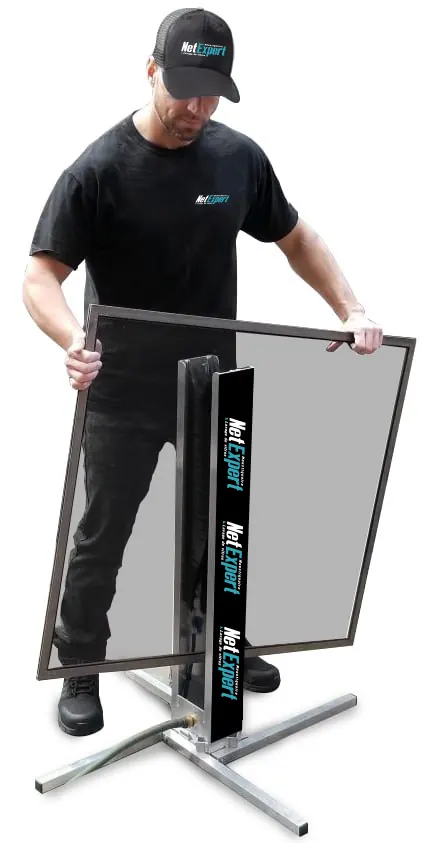
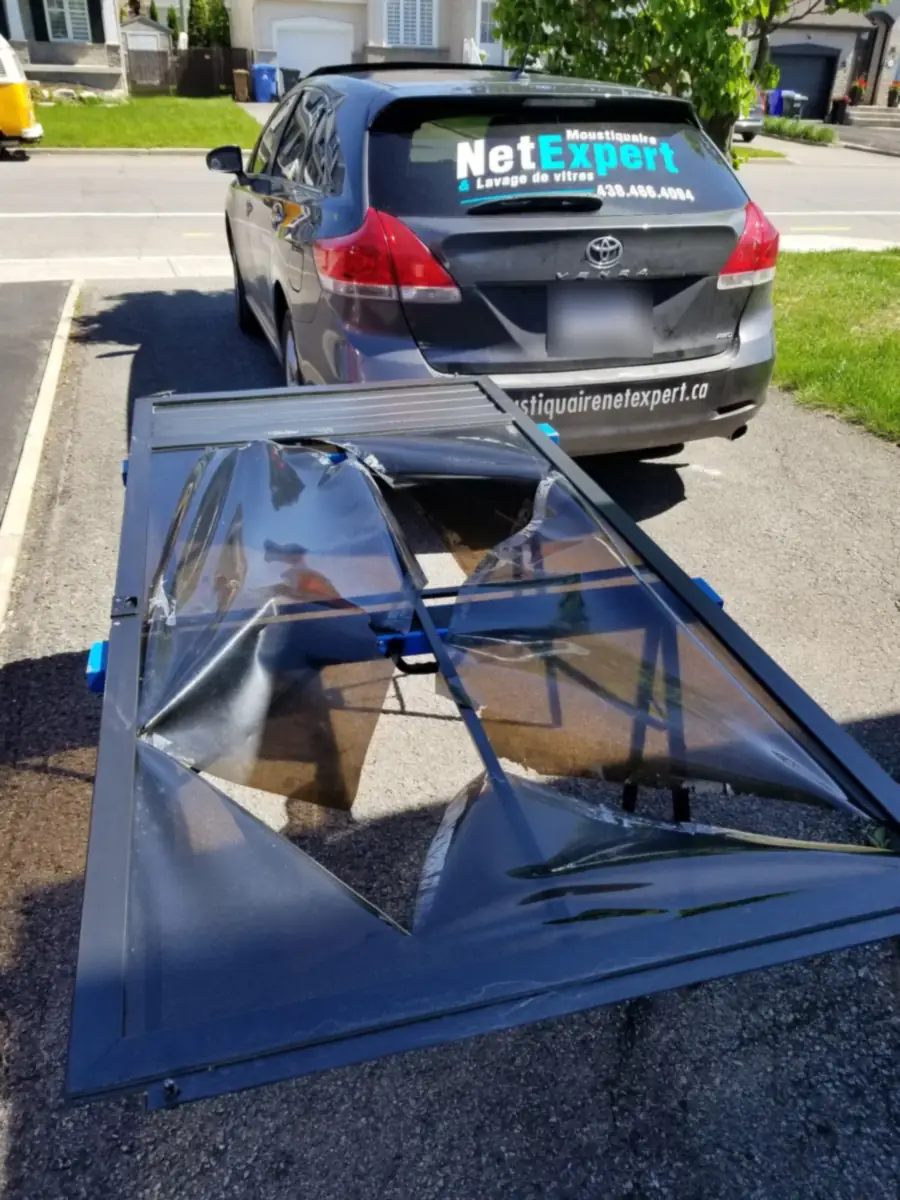
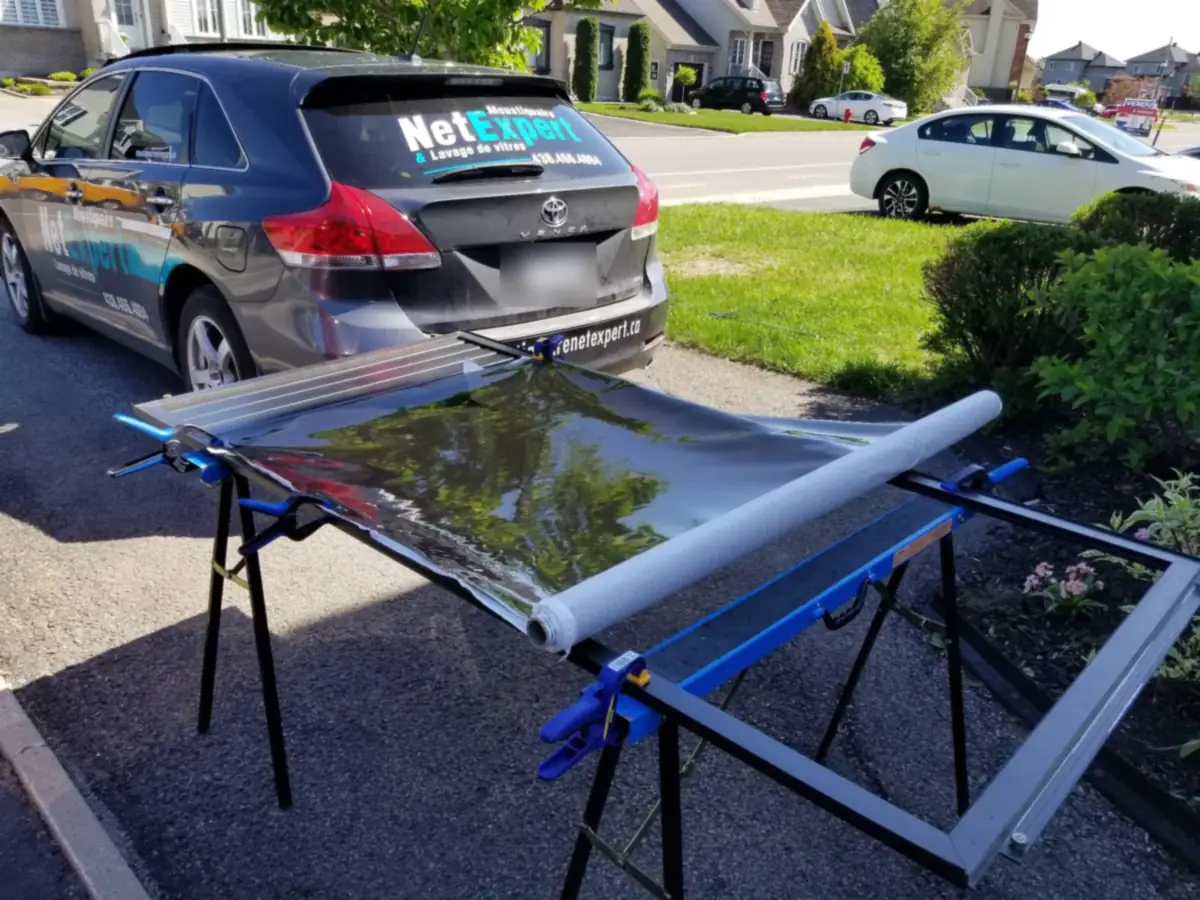
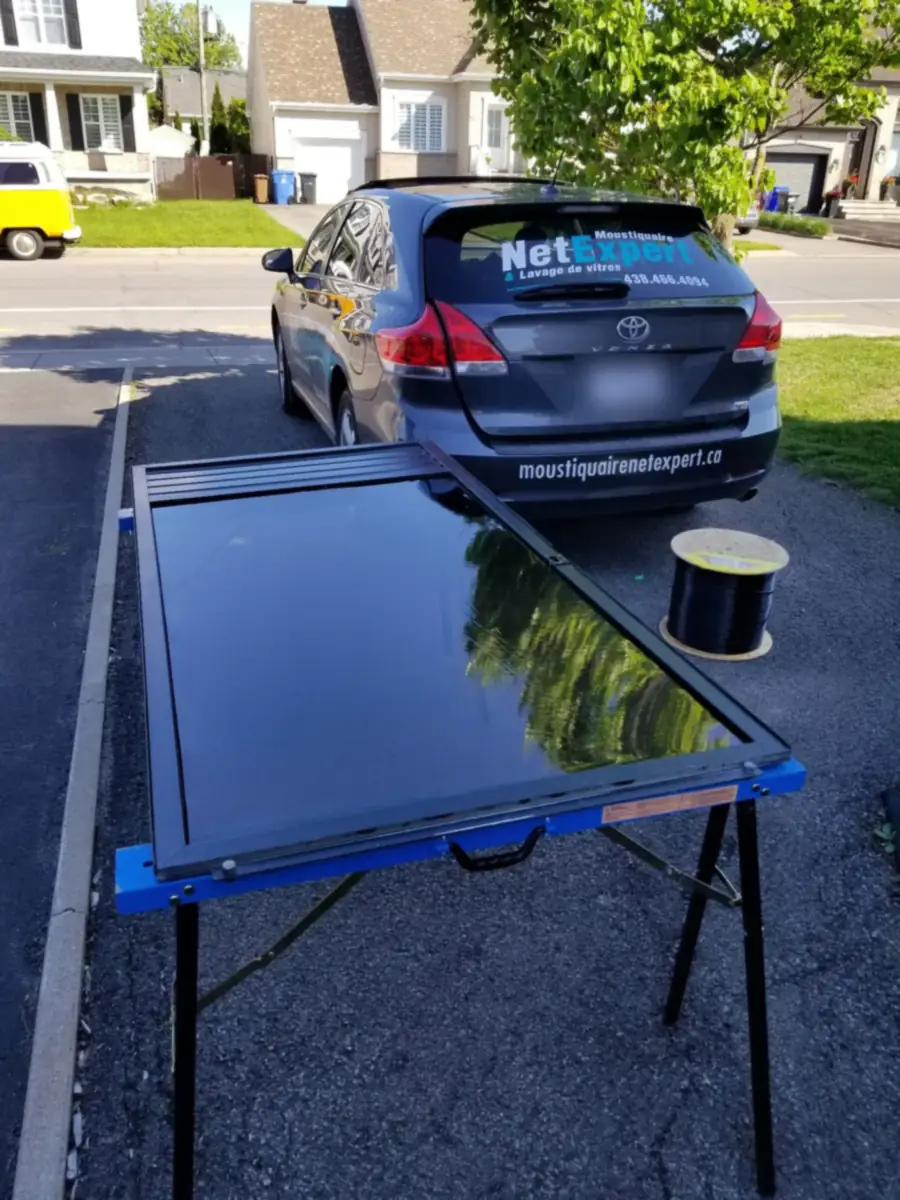
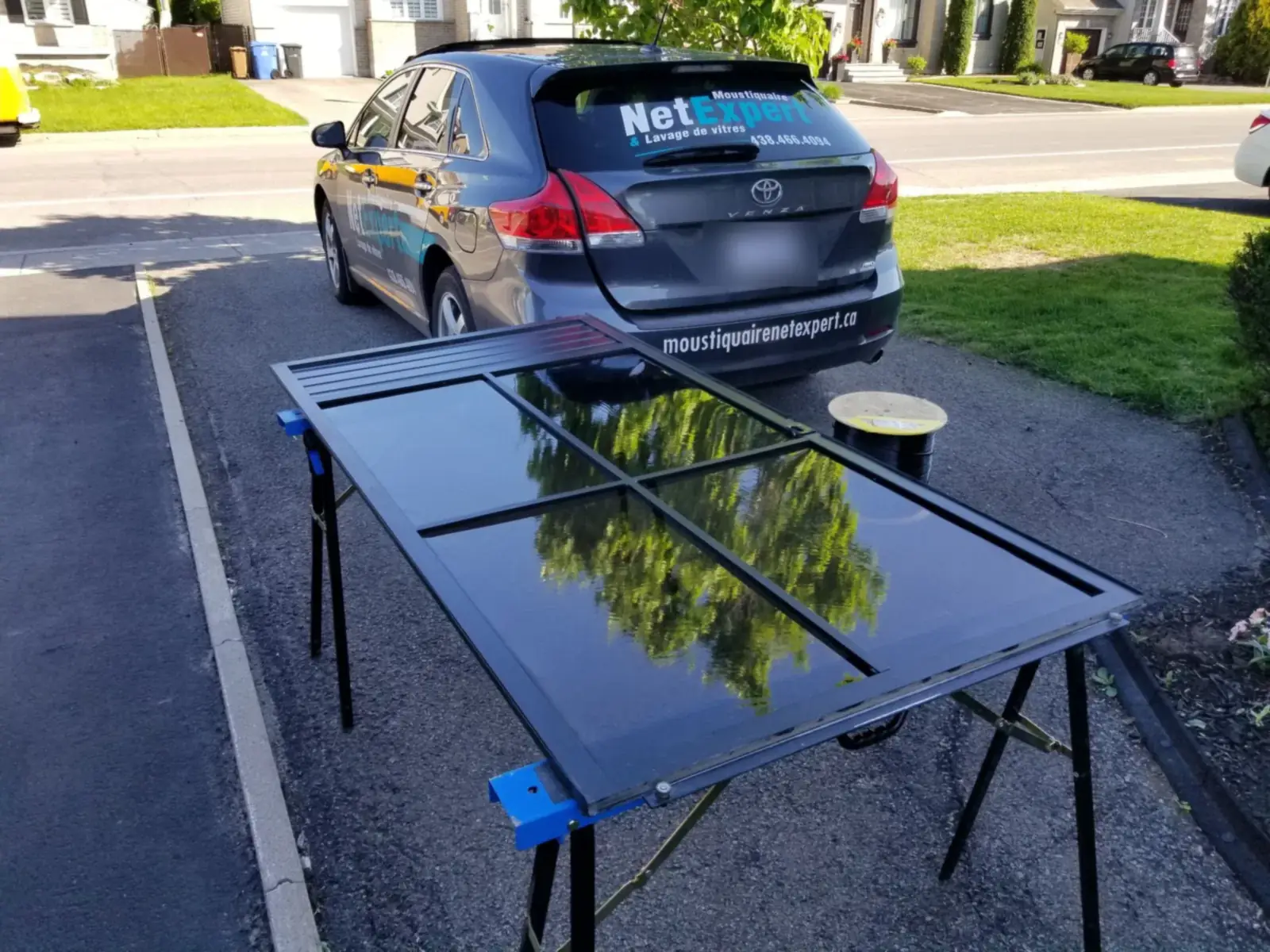
This job was not in Beauharnois — it shows our method, the same everywhere: panels down, new vinyl pane by pane, panels back up.
« Ludovic replaced my screen in record time. Professional, and with a great sense of humour. I recommend his services — don’t hesitate to contact him, he’ll come to your home and do beautiful work. »
« Excellent service. Clear explanations of the work to be done. I really appreciated his dedication: despite the rain he insisted on finishing the job, soaked through and still smiling. The work was very well done. »
« Great service! He was at my neighbour’s and agreed to fix my back screen even though we had no appointment. Very successful repair, and inexpensive! »
Straight answers
Yes. We do not depend on the manufacturer to redo a bay: the film is cut to measurements taken on your own structure and set into the original frame, held the way that frame was designed to hold it. The same goes for the screen panels, rescreened in their own frames. The structure itself is never touched, and it is the one part that could not be replaced.
That is how vinyl with slack in it normally ends. A loose bay flaps, and every flap wears the film against the edge of the frame; the split starts at that point and runs in one go, almost always in high wind. The answer is not thicker film but a tight fit, cut to the exact size of the bay. In an open air corridor like the canal's, tension is what decides how long it lasts.
The side the insects come from, meaning toward the water and toward open ground, and the panels you use earliest in the season. The canal corridor releases its insects early, and the mesh that comes as standard with a retailer shelter was chosen for what it cost to make, not for what flies here in May. Nothing says the whole shelter has to be treated the same way: panels are chosen one at a time, by orientation and by how they are used.
Yes, at your home. We travel to Beauharnois, remove the panels, replace the MICA vinyl in the original frames and put everything back — the gazebo structure is never touched. It is one of our specialties.
Yes. Depending on the retailer it is called MICA film, clear vinyl, clear plastic or transparent fabric — the same flexible material that cuts wind and holds warmth. We replace it on gazebos and sun shelters alike.
Yes. The vinyl is replaced pane by pane, in the existing frame — no need to redo the whole panel for one tear. If several panes have yellowed, doing them together gives a uniform result.
On assessment: the price depends on the number of panels and their dimensions. The quote is free, and a photo is often enough to price without a visit. Fabrication and installation guaranteed one year.
Do you manage a building or a business in Beauharnois?