
Summer UV
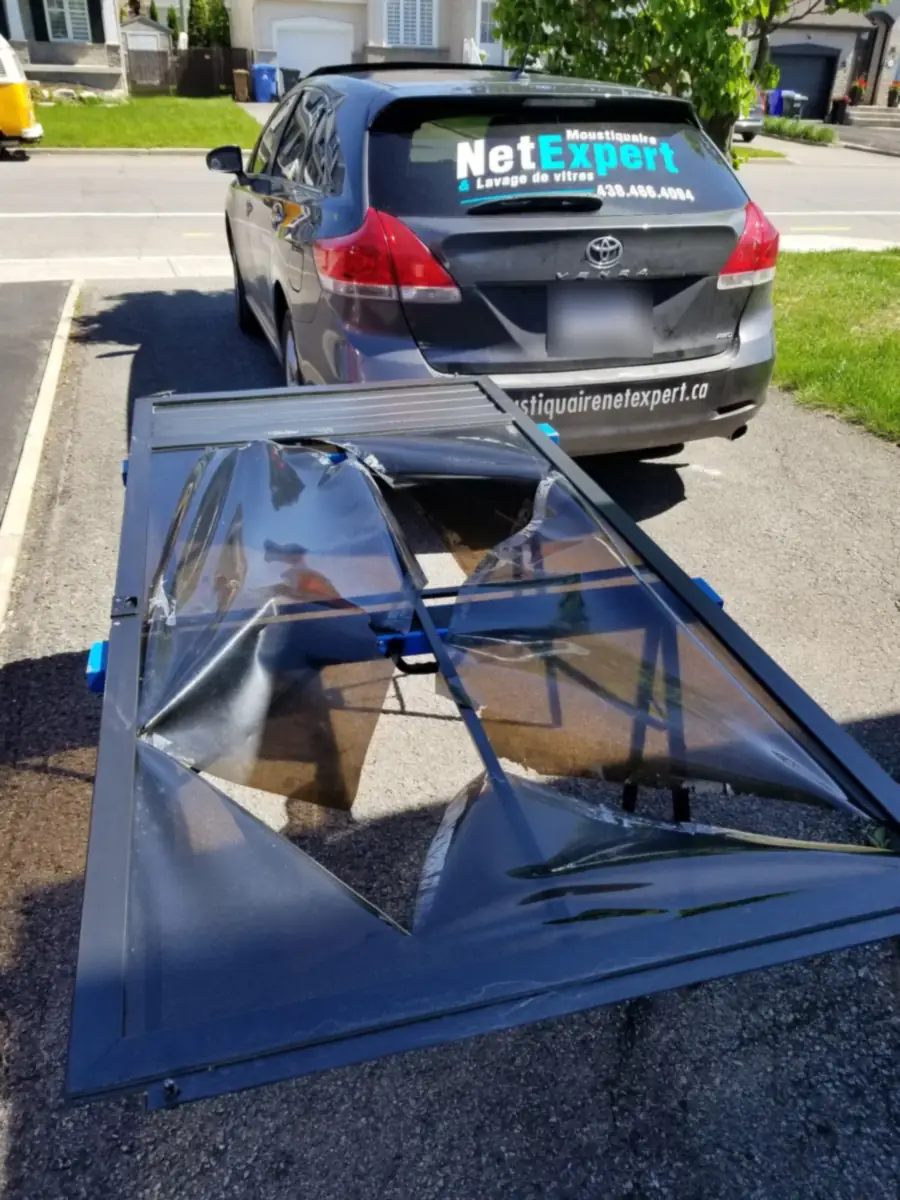
Sun yellows and clouds the vinyl. Film that crackles to the touch is at end of life.
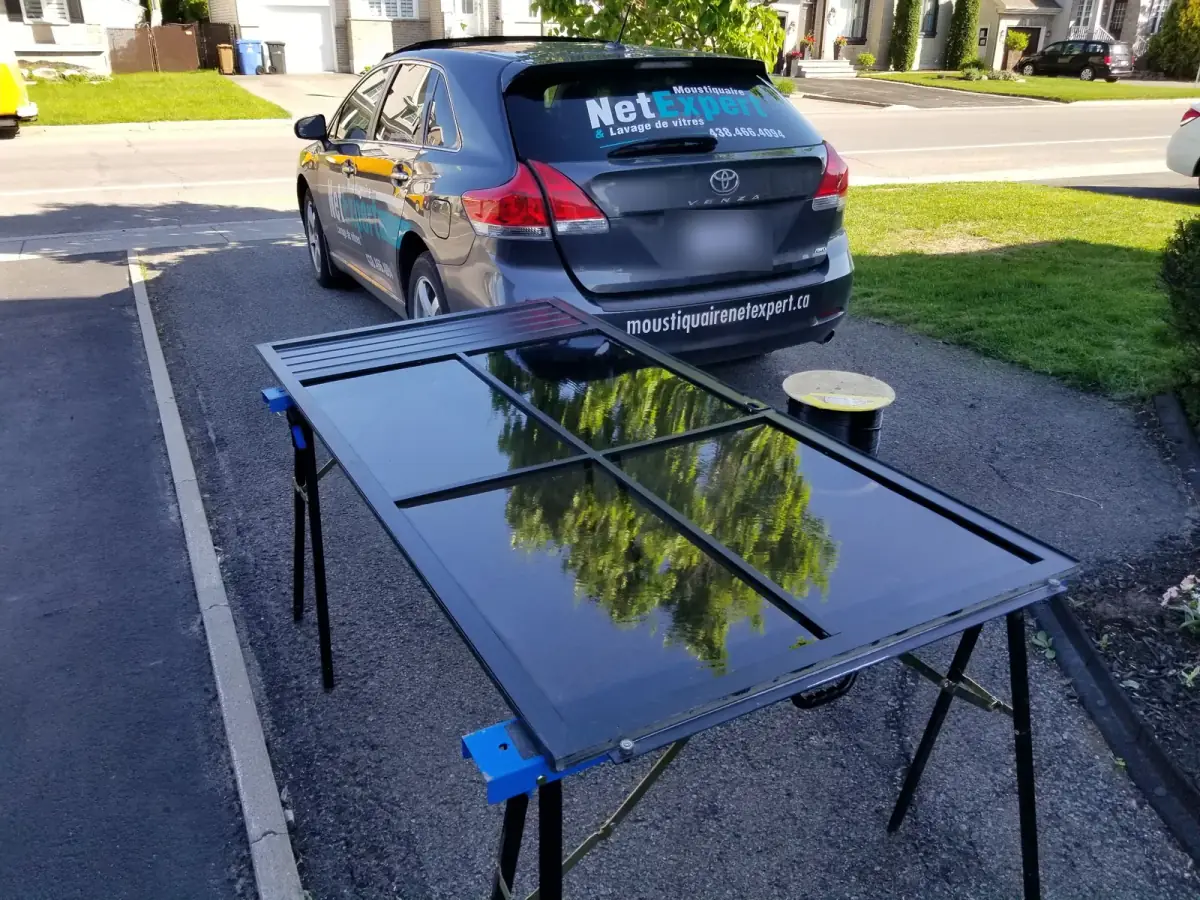
Gazebo and sun shelter specialty
Clear vinyl yellowed or torn? Replaced at your home in Salaberry-de-Valleyfield, in the original frames — gazebos and sun shelters.
Three questions are enough to start. The official measurement is taken on site.
Whatever your retailer calls it — MICA film, clear vinyl, clear plastic, sun-shelter transparent fabric — it is the same material, and we replace it in Salaberry-de-Valleyfield in your existing panels.
Sun yellows and clouds the vinyl. Film that crackles to the touch is at end of life.
Below freezing, MICA turns brittle — one handling or one gust splits it outright.
Slack vinyl flaps like a sail and eventually tears at the seams.
In Valleyfield a gazebo is nearly always oriented in relation to the water, and that orientation, more than the model, decides how its panels wear. In the early-20th-century workers’ neighbourhoods, the flat-roofed houses and duplexes have next to no yard: where a gazebo exists it is a small retail model wedged between two fences, or a pergola set on a flat-roof terrace, exposed to everything that blows in off the water. These are standard-size panels, few in number, but they take the wind head-on and their clear vinyl (MICA film) does not last long. A gazebo this size fits into a few square metres and comes apart panel by panel, which matters more here than the width of the yard.
The post-war bungalow suburbs are the true home of the retail gazebo: an open backyard, a slab or a deck, an aluminum or steel frame with its six or eight panels, bought long ago and left outside ever since. The recent developments on the outskirts bring the same object in a smaller size, in narrower yards where the wind funnels between houses. And on the lots that touch the bay or the canal you find the permanent wooden structure, custom-built facing the water, with one-of-a-kind panels and clear vinyl fitted in the fall to keep the shelter usable once the bay starts to blow. Three families of gazebo, one shared adversary: wind off the water.
On a gazebo facing the bay, the clear vinyl is the part that gives out first, and it gives out to wind before it gives out to age: a film that has gone a little slack flaps with every gust, fatigues at its fasteners and splits all at once in a big autumn blow. The screening follows, bellied by the same gusts until the spline leaves its groove or a corner tears. Facing the water, the vinyl is fixed all the way around the frame rather than at the corners alone, and the screen panel next to it takes aluminum mesh instead of fibreglass. On a waterfront wooden structure every panel is measured: there is no stock size.
In the workers’ neighbourhoods, access is the first constraint: a duplex yard is reached through a narrow side passage or through the unit, and a flat-roof pergola by the outside staircase. The panels of a retail gazebo are light and fit through anywhere; they are rebuilt in the mobile workshop parked out front and go back up the same way. In the post-war bungalows and the recent developments the yard is reached along the side. A wooden structure on a waterfront lot means unscrewing each panel and checking that the frame has not shifted in the wind — new mesh in a warped frame will not hold. The structure itself stays as it is.
The canal and the bay give Valleyfield two realities an ordinary suburban gazebo never meets. Wind first: a yard open to the water takes sustained, unobstructed gusts, and that is what kills clear vinyl before the sun does; on those sides the vinyl goes on heavier and tighter, and aluminum screening replaces fibreglass. Then insects: a wet environment produces no-see-ums and black flies early in the season, and a tight-weave screen genuinely makes a difference in a waterside gazebo, at the cost of a little light. The vinyl goes on before the first cold and comes off in spring or not, depending on use.
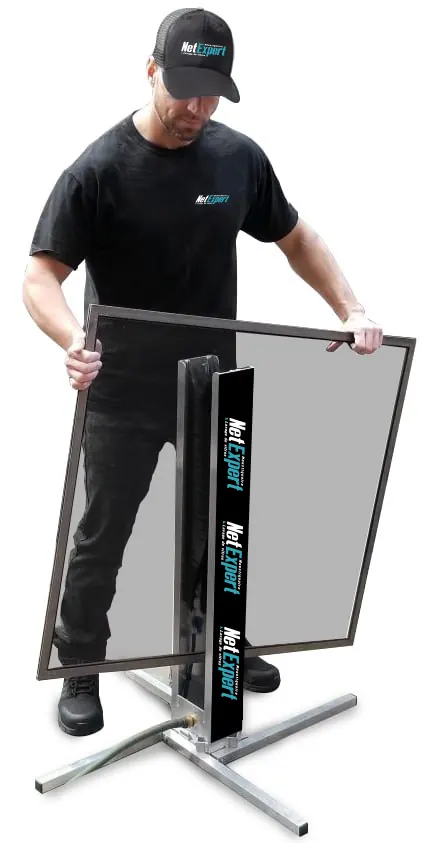
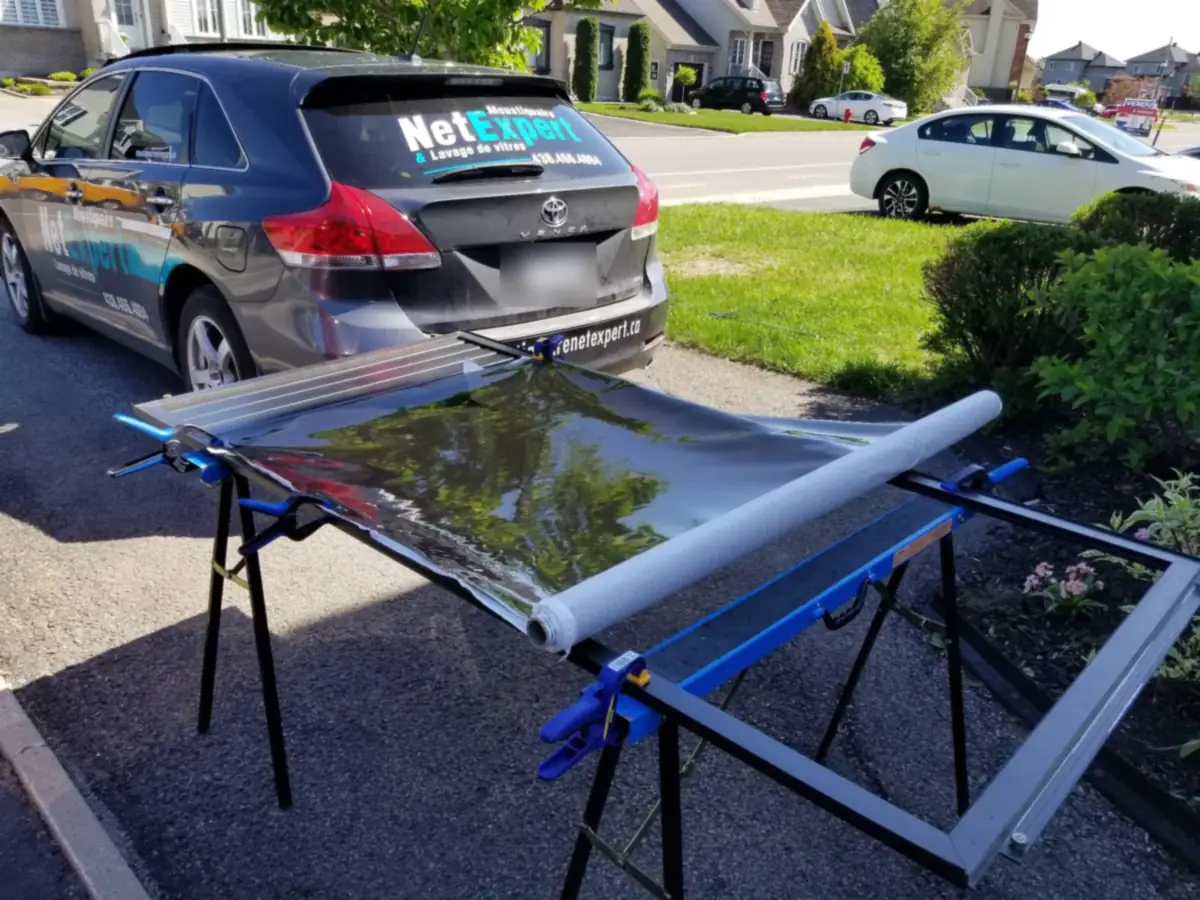
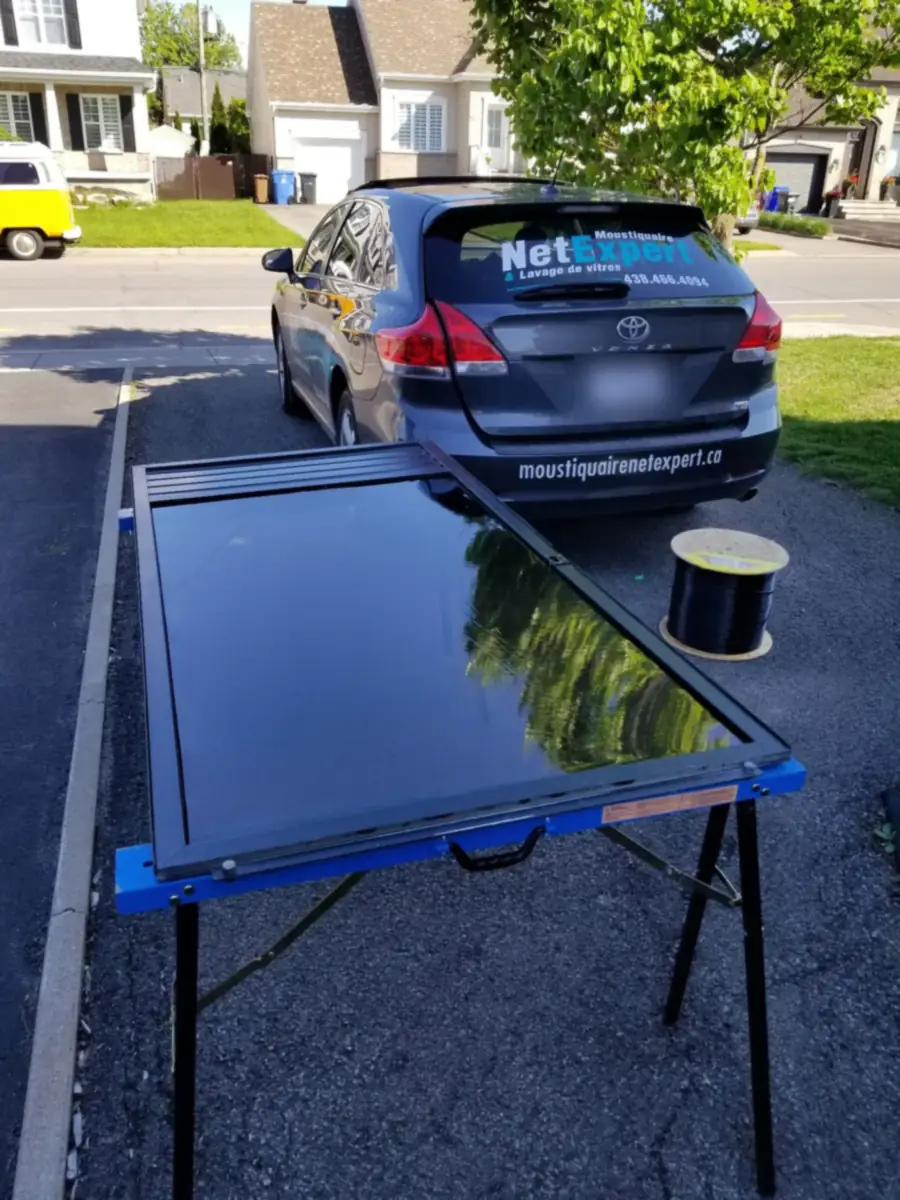
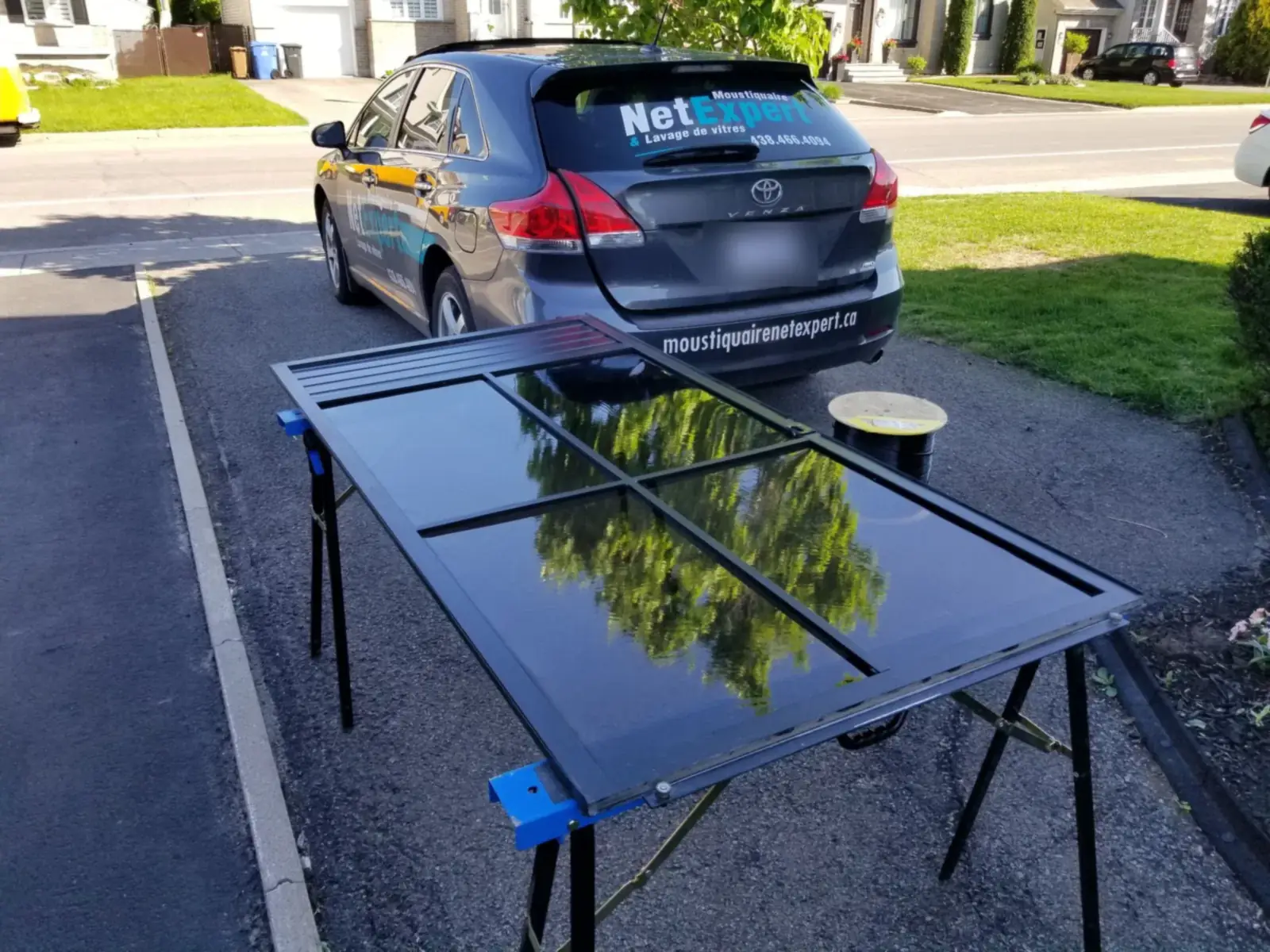
This job was not in Salaberry-de-Valleyfield — it shows our method, the same everywhere: panels down, new vinyl pane by pane, panels back up.
« Excellent service. Clear explanations of the work to be done. I really appreciated his dedication: despite the rain he insisted on finishing the job, soaked through and still smiling. The work was very well done. »
« Great service! He was at my neighbour’s and agreed to fix my back screen even though we had no appointment. Very successful repair, and inexpensive! »
« Ludovic replaced my screen in record time. Professional, and with a great sense of humour. I recommend his services — don’t hesitate to contact him, he’ll come to your home and do beautiful work. »
Straight answers
Wind off open water is the worst enemy of clear vinyl: it flaps, fatigues at its fasteners and splits where it is pulled tightest. We redo it heavier, cut to the exact size of each pane and fixed all the way around the frame, not just at the corners. If the side facing the water is only there to cut the wind, aluminum mesh holds its tension there better than any film.
Yes, if the pergola has frames that hold a mesh: the panels come off, go down the outside staircase, are rescreened in the mobile workshop and go back up. On a flat roof open to the wind, aluminum mesh stands up better than fibreglass, and clear vinyl is only offered if the structure is rigid and anchored enough to hold it without flapping.
Not necessarily. On a gazebo the factory mesh is the most open weave in the catalogue: it stops mosquitoes and lets anything smaller through. The answer is a tight-weave mesh fitted in the same frames. We also check that each panel closes snugly against the structure: a gap between two panels lets in far more than any mesh ever will.
Yes, at your home. We travel to Salaberry-de-Valleyfield, remove the panels, replace the MICA vinyl in the original frames and put everything back — the gazebo structure is never touched. It is one of our specialties.
Yes. Depending on the retailer it is called MICA film, clear vinyl, clear plastic or transparent fabric — the same flexible material that cuts wind and holds warmth. We replace it on gazebos and sun shelters alike.
Yes. The vinyl is replaced pane by pane, in the existing frame — no need to redo the whole panel for one tear. If several panes have yellowed, doing them together gives a uniform result.
On assessment: the price depends on the number of panels and their dimensions. The quote is free, and a photo is often enough to price without a visit. Fabrication and installation guaranteed one year.
Do you manage a building or a business in Salaberry-de-Valleyfield?