
Summer UV
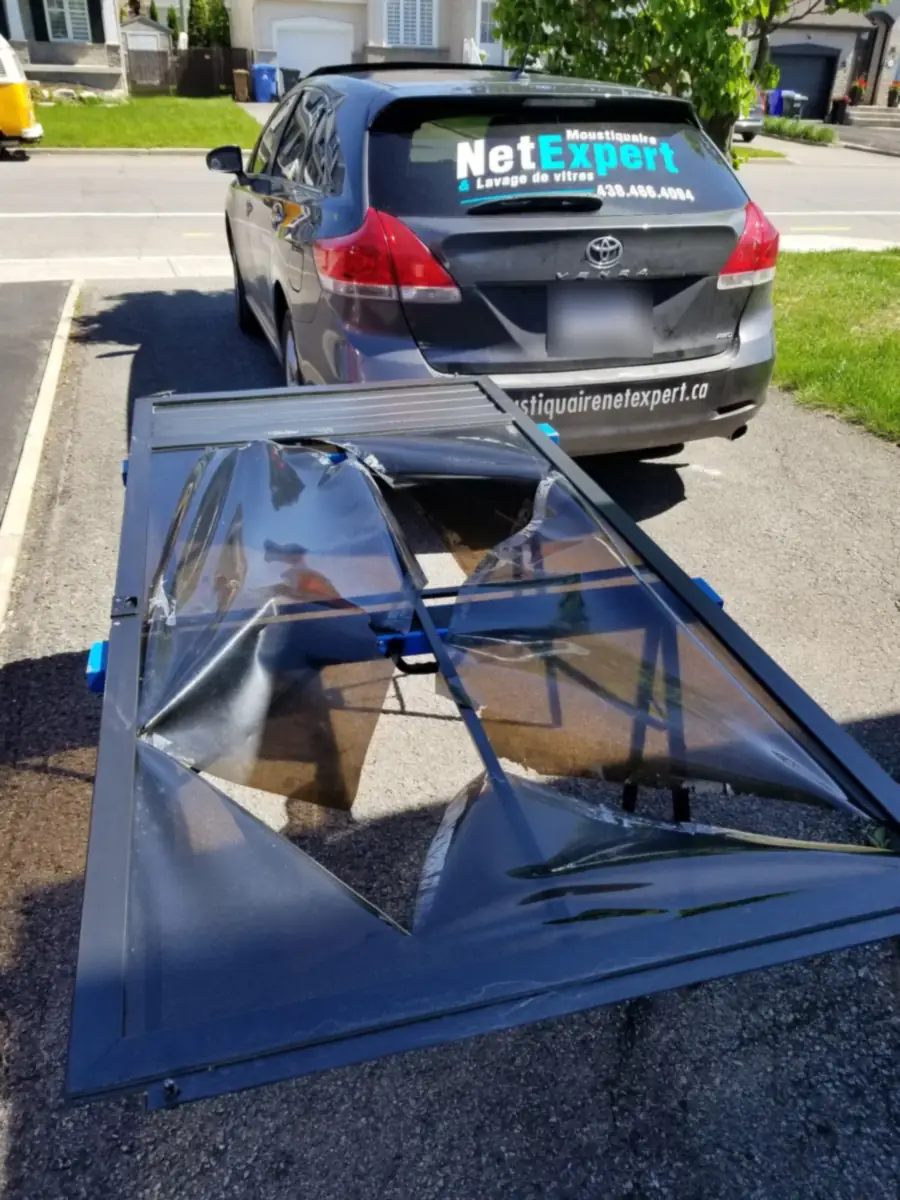
Sun yellows and clouds the vinyl. Film that crackles to the touch is at end of life.
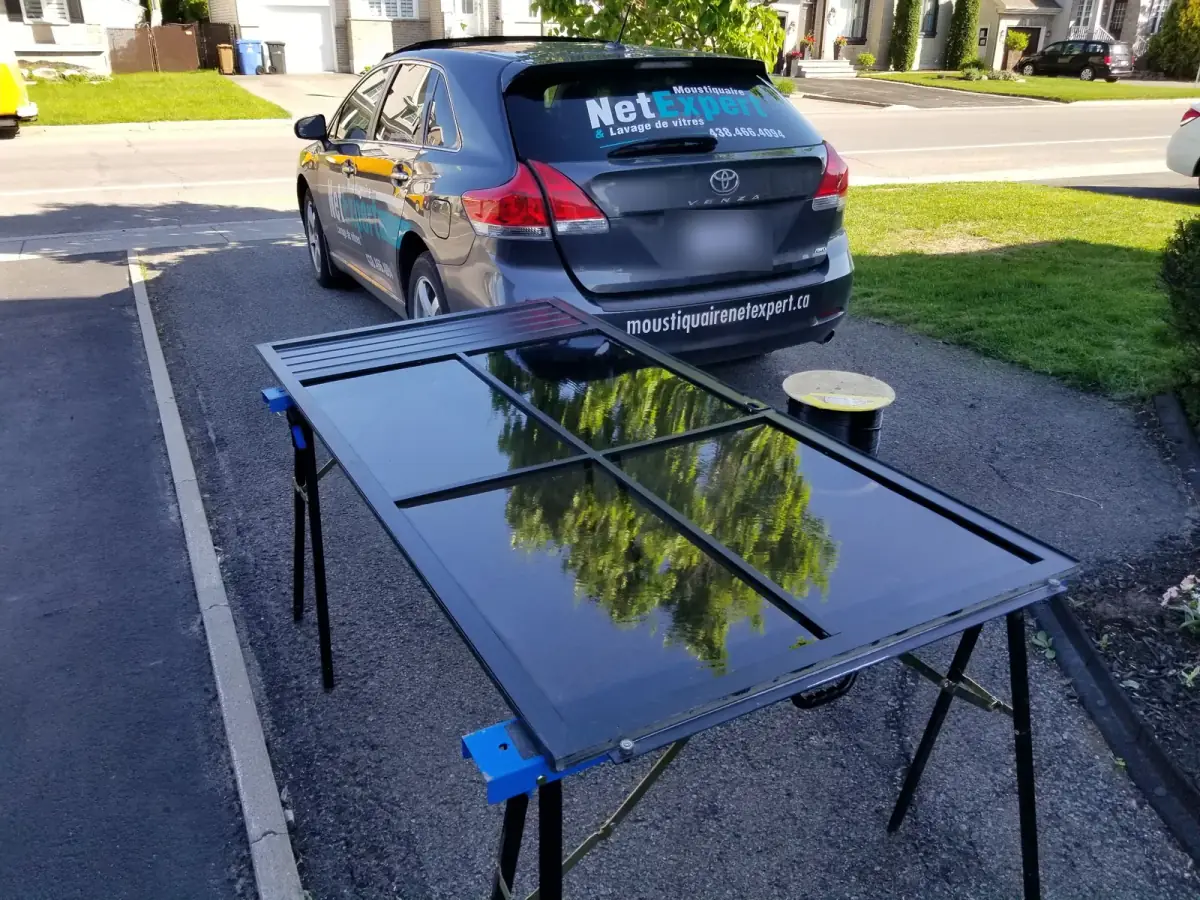
Gazebo and sun shelter specialty
Clear vinyl yellowed or torn? Replaced at your home in Pointe-des-Cascades, in the original frames — gazebos and sun shelters.
Three questions are enough to start. The official measurement is taken on site.
Whatever your retailer calls it — MICA film, clear vinyl, clear plastic, sun-shelter transparent fabric — it is the same material, and we replace it in Pointe-des-Cascades in your existing panels.
Sun yellows and clouds the vinyl. Film that crackles to the touch is at end of life.
Below freezing, MICA turns brittle — one handling or one gust splits it outright.
Slack vinyl flaps like a sail and eventually tears at the seams.
Pointe-des-Cascades runs along the old Soulanges canal, and the whole village takes its bearings from that strip of water. Lots follow the line of the canal and Lac Saint-Louis: often narrow, set side by side, backs turned toward the water, with nothing to break the wind coming up off it. In a village that size, the yards still are not all alike. The older village houses keep enclosed yards bordered by hedges and outbuildings; the post-war bungalows offer a flat square of lawn behind the house; the waterfront strip opens up completely.
Where a gazebo ends up says what the owner has figured out about the property. Behind a village house it slips into the sheltered corner, against a wall or a shed, and it is nearly always a retailer model with aluminum or steel framing and common panel sizes. On the waterfront lots and the enlarged former cottages the logic flips: the view is the point, so the structure faces the water, often in wood, built to fit, with panes that never repeat one another. Same village, two opposite ways of putting up a gazebo — and two ways of bringing it back.
On exposed ground like this, the clear vinyl (MICA film) pays the price. Clear film works with every gust: it snaps, pulls on its fastening points, elongates the holes around them, and once winter has stiffened it and sun has yellowed it, it splits outright in the first serious blow. Screen panels age more slowly but show the same signs: slack mesh that bellies out and hums, a corner come loose, a spline driven out of its groove. We redo the film pane by pane, to the exact dimensions of the original frame, and rescreen the panels back to proper tension. The structure stays as it is.
Two things slow a job here, and neither is the work itself. The first is measuring the waterfront wood structures: built on site, often modified since, they have no two openings alike and each pane is recorded separately. The second is the route out. On a narrow strip between house and water, long panels have to come out without twisting, sometimes down one side of the lot only. Panels come off, get rebuilt at the mobile shop, and go back on — that order is what keeps a wind-tired frame from being forced.
Wind is the dominant factor here, and it drives the choice. On the faces taking the full push off Lac Saint-Louis, the film sets the visit: recut to the pane's true dimensions and picked up on sound fastenings, it stops snapping, and it is that snapping that eventually splits it. Sun reflected off the water adds its share to the vinyl, which yellows faster than it would under cover. And close to open water, evenings call for a tighter weave if the gazebo is genuinely used. On ground that takes the wind off the lake, the film cuts and fits truer while the vinyl is still supple.
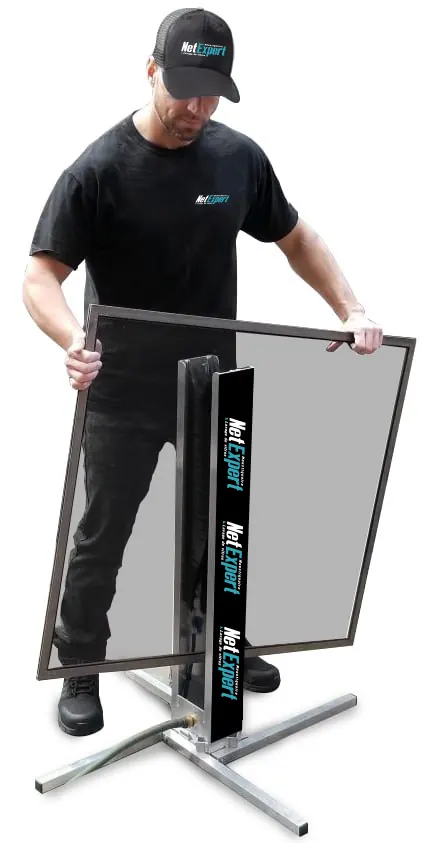
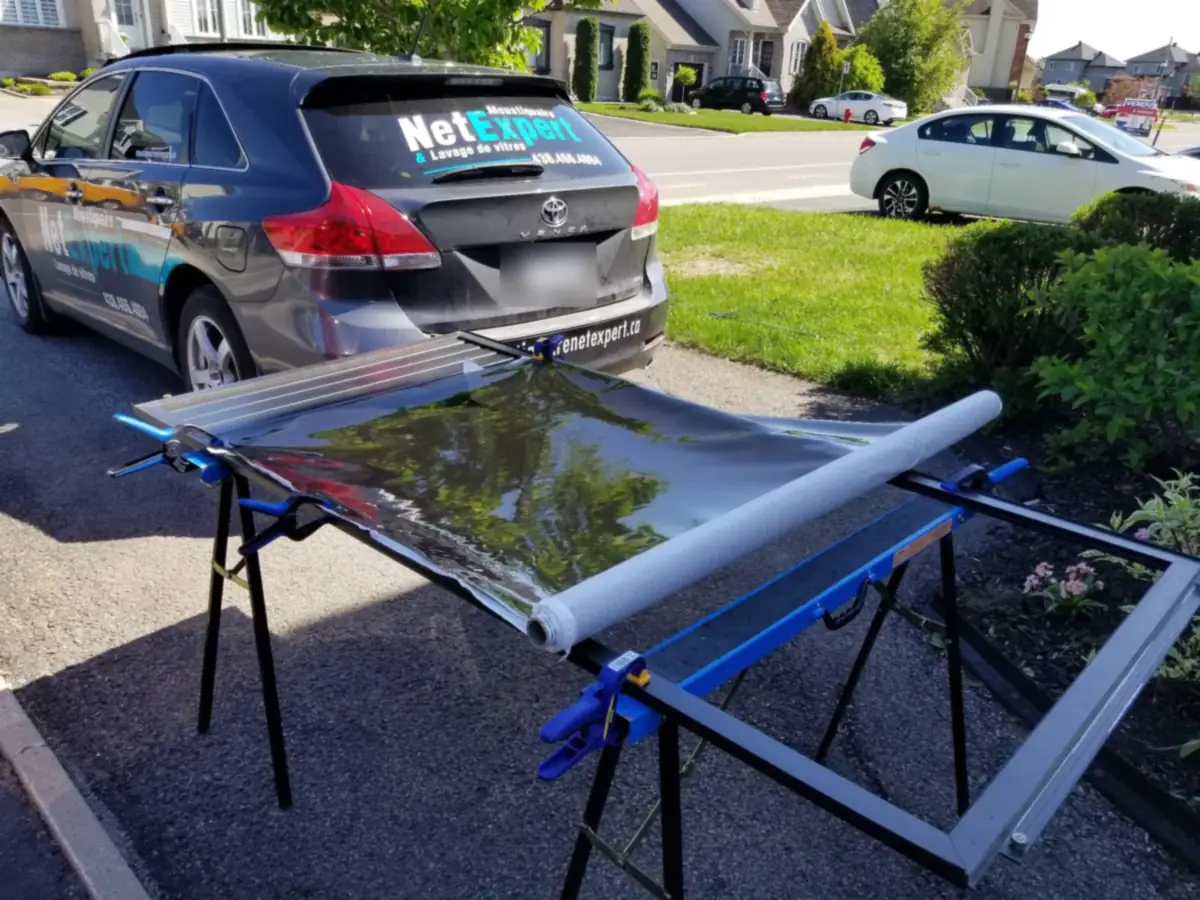
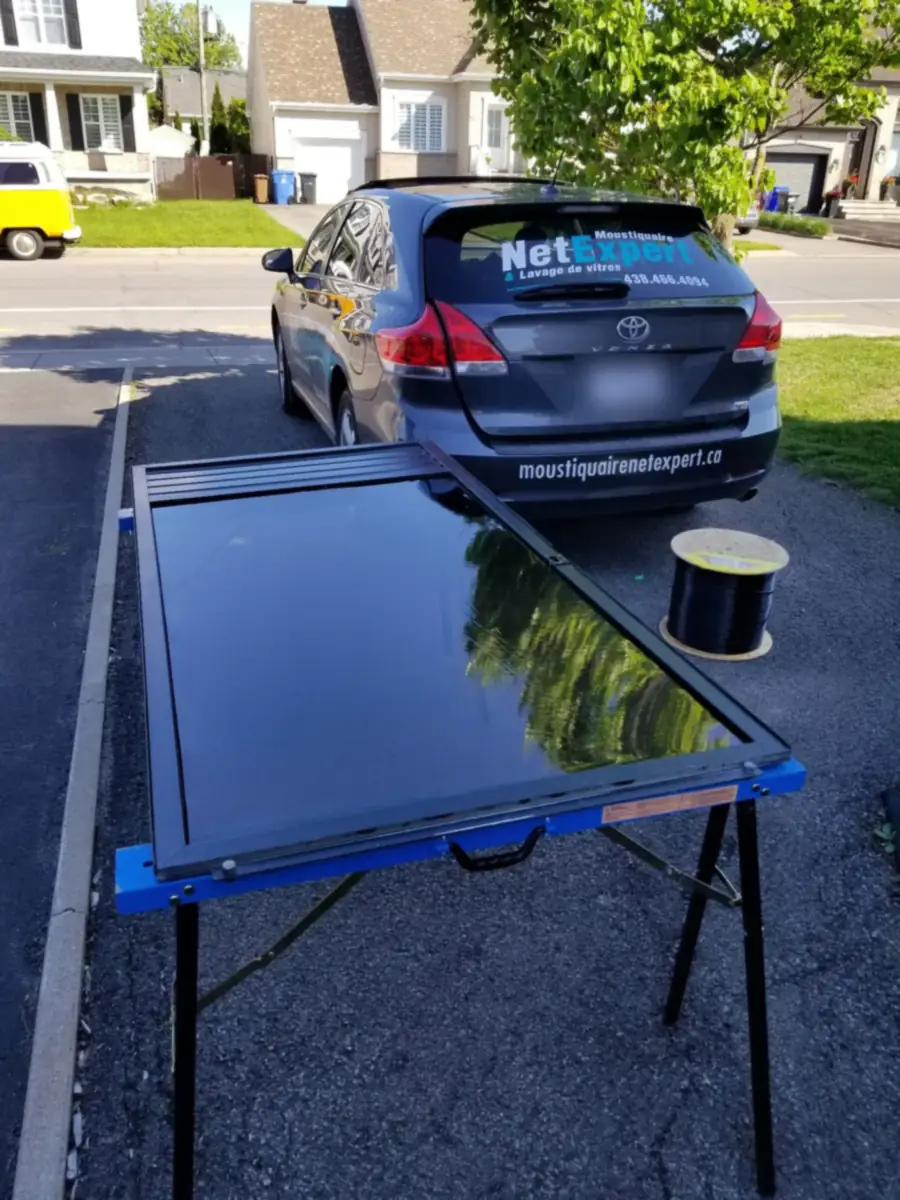
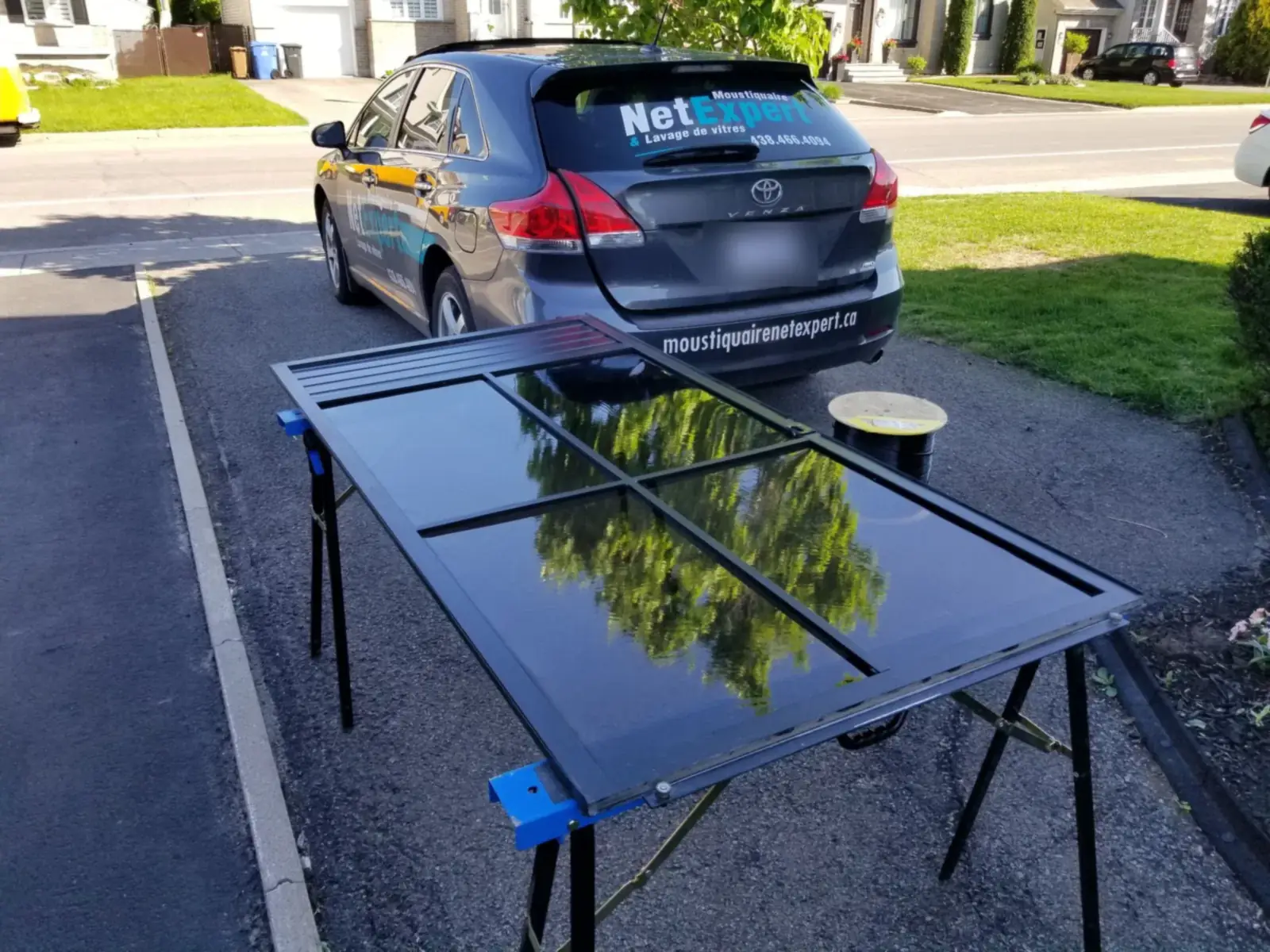
This job was not in Pointe-des-Cascades — it shows our method, the same everywhere: panels down, new vinyl pane by pane, panels back up.
« Excellent service. Clear explanations of the work to be done. I really appreciated his dedication: despite the rain he insisted on finishing the job, soaked through and still smiling. The work was very well done. »
« Great service! He was at my neighbour’s and agreed to fix my back screen even though we had no appointment. Very successful repair, and inexpensive! »
« Ludovic replaced my screen in record time. Professional, and with a great sense of humour. I recommend his services — don’t hesitate to contact him, he’ll come to your home and do beautiful work. »
Straight answers
Rarely. A corner that keeps failing is a corner catching wind on an angle: the film works harder there, the fastening holes elongate, and the tear starts from that point. Film recut to the pane's exact dimensions, properly tensioned and picked up on sound fastening points, spreads the load instead of concentrating it in one spot.
On a gazebo the question only comes up for the screen panels on the faces that take the lake. A gazebo pane is wider than a window panel, so the unsupported span in the middle is longer, and that is where mesh bellies first. On sheltered faces, fibreglass is enough. But on an exposed structure the real decision stays the film, not the mesh.
Yes: the panels come off, never the framing. Each opening is measured on its own, the panel goes to the mobile shop, comes back rescreened or with new film, and returns to its original spot. A structure built to fit has no standard sizes, which makes the measuring longer — not the work riskier.
Yes, at your home. We travel to Pointe-des-Cascades, remove the panels, replace the MICA vinyl in the original frames and put everything back — the gazebo structure is never touched. It is one of our specialties.
Yes. Depending on the retailer it is called MICA film, clear vinyl, clear plastic or transparent fabric — the same flexible material that cuts wind and holds warmth. We replace it on gazebos and sun shelters alike.
Yes. The vinyl is replaced pane by pane, in the existing frame — no need to redo the whole panel for one tear. If several panes have yellowed, doing them together gives a uniform result.
On assessment: the price depends on the number of panels and their dimensions. The quote is free, and a photo is often enough to price without a visit. Fabrication and installation guaranteed one year.
Do you manage a building or a business in Pointe-des-Cascades?