
Summer UV
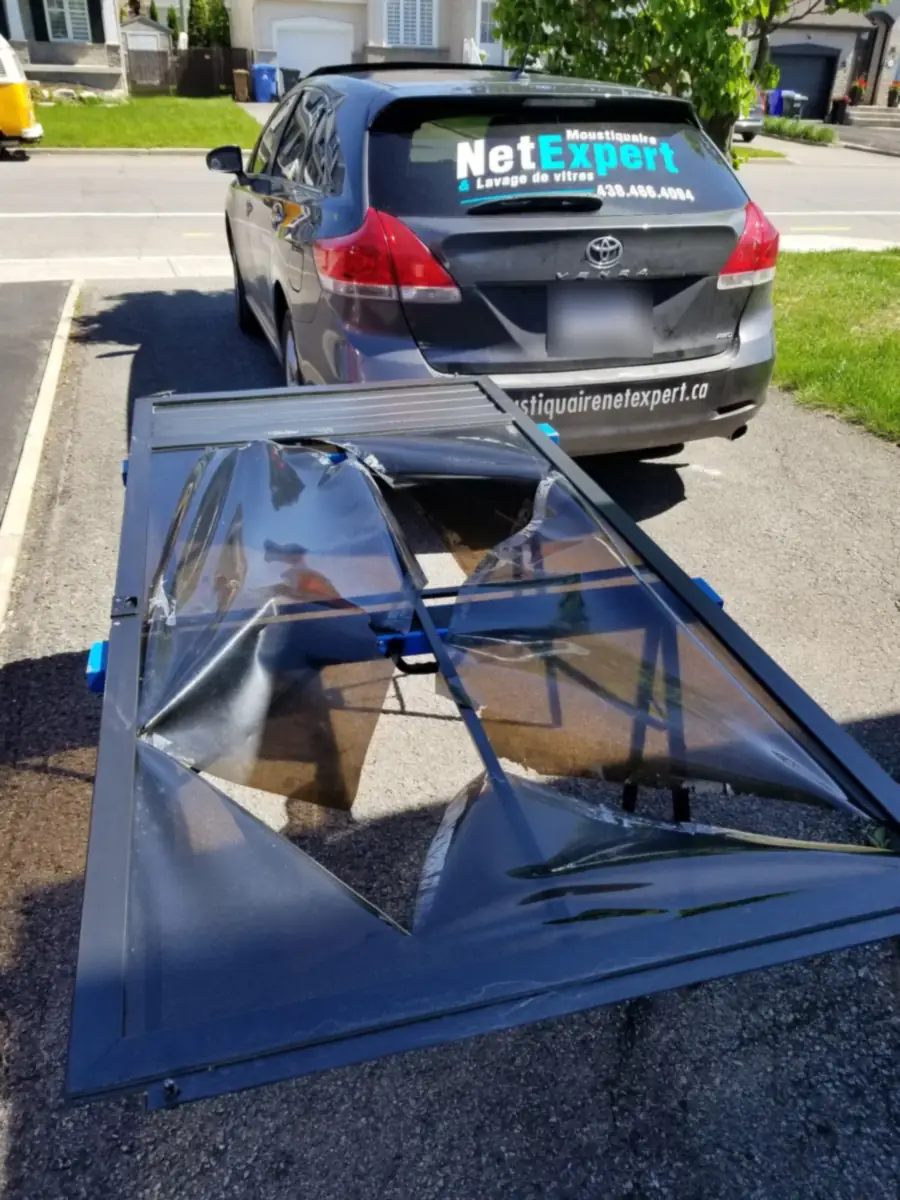
Sun yellows and clouds the vinyl. Film that crackles to the touch is at end of life.
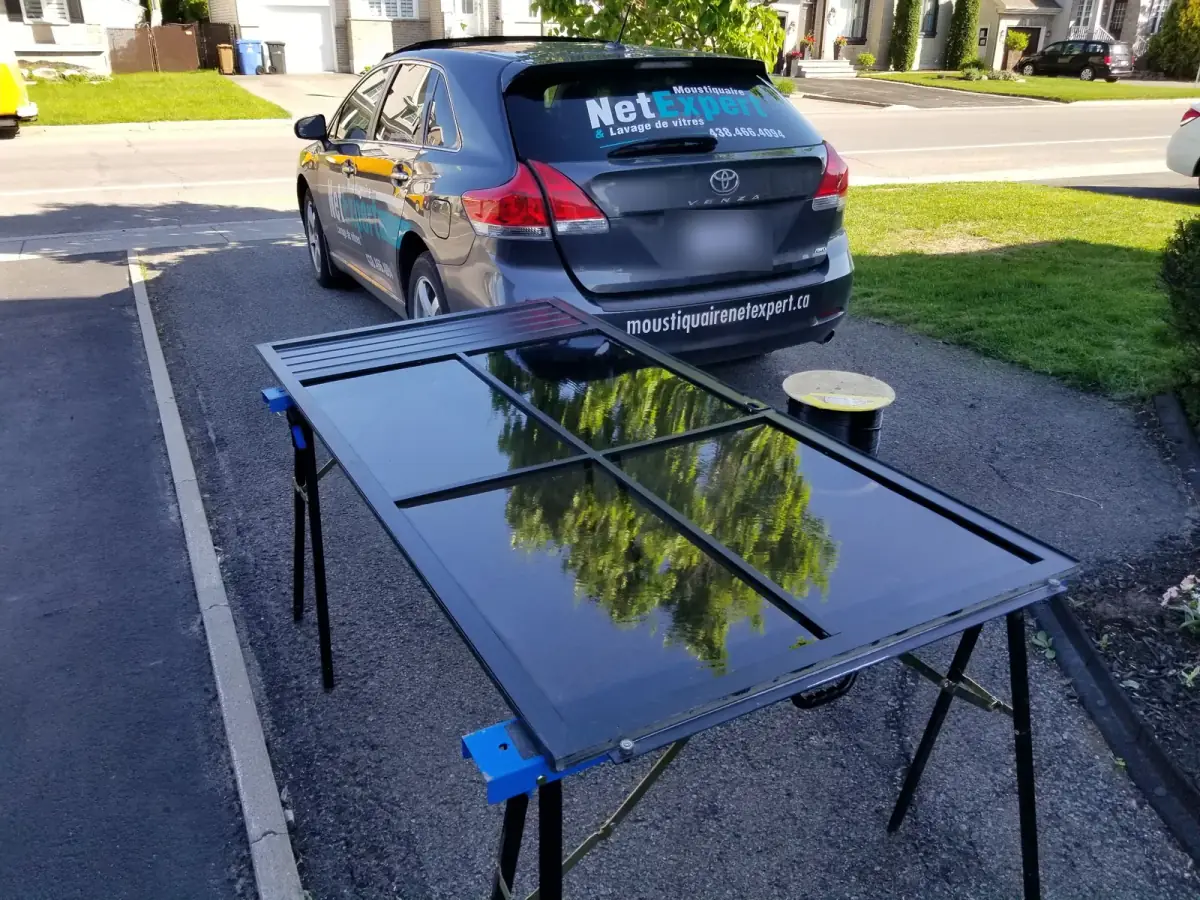
Gazebo and sun shelter specialty
Clear vinyl yellowed or torn? Replaced at your home in Lacolle, in the original frames — gazebos and sun shelters.
Three questions are enough to start. The official measurement is taken on site.
Whatever your retailer calls it — MICA film, clear vinyl, clear plastic, sun-shelter transparent fabric — it is the same material, and we replace it in Lacolle in your existing panels.
Sun yellows and clouds the vinyl. Film that crackles to the touch is at end of life.
Below freezing, MICA turns brittle — one handling or one gust splits it outright.
Slack vinyl flaps like a sail and eventually tears at the seams.
Lacolle reads in two chapters as soon as gazebos come up. In the old village, wood and brick houses already carry a covered porch out front; the gazebo goes up in the back yard instead, out of sight of the road. These are lots where a permanent wooden structure, built on site, makes full sense — panels cut for that frame alone, no twin anywhere, no retailer format that will simply drop in. Clear vinyl (MICA film) gets cut pane by pane there, to measurements taken in front of each opening, because an outdoor frame built by hand rarely has two sides that match exactly.
Past the core the land is farmland: houses sit one to a lot along the country roads, each on its own, with no neighbour close enough to break anything. Yards are wide and open, with little standing between a gazebo and the next field. That is the natural ground for the retailer gazebo — aluminum or steel structure, standard panel sizes, four to eight panes a side — and it is also where the film works hardest. Nothing breaks the wind: clear vinyl stretched over a large pane flutters all day long, and that flutter eventually opens a split, almost always along a fastener rather than in the middle of the surface.
On a gazebo, the clear film gives out before the screen does, and it warns you well ahead: it yellows, it stiffens, it crumples like an accordion along the bottom, and then a gust opens a split top to bottom. We replace it pane by pane in the original frame, to exact dimensions, without ever touching the gazebo structure itself. Screen panels fail differently: the mesh tears at a corner, sags in the middle, or the spline lifts out of its groove and lets an edge flap in the wind. Each panel comes down, gets rescreened or refilmed at the mobile shop, then goes back on its original clips. The original frame is not replaced: it carries the gazebo's dimensions, not the mesh or the vinyl fitted into it.
Two structures, two methods. A retailer gazebo repeats its formats: the first panel measured gives the size of the rest, and the panels come off the same fasteners all the way around. A wooden structure built on site has no interchangeable part — every opening is measured on its own, widths top and bottom, heights on both sides, because an outdoor frame that has been through a few winters no longer sits square. Access is rarely the issue on country lots: we pull up near the gazebo, take the panels down and work beside it. What gets planned is the number of panels, not the route to reach them.
On open ground, wind decides. Facing the field, pane width is what decides: past a large format, fibreglass bows under the push of the wind and aluminum does not — and vinyl will not forgive a perimeter pinched at points instead of along its full length. Sun does the rest: full southern exposure yellows the vinyl and weakens the fibre year after year. Along a field edge, summer evenings bring their share of fine insects, and that is where a tighter weave earns its keep — at the cost of a little airflow, a trade-off worth settling before the order, not after.
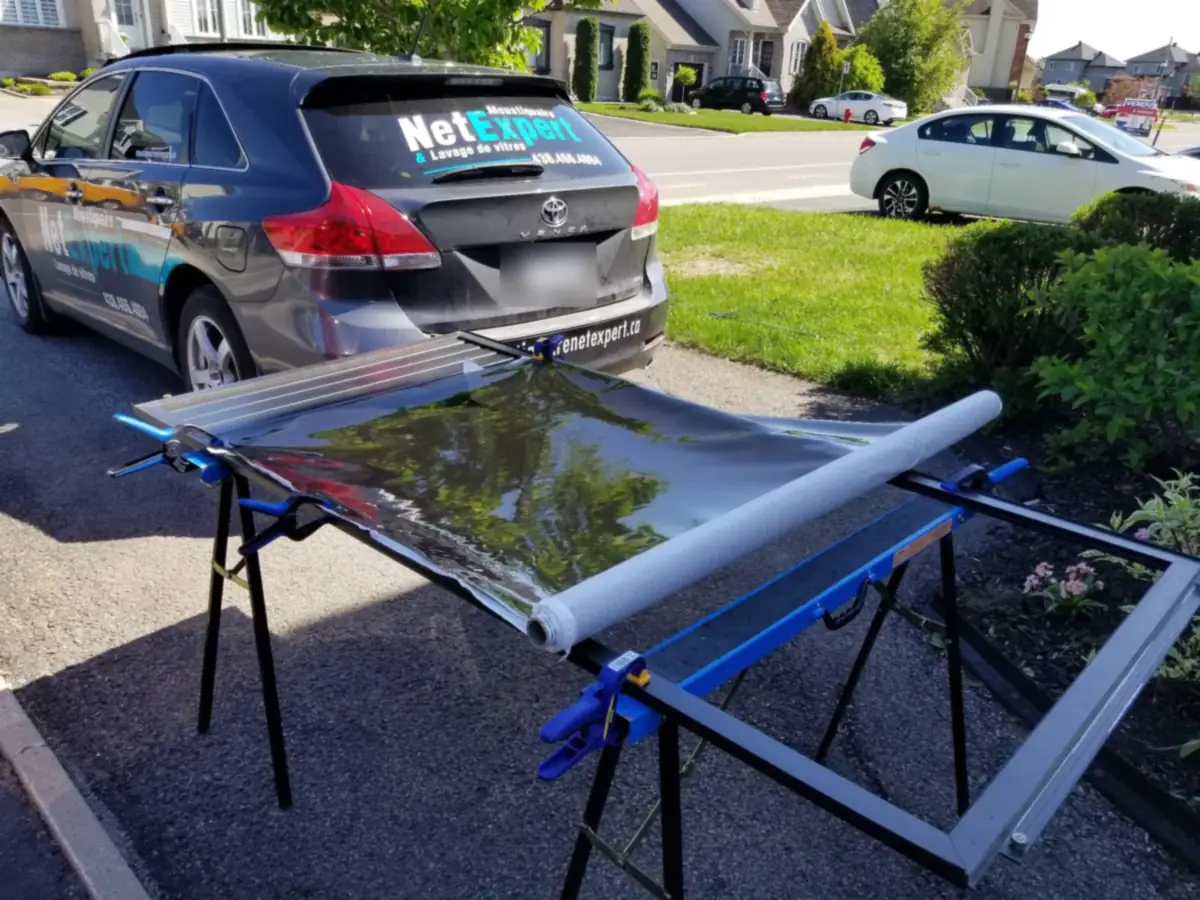
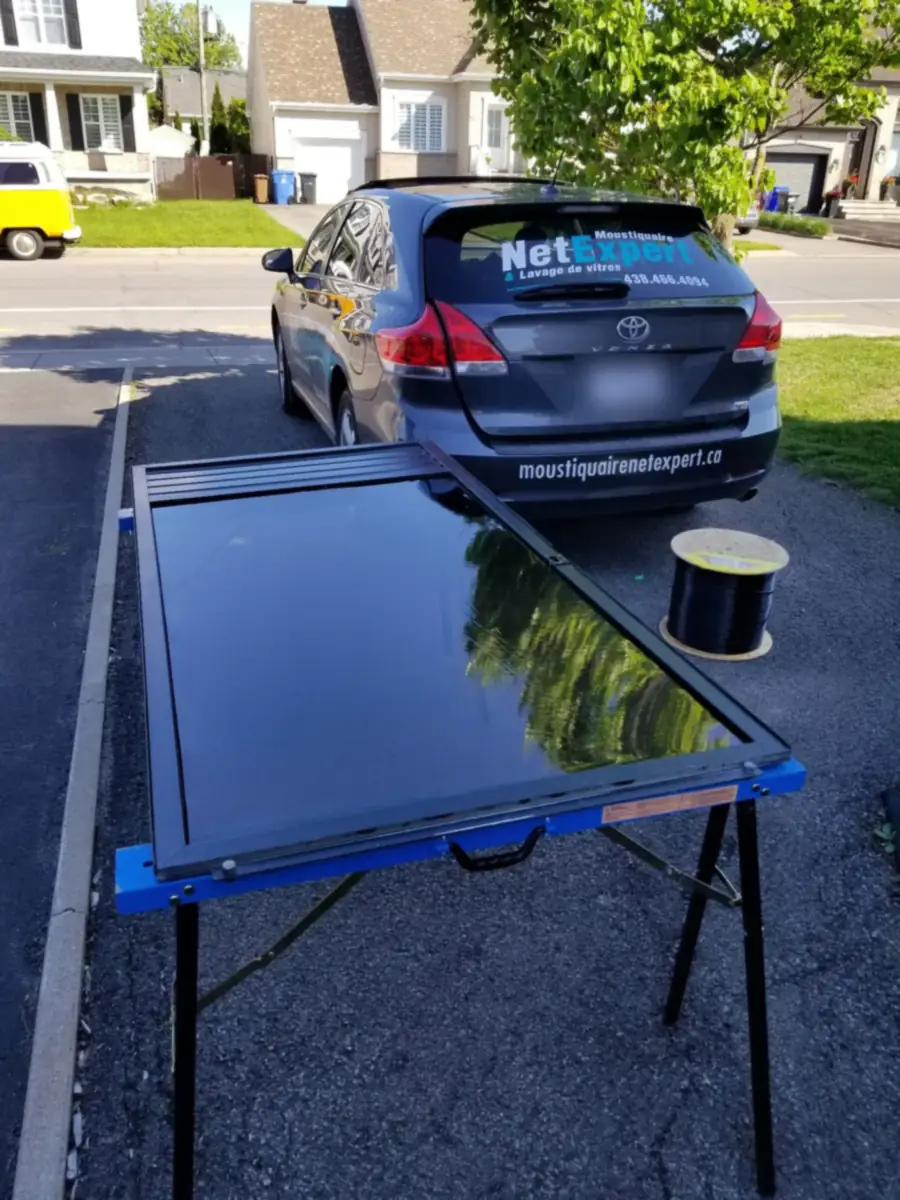
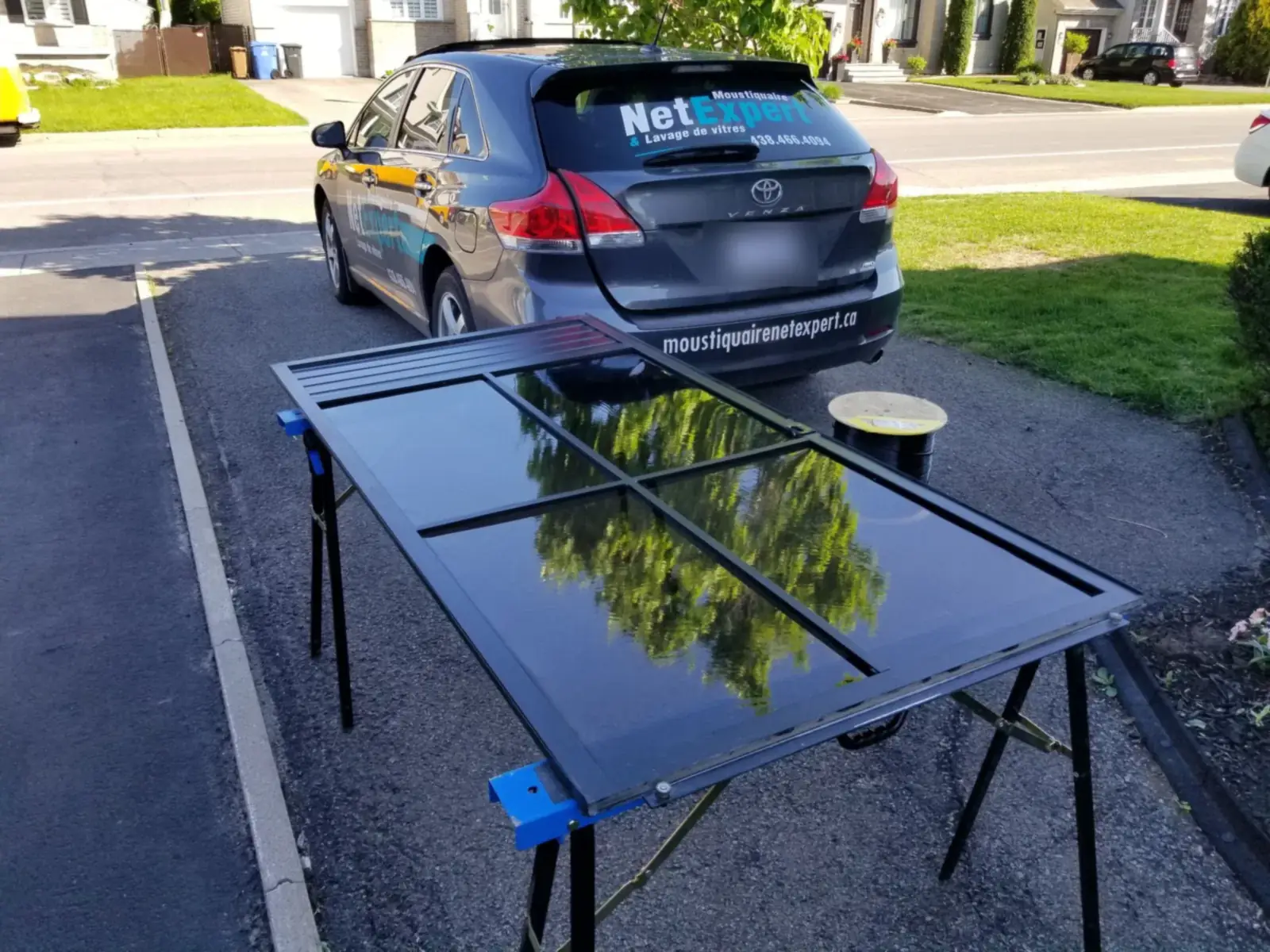
This job was not in Lacolle — it shows our method, the same everywhere: panels down, new vinyl pane by pane, panels back up.
« Great service! He was at my neighbour’s and agreed to fix my back screen even though we had no appointment. Very successful repair, and inexpensive! »
« Ludovic replaced my screen in record time. Professional, and with a great sense of humour. I recommend his services — don’t hesitate to contact him, he’ll come to your home and do beautiful work. »
« Excellent service. Clear explanations of the work to be done. I really appreciated his dedication: despite the rain he insisted on finishing the job, soaked through and still smiling. The work was very well done. »
Straight answers
No. Panels come off one at a time, and a damaged pane is handled on its own: we take that panel down, redo its film or mesh in its frame, and put it back on its clips. The structure is never touched — not the posts, not the roof. On a wooden structure built on site we still measure the neighbouring panels, since they are rarely identical to one another.
Not much. Panels come off and get carried to the vehicle, where the mobile shop does the work before they go back up. What actually matters is a walkable path for moving tall panels without twisting them: a frame bent in transit creates more work than torn mesh ever did. On a country lot that is rarely an obstacle.
Yes, and that is the usual case. The two age at different rates: clear vinyl takes the UV and the wind flutter, while mesh on a sheltered panel lasts much longer. We replace the film panes at exact dimensions and leave the screen panels in place, retensioning a spline along the way if one has lifted.
Yes, at your home. We travel to Lacolle, remove the panels, replace the MICA vinyl in the original frames and put everything back — the gazebo structure is never touched. It is one of our specialties.
Yes. Depending on the retailer it is called MICA film, clear vinyl, clear plastic or transparent fabric — the same flexible material that cuts wind and holds warmth. We replace it on gazebos and sun shelters alike.
Yes. The vinyl is replaced pane by pane, in the existing frame — no need to redo the whole panel for one tear. If several panes have yellowed, doing them together gives a uniform result.
On assessment: the price depends on the number of panels and their dimensions. The quote is free, and a photo is often enough to price without a visit. Fabrication and installation guaranteed one year.
Do you manage a building or a business in Lacolle?