
Slack or torn mesh
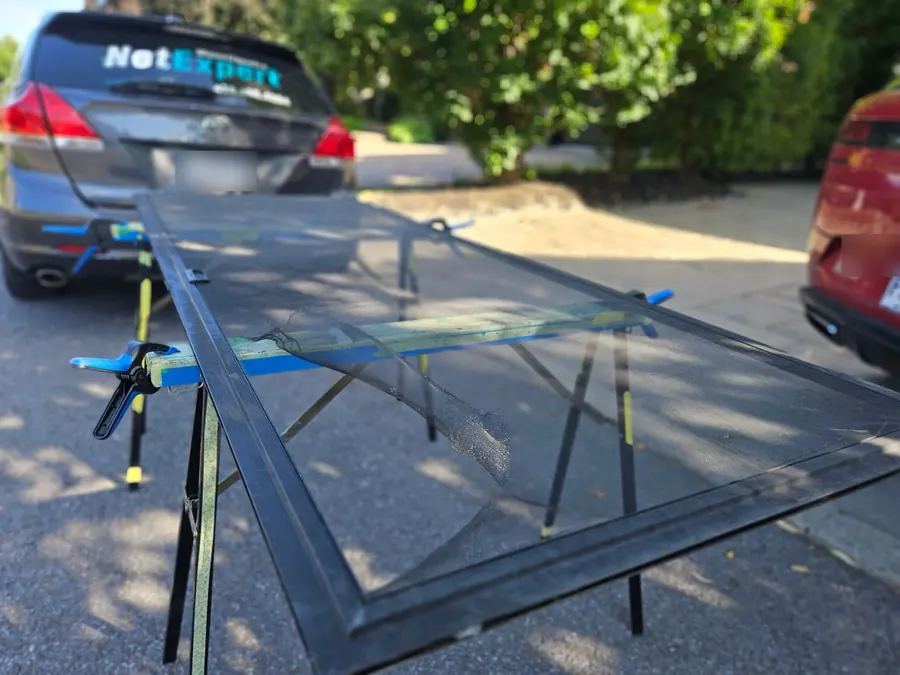
The mesh pulls out of the spline, billows in the wind or tore at the bottom — the classic. Re-meshed in your frame, fibreglass or reinforced.
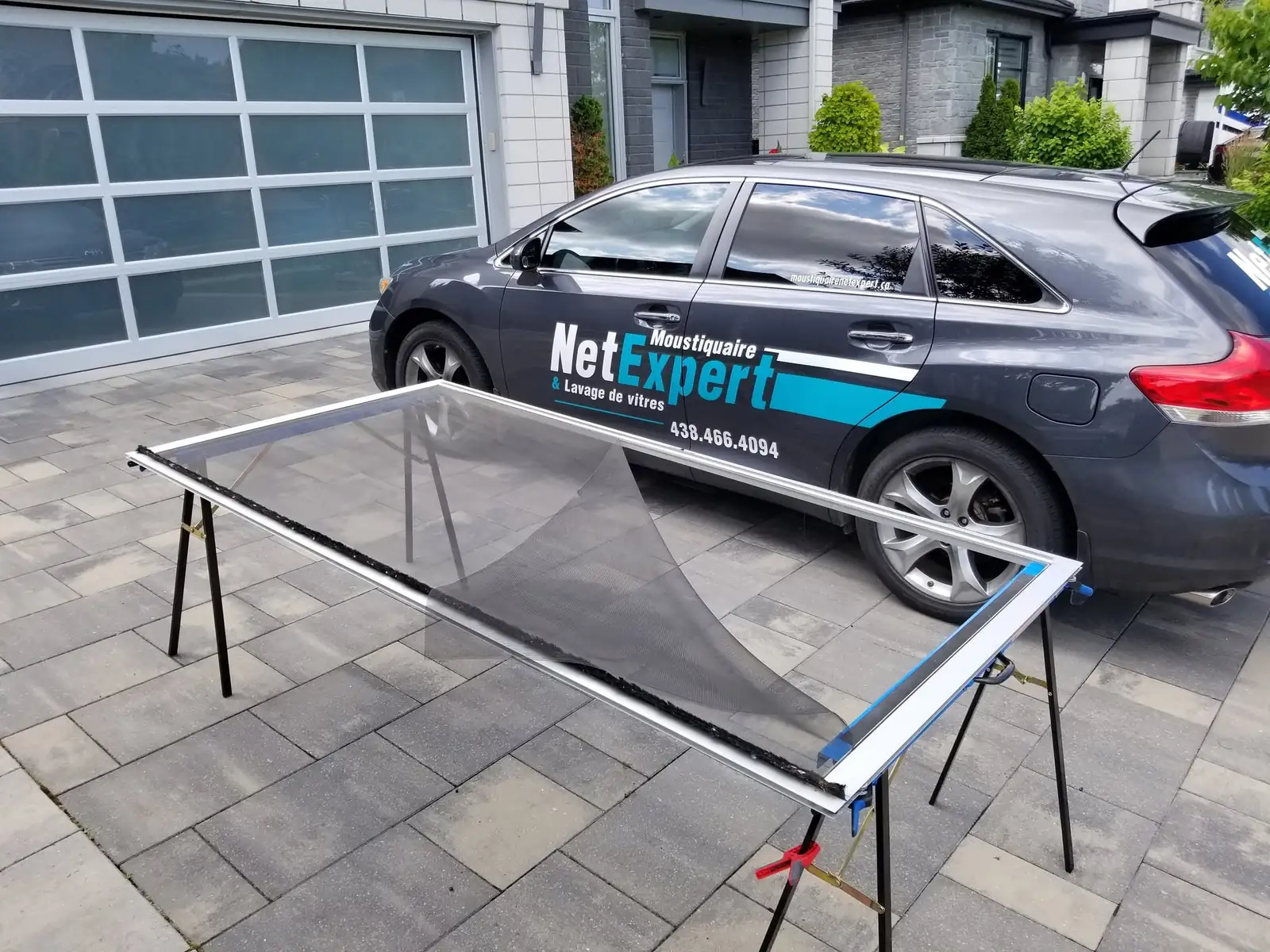
Patio door screens
Mesh, rollers, track, hardware: your screen door repaired at home in Beauharnois, usually in a single visit.
Three questions are enough to start. The official measurement is taken on site.
It is the most used screen in the house — opened and closed thousands of times a season. Four failures come up constantly, and all four are repaired on site.
The mesh pulls out of the spline, billows in the wind or tore at the bottom — the classic. Re-meshed in your frame, fibreglass or reinforced.
The door drags, jumps the track or scrapes. We replace the rollers and adjust the height — the most requested repair.
Sand, pet hair and debris jam the rolling. Cleaning, lubrication, light track straightening when needed.
The door no longer locks or the handle hangs loose. Hardware replaced, latch adjusted.
Most of Beauharnois’ patio doors are in its post-war bungalows, and they nearly all share the same history. Delivered with the house or fitted shortly after, the door opens onto the back yard, often onto a wooden deck built later. Its frame is aluminum, the screen panel slides on the outside, and the rollers belong to a generation of hardware you don’t replace by guesswork: they are identified, wheel by wheel, before anything is ordered. On a door of that generation the mesh has dried out and lost its give, while the bottom track has swallowed everything carried in underfoot. The panel frame itself is often still perfectly straight — which is what makes an on-site repair make more sense than replacing the whole unit.
The old sector along the canal tells a different story. Those modest pre-war workers’ houses never had an original patio door: where there is one, it came with an addition, an enlarged kitchen, or access to a back gallery added long after construction. Its width may fall outside the usual sizes, and its hardware may belong to a model no longer sold. At the other end of the timeline, the small recent developments on the outskirts are built with PVC: common dimensions, parts still manufactured, a lighter panel to handle. In a town carrying all three layers on the same streets, the first thing to do at a patio door is work out which layer it comes from.
Here the track decides everything. Winter sand and fine gravel come into the house underfoot, and where they end up is the bottom track of the patio door — a hollow profile that never empties itself. That grit wears the rollers far faster than the weight of the panel alone: they flatten, they seize, and the door starts to drag instead of rolling. That is the moment the owner pushes harder, and the panel frame goes out of true. So all three causes are taken together: track emptied, cleaned and lubricated, new rollers of the right model, new mesh tensioned evenly in the frame. On an aluminum panel from a 1970s bungalow the frame straightens out most of the time; it is replaced only when bent or split. Everything happens on site: the panel comes off, is rescreened and goes back, and nothing leaves for a shop.
The constraint shows up mostly in the old sector, where houses sit close together and the back yard is reached through the house more often than around the side. A patio door panel is long, bulkier than a window screen, and it has to lie flat for mesh to tension properly, so it needs clear space, in the yard or indoors. Second point, height: many of these doors open onto a raised wooden deck whose threshold step makes lifting the panel out awkward. Third, size: an addition’s door is not necessarily a common format, and its panel is measured on itself, never from the opening.
The canal puts open water and wind in front of a good part of the town, and wind is what decides on a wide door. Standard fibreglass suits a sheltered door, tucked between two close-set houses in the old sector. On an exposed elevation taking the wind head-on, aluminum holds up better: stiffer, it keeps its tension instead of bellying in the middle after a single summer. And when a dog noses the door open several times a day, pet-resistant mesh is the choice that avoids redoing the same repair every spring.
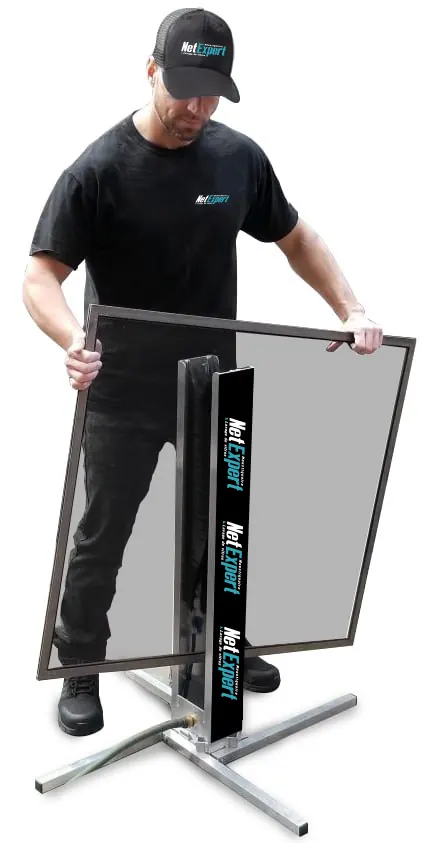
A patio door opens and closes more often than every window in the house combined — and it is the one the dog noses open and the cat climbs. Standard fibreglass mesh suits a lightly used door; for the others, we fit reinforced mesh, about seven times stronger, or pet-resistant mesh built for claws.
The extra cost is measured in tens of dollars; the yearly replacement it prevents, in hundreds. We carry both types in the vehicle — the decision can happen on the spot, with the door off its track in front of you.
Ten kinds of damage, one answer
If your screen looks like any of these, it can be repaired. Tap one to request a quote for that exact damage. We rarely replace a whole frame — in most cases only the mesh needs redoing.
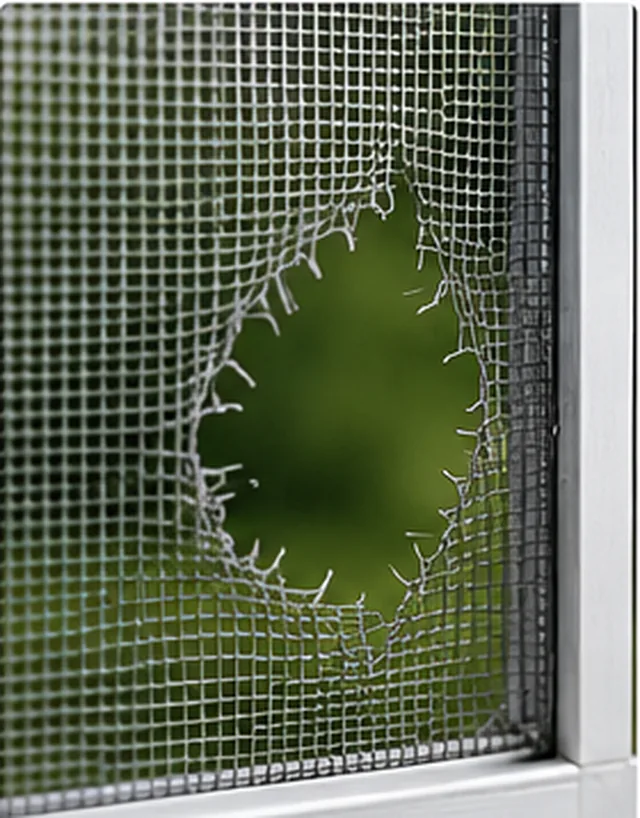 Mesh
Mesh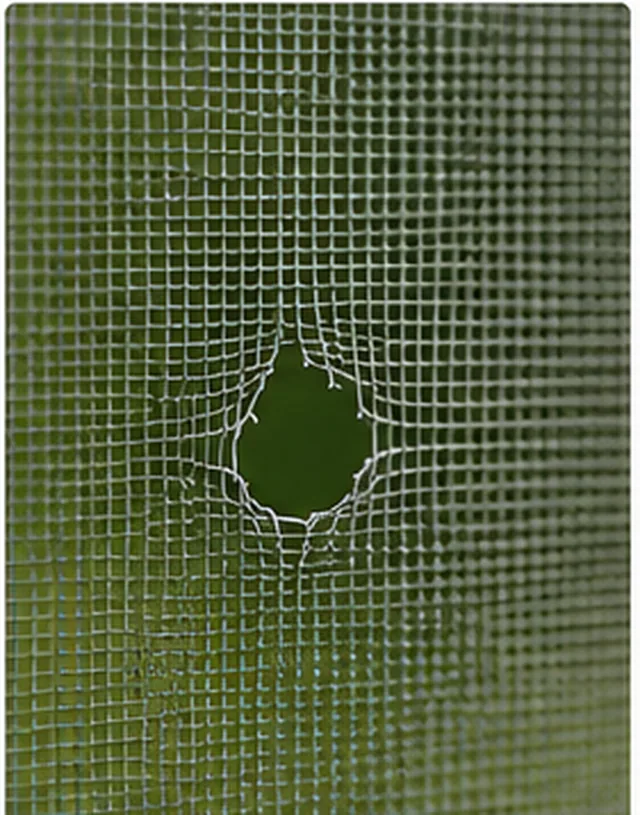 Mesh
Mesh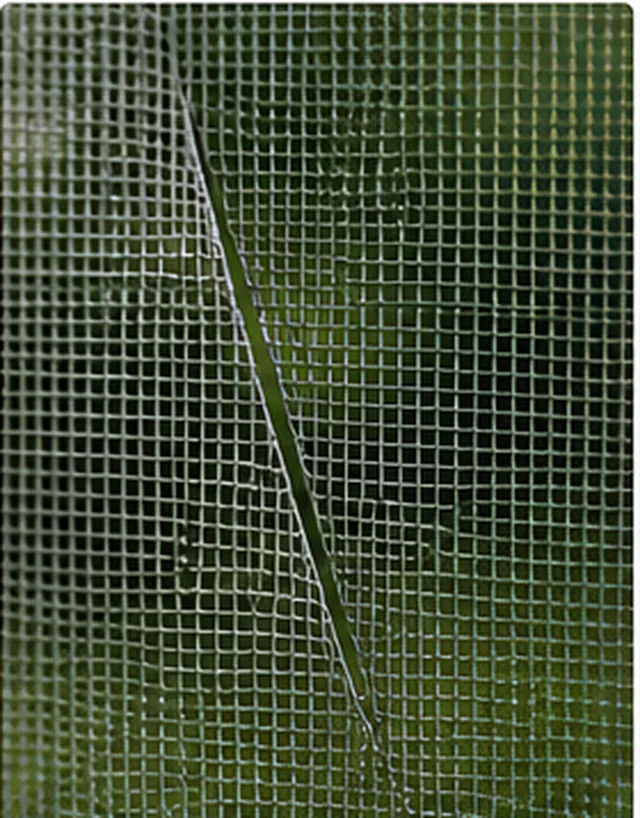 Mesh
Mesh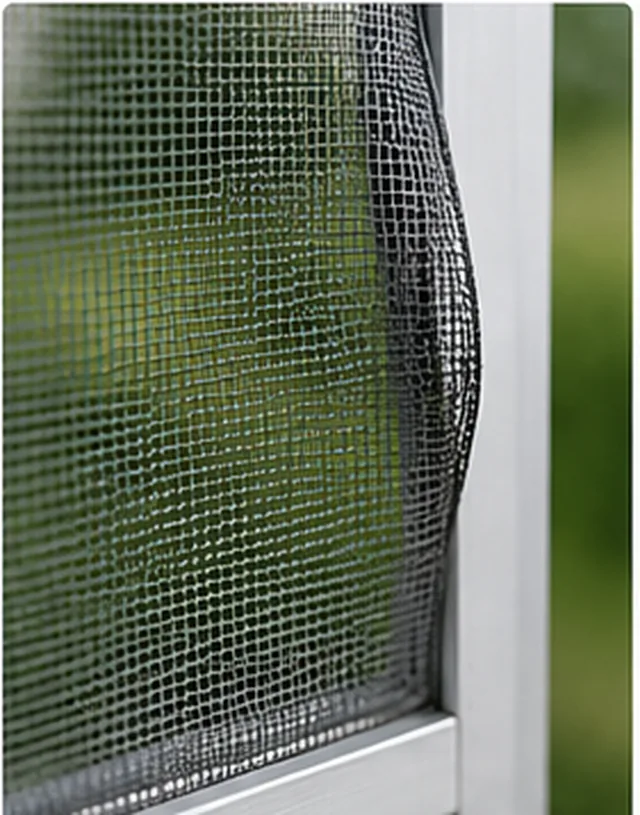 Mesh
Mesh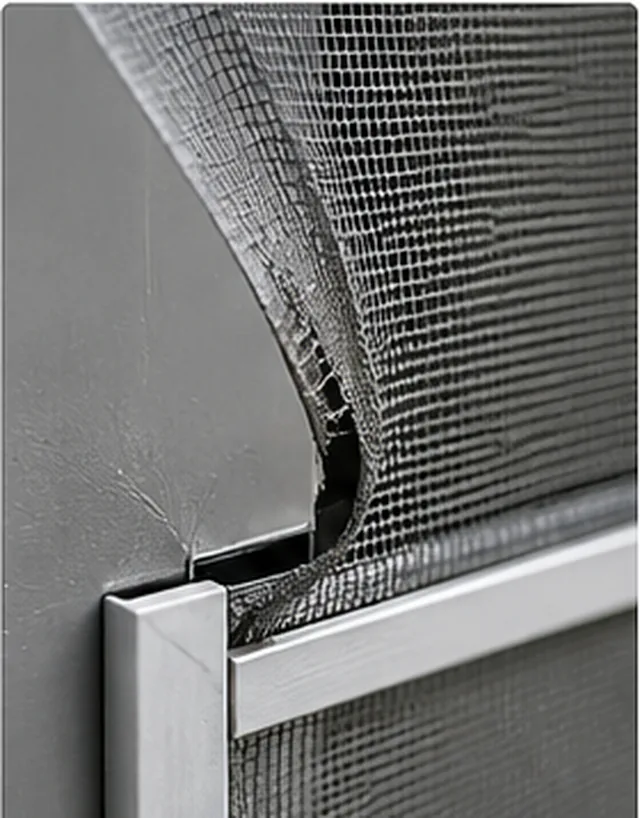 Mesh
Mesh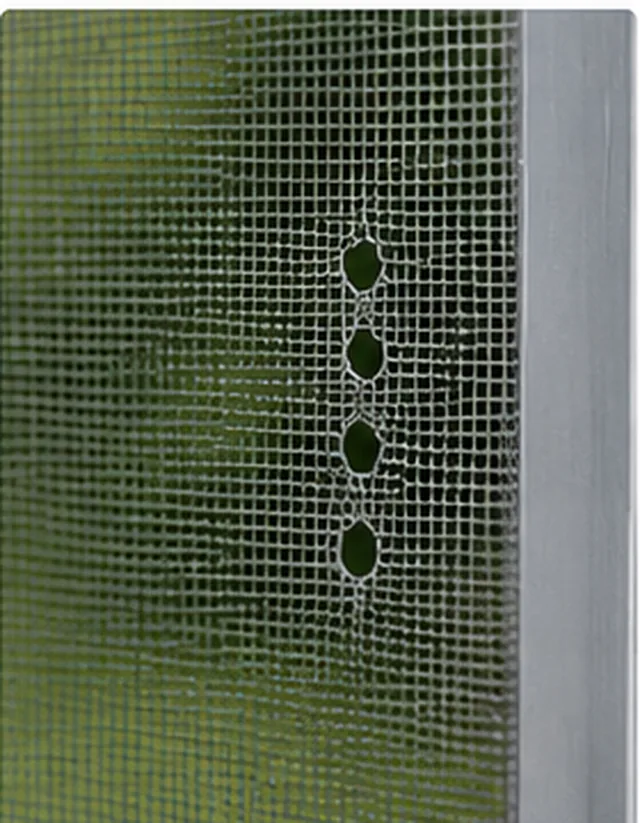 Mesh
Mesh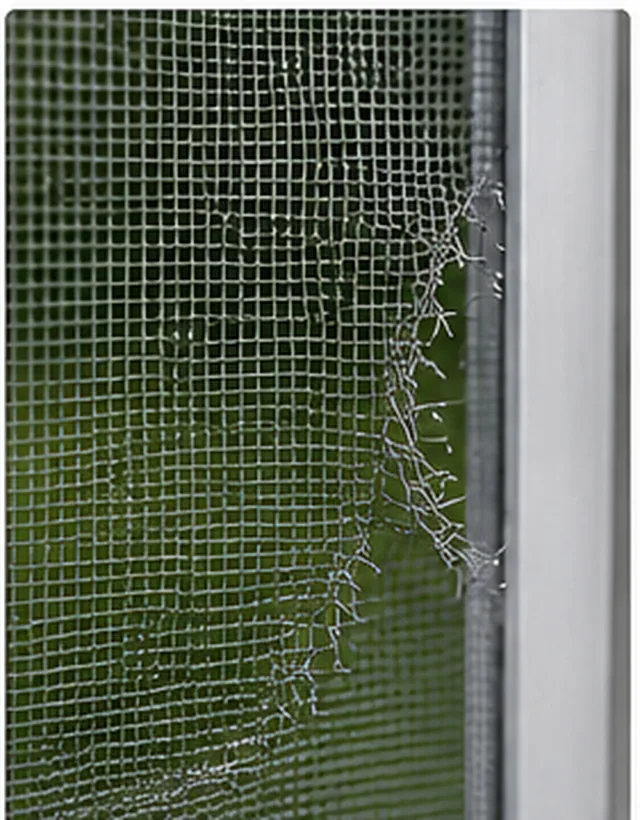 Mesh
Mesh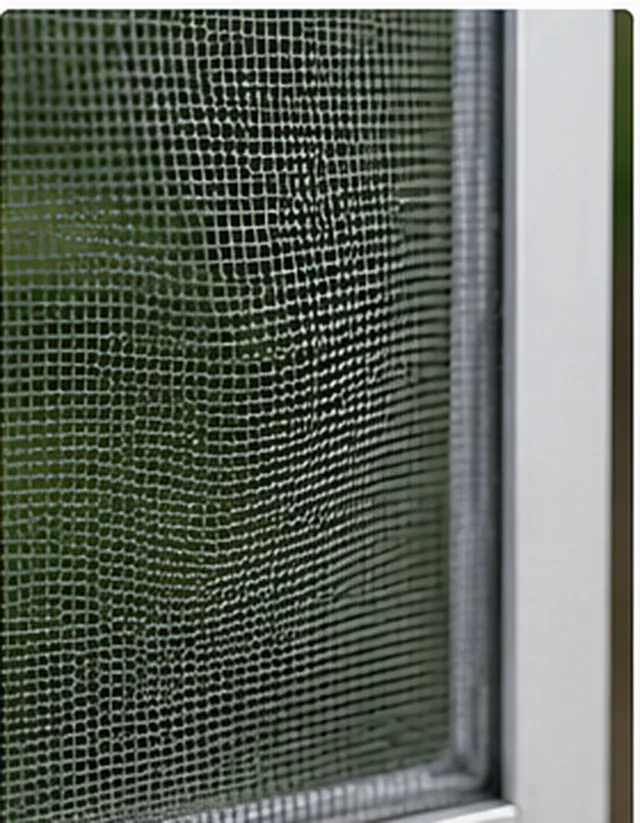 Mesh
Mesh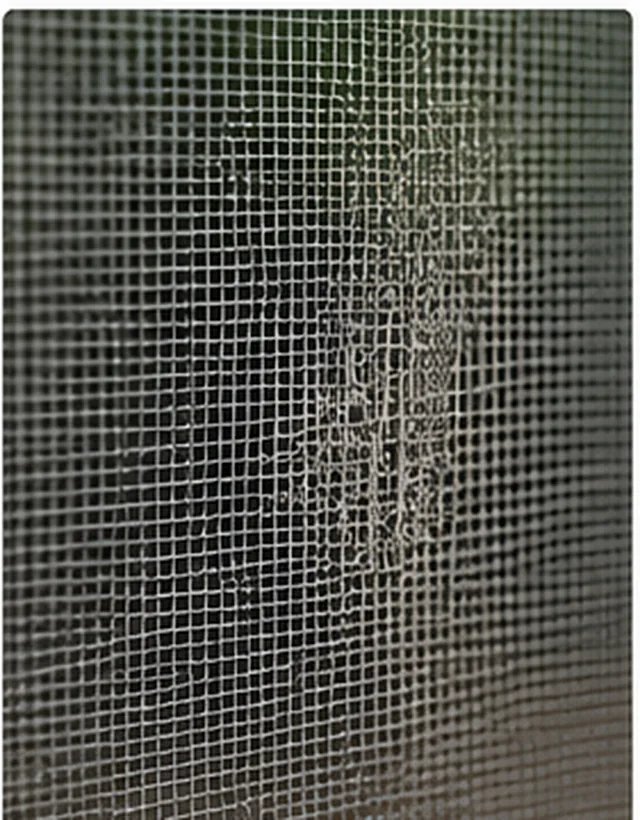 Mesh
Mesh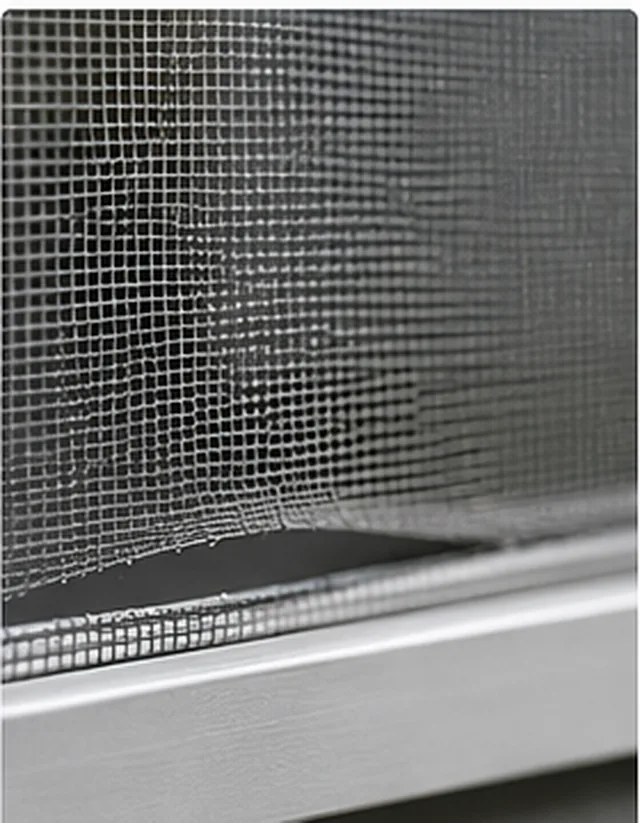 Frame
FrameThis job was not in Beauharnois — it shows our method, the same everywhere: door off its track, new rollers, new mesh, frame squared up.
 1
1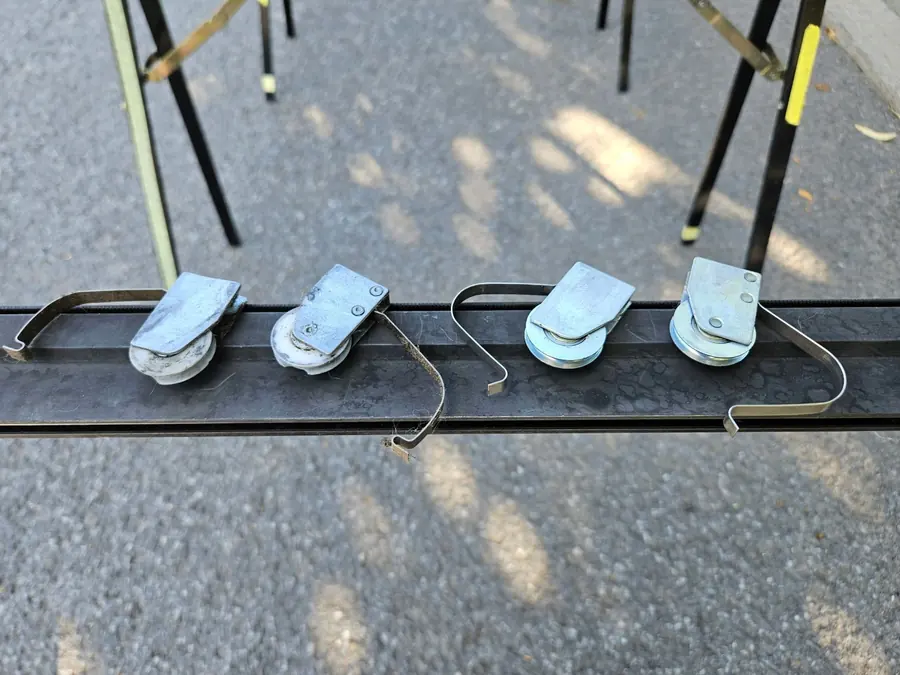 2
2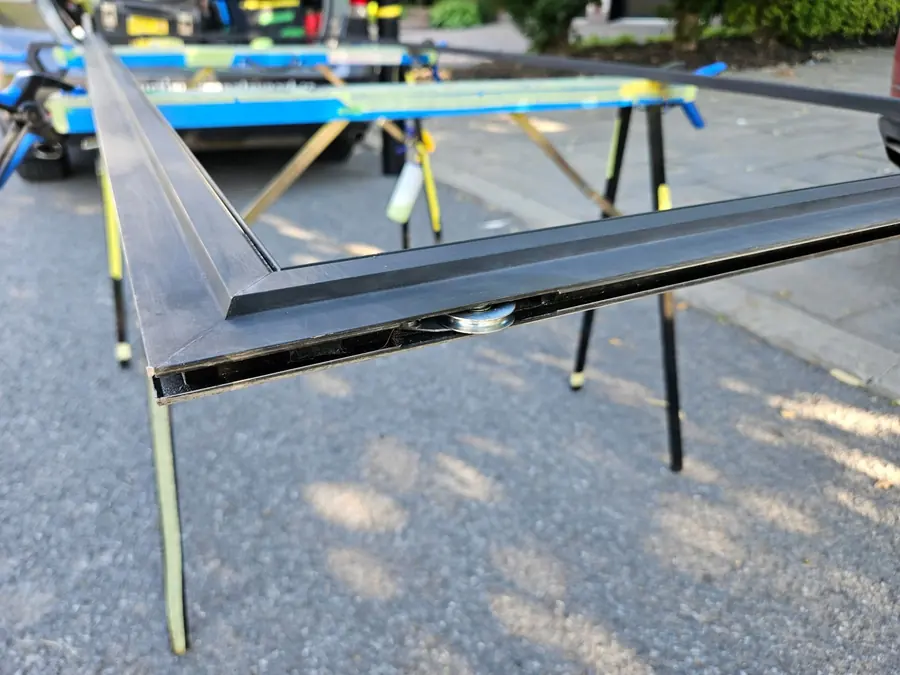 3
3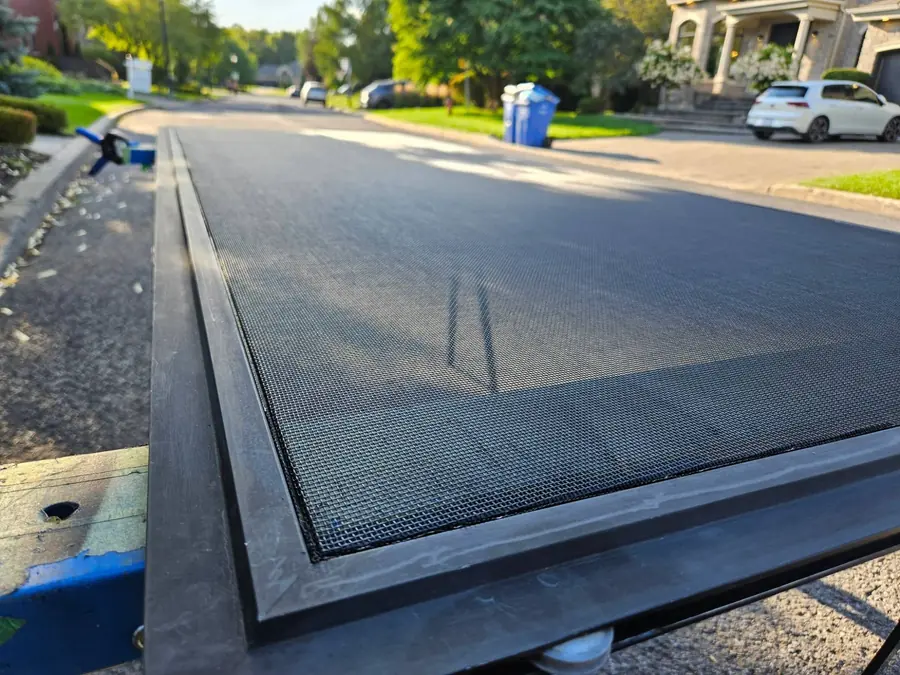 4
4« Great service! He was at my neighbour’s and agreed to fix my back screen even though we had no appointment. Very successful repair, and inexpensive! »
« Ludovic replaced my screen in record time. Professional, and with a great sense of humour. I recommend his services — don’t hesitate to contact him, he’ll come to your home and do beautiful work. »
« Excellent service. Clear explanations of the work to be done. I really appreciated his dedication: despite the rain he insisted on finishing the job, soaked through and still smiling. The work was very well done. »
Straight answers
They can still be found, just not off the shelf. Hardware of that generation is recognized by its shape, its axle and how it adjusts: the model is read off the roller once removed, then the equivalent is fitted. That is exactly why nothing is ordered before the door has been seen. The panel itself is almost always kept.
Rarely. An aluminum frame that is merely bowed can be straightened, then holds its shape again once new mesh is set square in it. It is replaced only when deeply bent or split at a corner, because mesh will not hold in that case. The diagnosis is made with the panel off and lying flat, not by looking at the door in its opening.
Yes, and in most cases without going through the manufacturer. These panels use common dimensions and mesh held by a spline in a groove: the mesh comes out, the spline is replaced if it has hardened, and pet-resistant mesh goes into the same frame. The rest of the door is untouched.
Yes, at your home. We remove the screen door, replace the mesh or rollers on site, clean and lubricate the track, then reinstall it — usually in a single visit to Beauharnois.
Almost always the rollers: they wear out before the mesh and push the door off its track. We replace them and clean the track in the same intervention — forcing a derailing door eventually bends the frame, a costlier repair.
Rollers and hardware: from $30. A complete custom-built screen door: from $500, depending on format. The mesh alone on a door is priced on quote, from its dimensions. An exact quote is free.
One year on fabrication and installation — mesh, fitted rollers, built frames. Damage caused afterwards, by a pet or an impact, is not covered; for a dog, pet-resistant mesh is the real answer.
Pet-resistant mesh: about seven times stronger than standard fibreglass. On a patio door used daily, it is the difference between replacing the mesh yearly and being done with it for seasons.
Do you manage a building or a business in Beauharnois?