
Slack or torn mesh
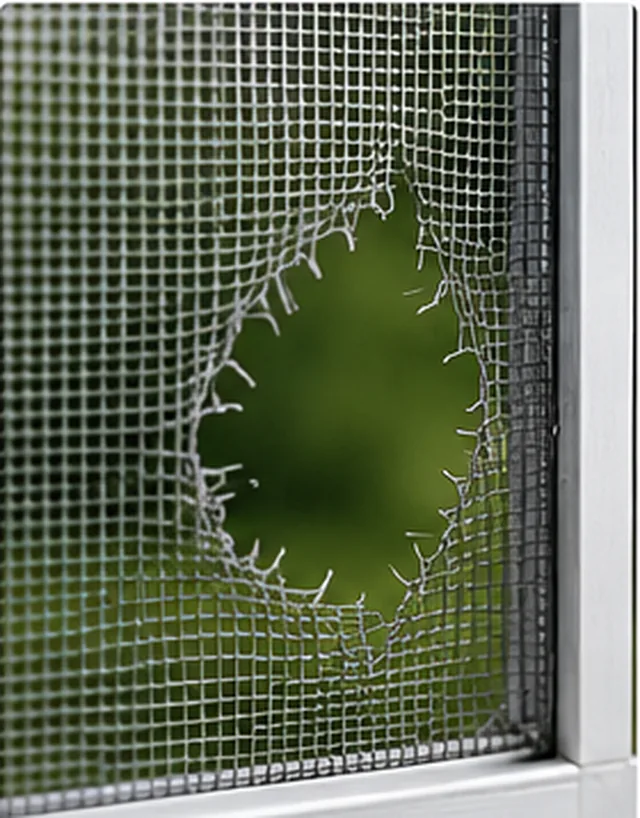
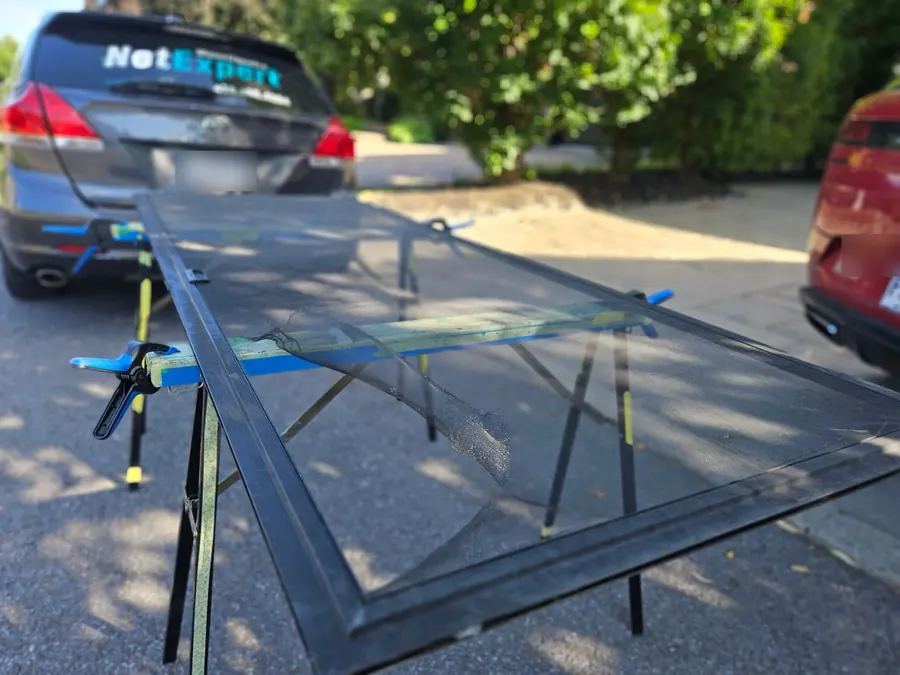
The mesh pulls out of the spline, billows in the wind or tore at the bottom — the classic. Re-meshed in your frame, fibreglass or reinforced.
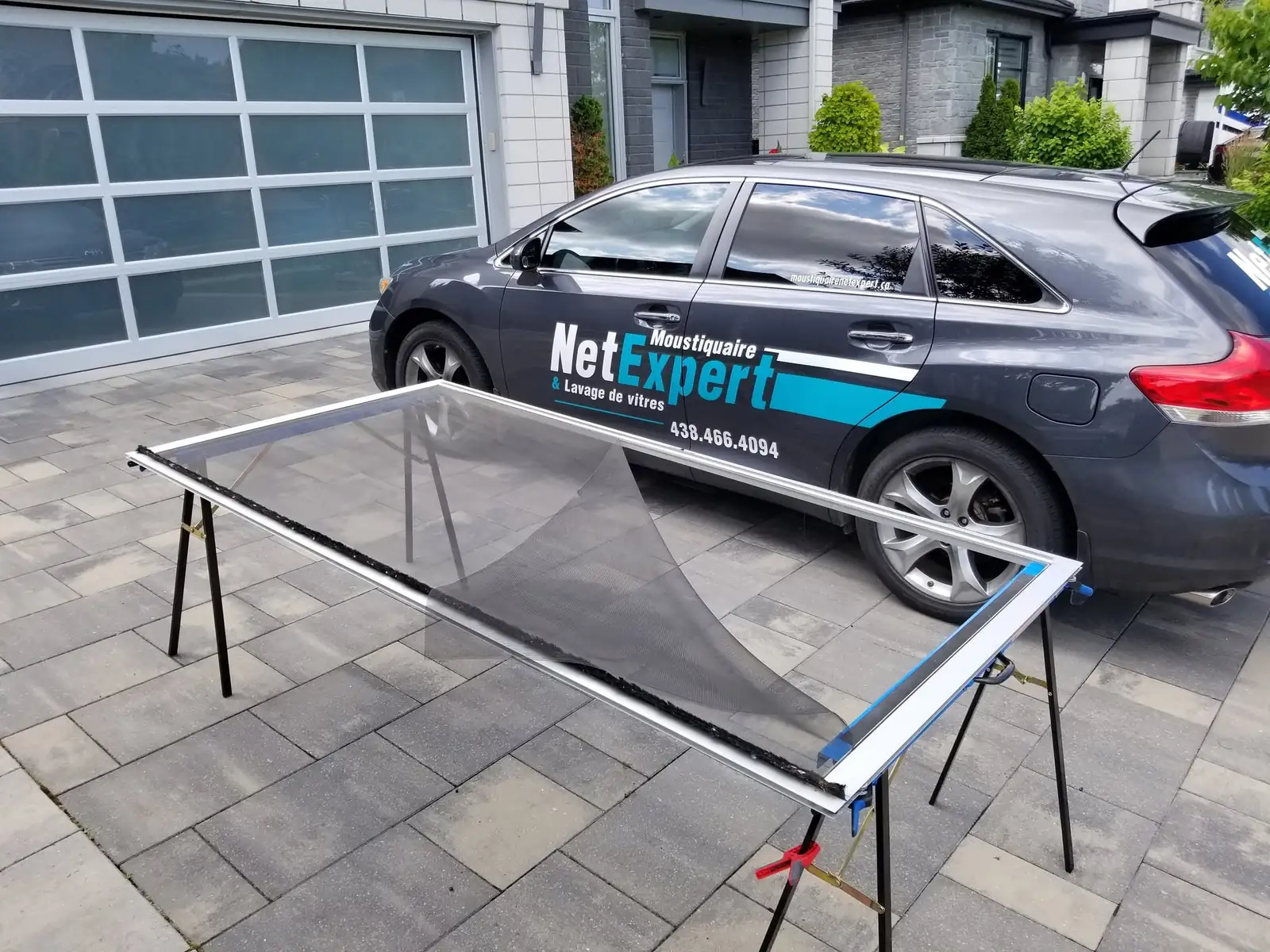
Patio door screens
Mesh, rollers, track, hardware: your screen door repaired at home in Saint-Michel, usually in a single visit.
Three questions are enough to start. The official measurement is taken on site.
It is the most used screen in the house — opened and closed thousands of times a season. Four failures come up constantly, and all four are repaired on site.
The mesh pulls out of the spline, billows in the wind or tore at the bottom — the classic. Re-meshed in your frame, fibreglass or reinforced.
The door drags, jumps the track or scrapes. We replace the rollers and adjust the height — the most requested repair.
Sand, pet hair and debris jam the rolling. Cleaning, lubrication, light track straightening when needed.
The door no longer locks or the handle hangs loose. Hardware replaced, latch adjusted.
In Saint-Michel, the patio door almost always has a shorter history than the house that carries it. The older village homes near the church were not built with a wide sliding opening at the back; where one exists, it arrived with an addition, a deck, or a kitchen that was redone. That changes how it is approached. The hardware is not the age of the building, it is the age of the work, and that year is the starting point for identifying rollers or a frame profile. One village house may therefore carry a perfectly ordinary PVC patio door, while the house next door, extended much earlier, has a thin aluminum frame in a profile no supplier stocks any more.
The rest of the village reads differently. Bungalows on large lots open onto the yard through a patio door in daily use, and the houses of the market-garden farms, scattered among the fields, often have theirs opening onto a porch or a deck facing the crops. In both cases there is nothing in front: no row of houses, no line of trees, nothing to break the wind crossing open ground. A screen door panel is a large, flat, light surface; left free, it gets pushed, it bangs against its stop, and the latch is what takes the hit. That exposure explains why the latch, not the mesh, is the first thing to give on a door facing open fields.
Three failures come back on these doors. Rollers first: the bottom track of a door facing the fields fills with a fine, dry dust that works like an abrasive under the wheel. The roller flattens, the panel drops, and the bottom of the door starts to drag. Then the mesh, gone slack at hand height on the handle side, then torn at a corner as soon as something catches. Finally the latch, out of alignment because the panel has lost a few millimetres of height, or forced by a gust. We settle all of it at once: channel cleared and straightened, new rollers, mesh retensioned in the frame, latch realigned. A panel that is merely bowed gets straightened; we replace it only when split or twisted.
The difficulty here comes from the building, not from height. On an extended village house, the patio door opening has moved with the structure: it is no longer quite square, the panel bears on one side, and a repair that looks only at the mesh leaves the fault in place. On a farm property, the door sometimes opens onto a covered porch, with a step and less room to manoeuvre a seven-foot panel than it appears. In both cases the measurements are taken on site, diagonals included, and the panel comes out of its track before anything is decided.
Wind drives the choice here. On a wide door exposed to the gusts that sweep the fields, aluminum holds tension better than standard fibreglass, which eventually pockets in the middle of the panel. If a dog or a cat uses that door, pet-resistant mesh takes priority over every other consideration: its heavier strand resists claws and prevents the corner tear that widens on its own. Standard fibreglass remains a sensible choice on a door sheltered by a covered porch, where nothing pushes on the panel and the weave is left to do only its own job.
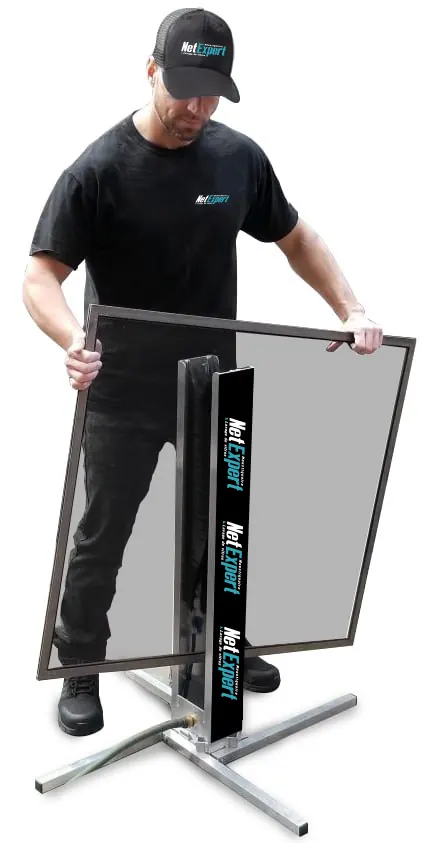
A patio door opens and closes more often than every window in the house combined — and it is the one the dog noses open and the cat climbs. Standard fibreglass mesh suits a lightly used door; for the others, we fit reinforced mesh, about seven times stronger, or pet-resistant mesh built for claws.
The extra cost is measured in tens of dollars; the yearly replacement it prevents, in hundreds. We carry both types in the vehicle — the decision can happen on the spot, with the door off its track in front of you.
Ten kinds of damage, one answer
If your screen looks like any of these, it can be repaired. Tap one to request a quote for that exact damage. We rarely replace a whole frame — in most cases only the mesh needs redoing.
 Mesh
Mesh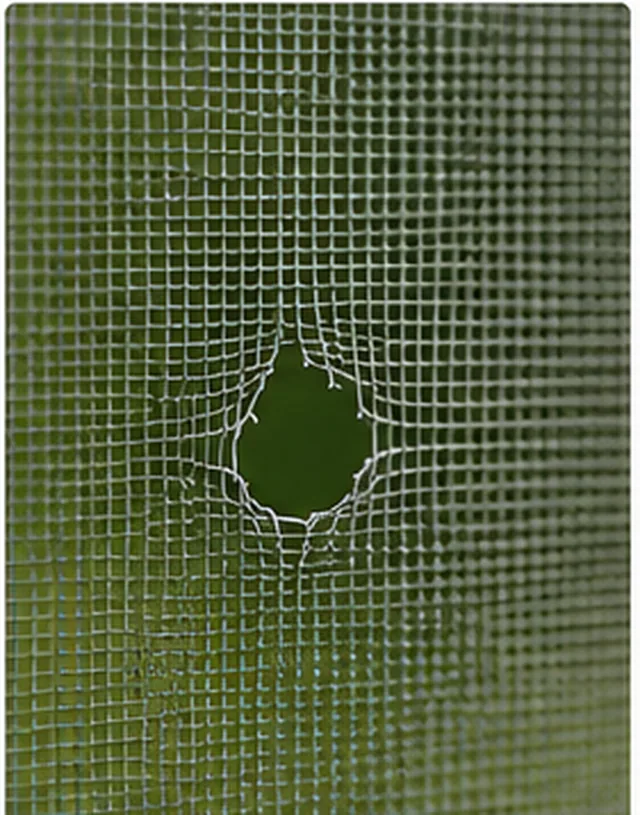 Mesh
Mesh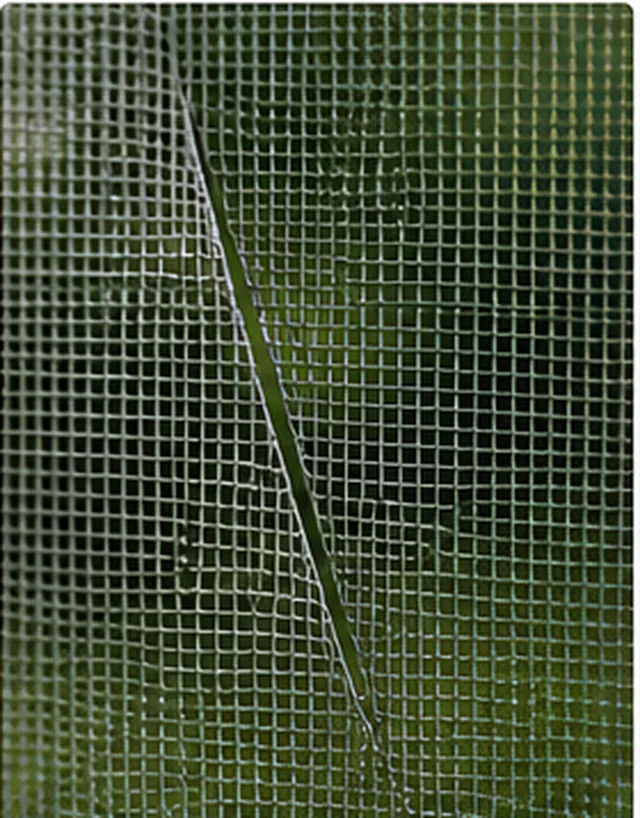 Mesh
Mesh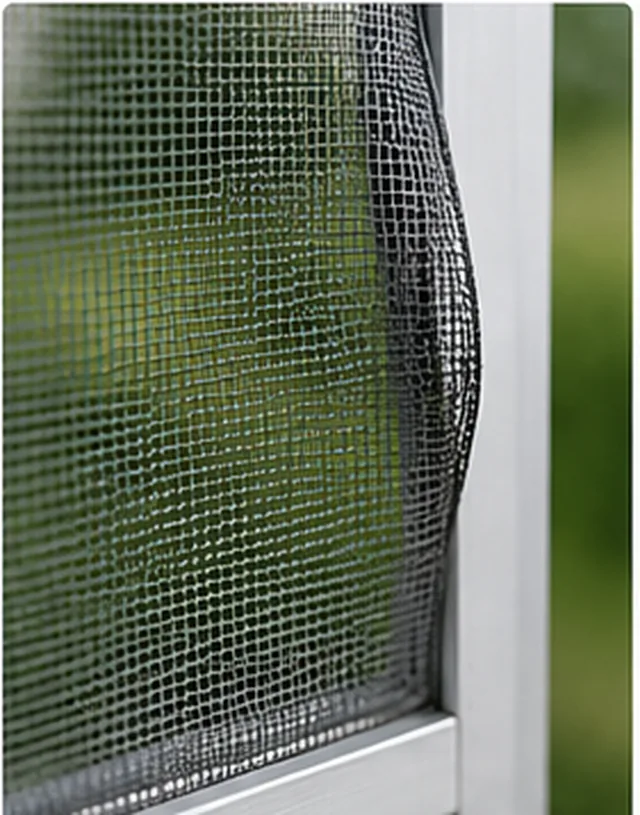 Mesh
Mesh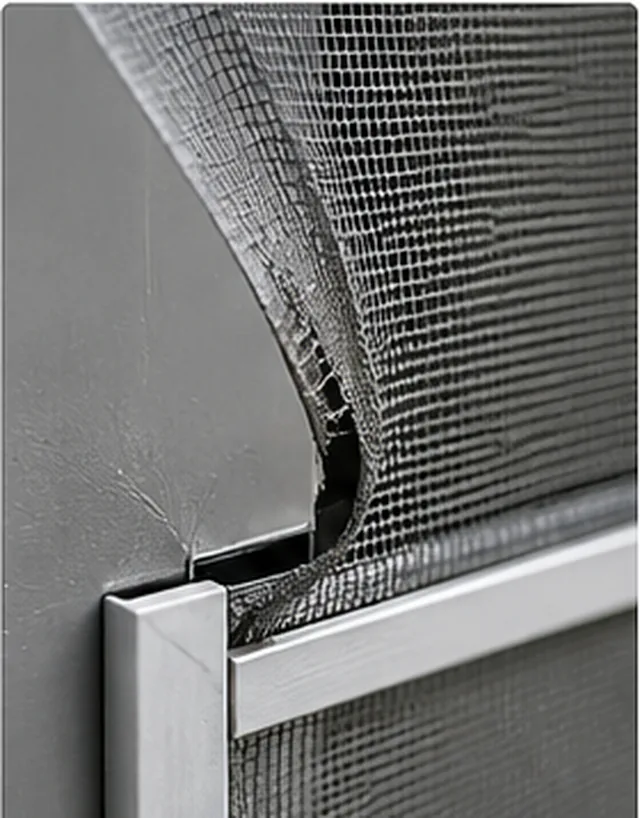 Mesh
Mesh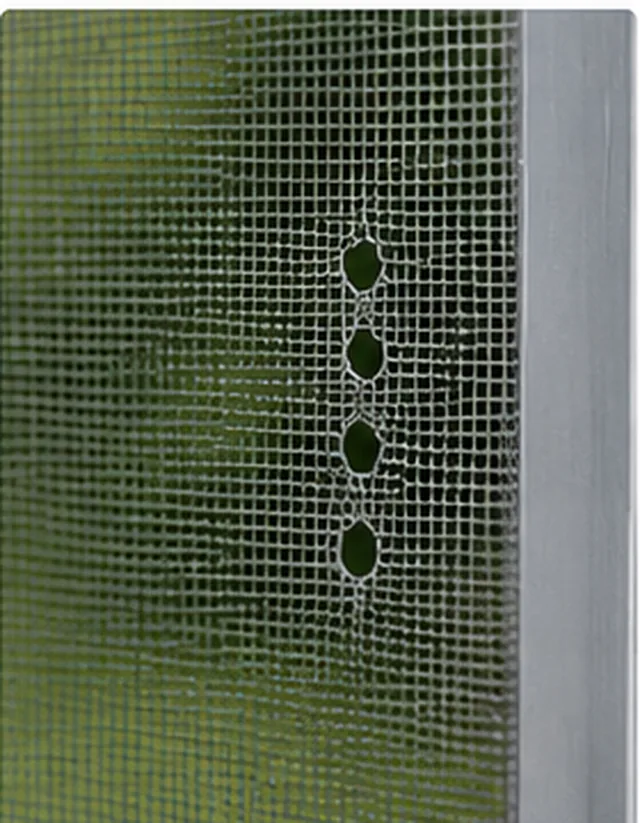 Mesh
Mesh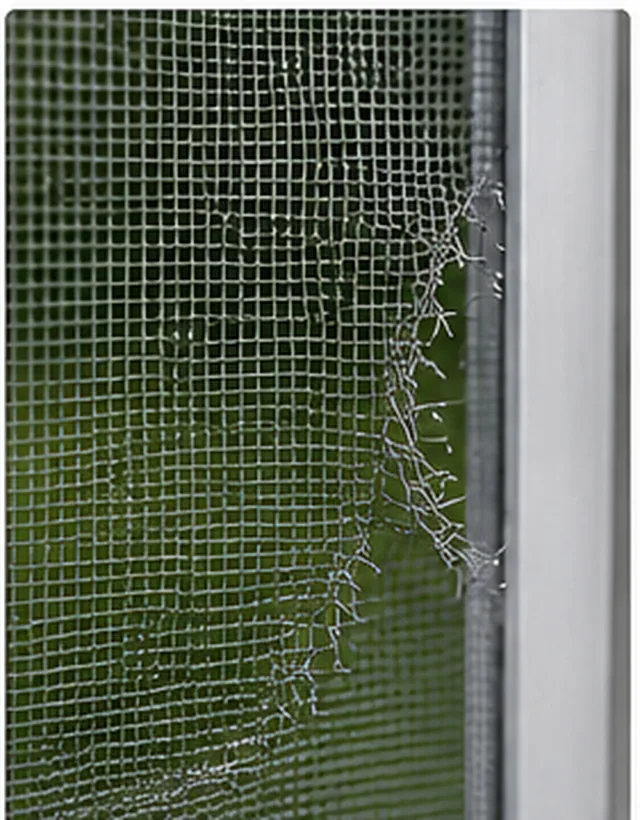 Mesh
Mesh Mesh
Mesh Mesh
Mesh Frame
FrameThis job was not in Saint-Michel — it shows our method, the same everywhere: door off its track, new rollers, new mesh, frame squared up.
 1
1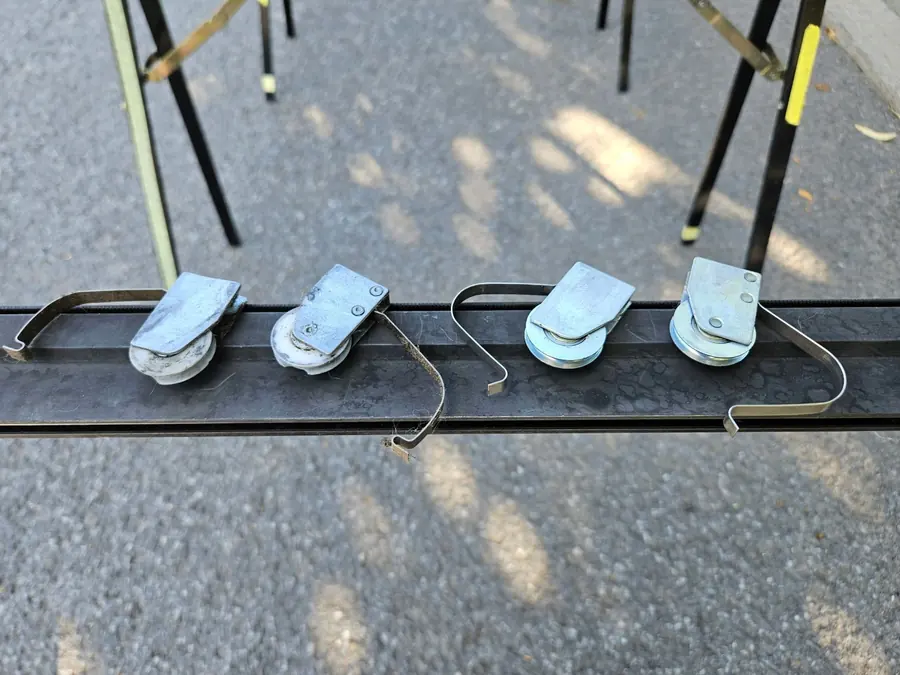 2
2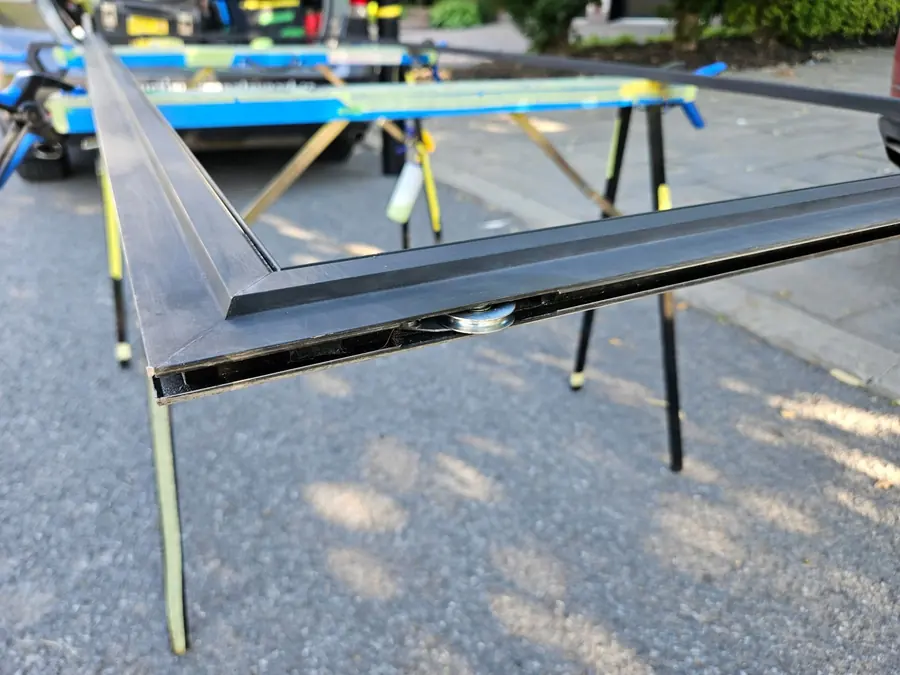 3
3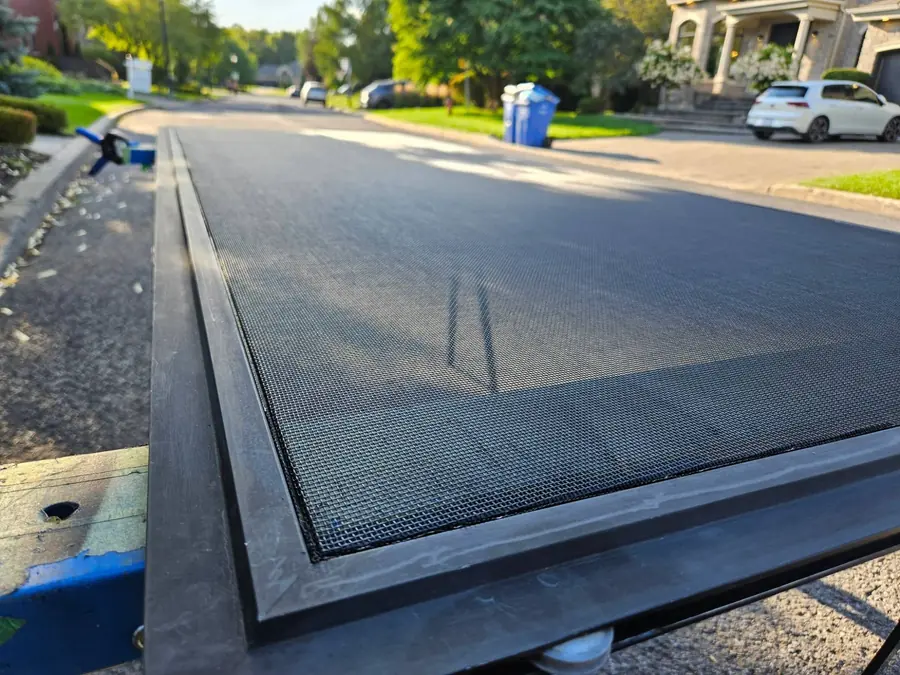 4
4« Great service! He was at my neighbour’s and agreed to fix my back screen even though we had no appointment. Very successful repair, and inexpensive! »
« Ludovic replaced my screen in record time. Professional, and with a great sense of humour. I recommend his services — don’t hesitate to contact him, he’ll come to your home and do beautiful work. »
« Excellent service. Clear explanations of the work to be done. I really appreciated his dedication: despite the rain he insisted on finishing the job, soaked through and still smiling. The work was very well done. »
Straight answers
On one point, yes: the hardware to identify belongs to the year of the work, not the year of the house. We start from the actual part rather than the age of the building. The other effect is the opening itself, which may have shifted since. We measure the diagonals of the opening before reassembling, and take up the lean on the adjustment screws rather than on the mesh.
Almost always. A panel that takes off in the wind either has a latch that no longer catches or a height that has gone wrong because the rollers have sagged, so the bolt no longer meets its keeper. We bring the panel back to the right height with new rollers, realign the latch, and the door holds itself closed again.
The track is rarely replaced. It is cleared, cleaned thoroughly and straightened where the weight of the panel has crushed it, then lubricated with a dry product that does not hold dust — a sticky grease would do exactly the opposite. Rollers, on the other hand, do not recover once that fine grit has worn them, and are replaced in the same visit.
Yes, at your home. We remove the screen door, replace the mesh or rollers on site, clean and lubricate the track, then reinstall it — usually in a single visit to Saint-Michel.
Almost always the rollers: they wear out before the mesh and push the door off its track. We replace them and clean the track in the same intervention — forcing a derailing door eventually bends the frame, a costlier repair.
Rollers and hardware: from $30. A complete custom-built screen door: from $500, depending on format. The mesh alone on a door is priced on quote, from its dimensions. An exact quote is free.
One year on fabrication and installation — mesh, fitted rollers, built frames. Damage caused afterwards, by a pet or an impact, is not covered; for a dog, pet-resistant mesh is the real answer.
Pet-resistant mesh: about seven times stronger than standard fibreglass. On a patio door used daily, it is the difference between replacing the mesh yearly and being done with it for seasons.
Do you manage a building or a business in Saint-Michel?