
Slack or torn mesh
The mesh pulls out of the spline, billows in the wind or tore at the bottom — the classic. Re-meshed in your frame, fibreglass or reinforced.
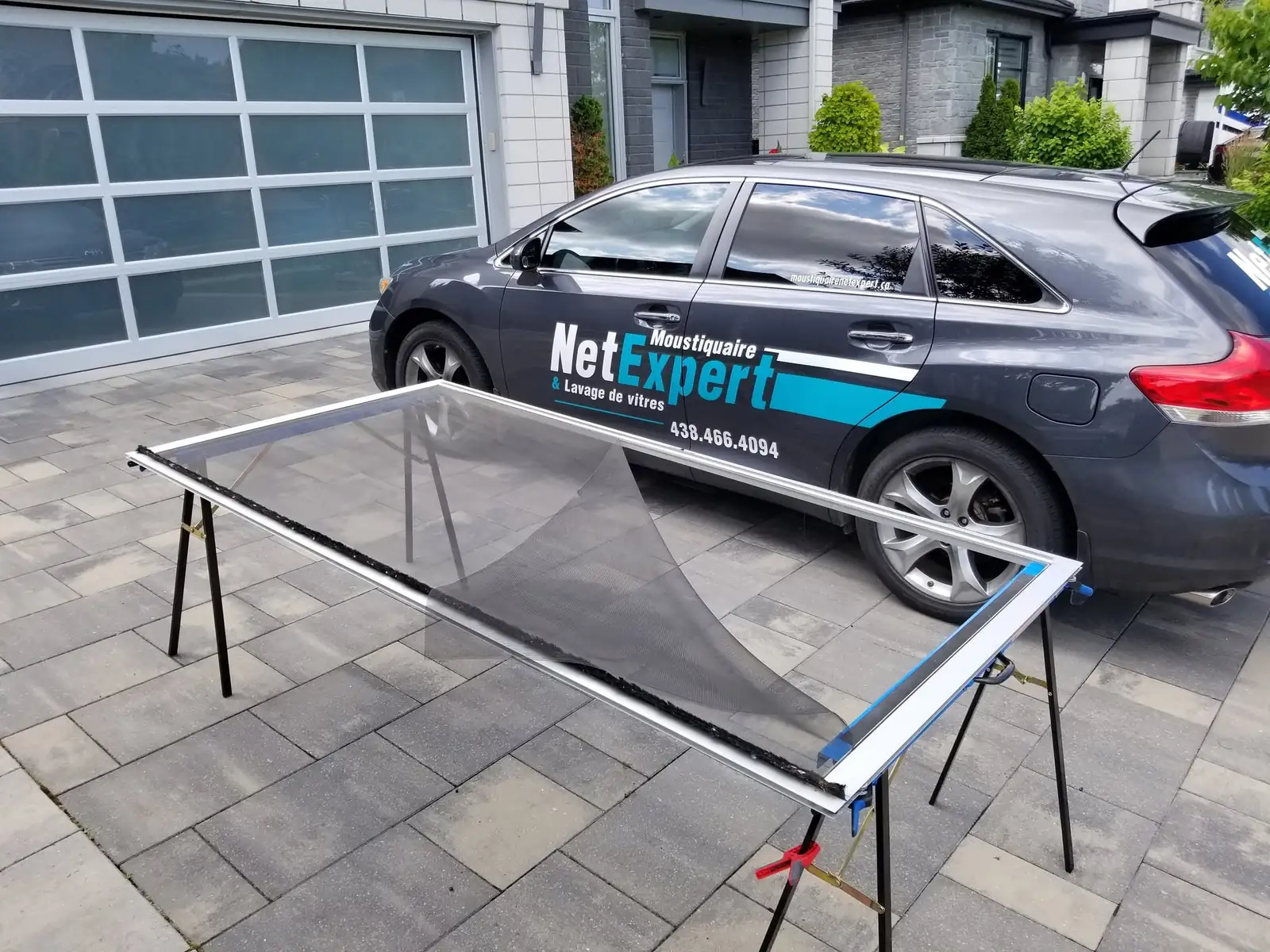
Patio door screens
Mesh, rollers, track, hardware: your screen door repaired at home in Hemmingford (Canton), usually in a single visit.
Three questions are enough to start. The official measurement is taken on site.
It is the most used screen in the house — opened and closed thousands of times a season. Four failures come up constantly, and all four are repaired on site.
The mesh pulls out of the spline, billows in the wind or tore at the bottom — the classic. Re-meshed in your frame, fibreglass or reinforced.
The door drags, jumps the track or scrapes. We replace the rollers and adjust the height — the most requested repair.
Sand, pet hair and debris jam the rolling. Cleaning, lubrication, light track straightening when needed.
The door no longer locks or the handle hangs loose. Hardware replaced, latch adjusted.
The township of Hemmingford is farm country of orchards and large farms, so a patio door there is always an addition, never original. A 19th-century stone or wood farmhouse was built with solid doors, not with a sliding glass bay. Where one exists, it belongs to an extension: an enlarged kitchen, a room added at the back, a section of gallery converted. The newer houses along the rangs of Hemmingford, on the other hand, came with theirs, in whatever formats were standard the year they were built. Those two origins put two different sets of hardware behind the same word. That is the first thing to look at: the section of the screen panel tells you which generation you are dealing with, long before mesh comes up.
The setting does the rest. A patio door out on a rang faces fields, an orchard or a farmyard, with nothing in front of it to break the wind. The screen panel is a solid surface close to seven feet tall: wind takes it like a sail, and the track and the latch absorb that. The ground supplies the other half of the problem. A gravel driveway, a dirt lane, dust lifted by fieldwork — all of it settles on the sill and ends up in the track, where it mixes with the grease on the rollers. That mixture shortens the life of a country patio door far more than sunlight does.
The result always reads in the same order. The rollers grind whatever grit they pick up, wear hollow, and stop carrying the panel at its proper height; it drops, drags on the track, and gets pushed harder to move at all. Force applied at one corner bows the frame, and a bowed frame will not hold mesh tight. So it all gets taken back at once: new rollers once the model is identified, track cleared of gravel and lubricated, frame straightened where it can be, mesh redone last. The frame is only replaced if it is twisted or split. Handle and latch are set at the end — on a door that has been binding for two summers, that is the part that has been hauled on hardest, and it usually has play in it.
On a farm, the extension patio door is often the one everybody uses: it is how people come back in from outside, hands full. It cannot sit in pieces. So the work is done on site — panel out, rescreened, reset and rehung where it stands — with the glass door still opening and locking throughout. The other thing worth settling ahead is what sits in front of it: where the extension door opens under the farmhouse's wide gallery, it is the headroom under the gallery roof that matters, because that is what decides whether the panel can be lifted out of its channel where it stands. A word about that when the appointment is set avoids an unpleasant surprise.
Two farm realities decide the mesh here. If there is a dog, or barn cats coming and going, animal-resistant mesh is the only weave that survives a claw and a nose pressing on the same spot every day — on a patio door it is always the bottom of the panel that goes first. On a wide door standing full into the wind off the fields, aluminum holds its plane where fibreglass eventually ripples. Standard fibreglass is perfectly adequate for a door sheltered by a gallery roof.
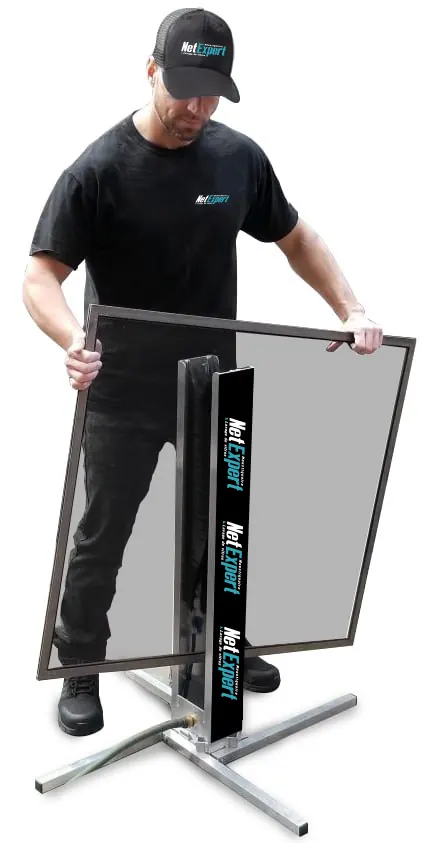
A patio door opens and closes more often than every window in the house combined — and it is the one the dog noses open and the cat climbs. Standard fibreglass mesh suits a lightly used door; for the others, we fit reinforced mesh, about seven times stronger, or pet-resistant mesh built for claws.
The extra cost is measured in tens of dollars; the yearly replacement it prevents, in hundreds. We carry both types in the vehicle — the decision can happen on the spot, with the door off its track in front of you.
Ten kinds of damage, one answer
If your screen looks like any of these, it can be repaired. Tap one to request a quote for that exact damage. We rarely replace a whole frame — in most cases only the mesh needs redoing.
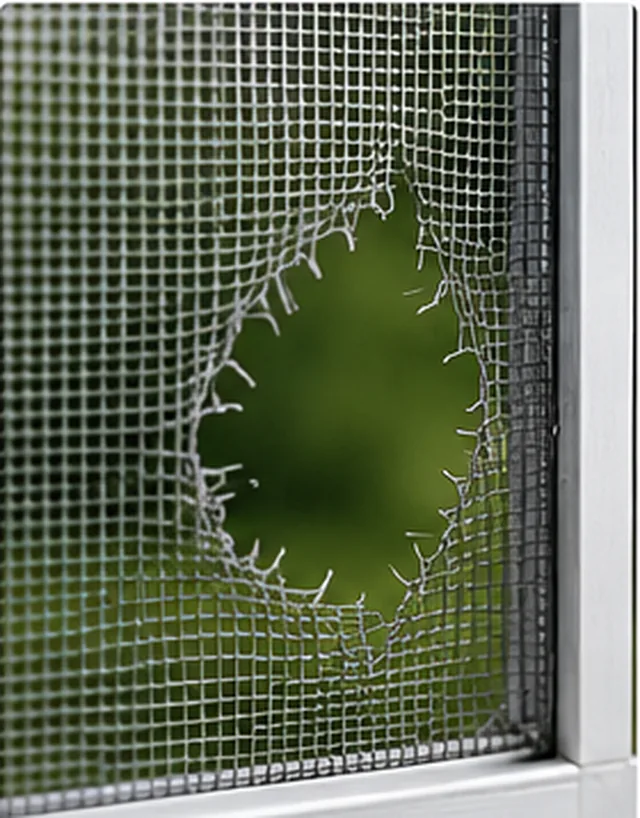 Mesh
Mesh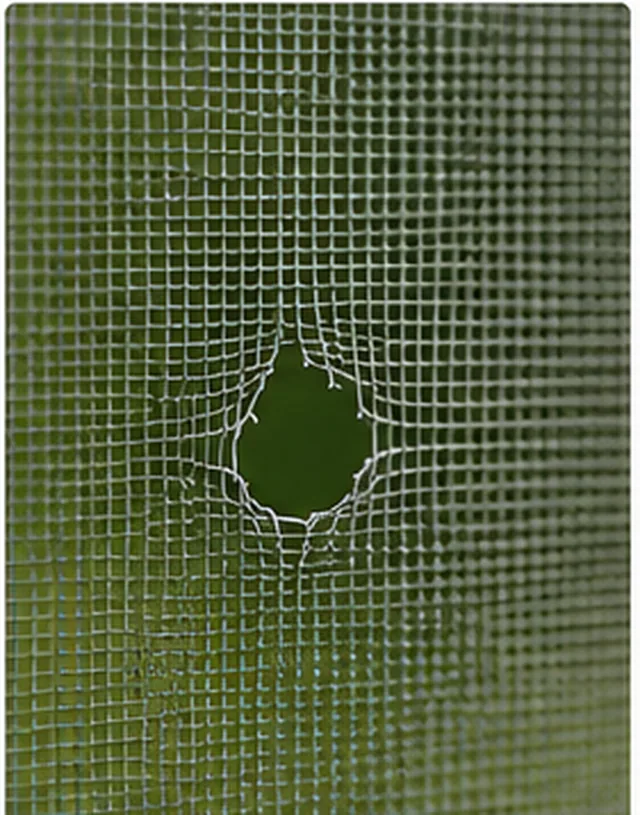 Mesh
Mesh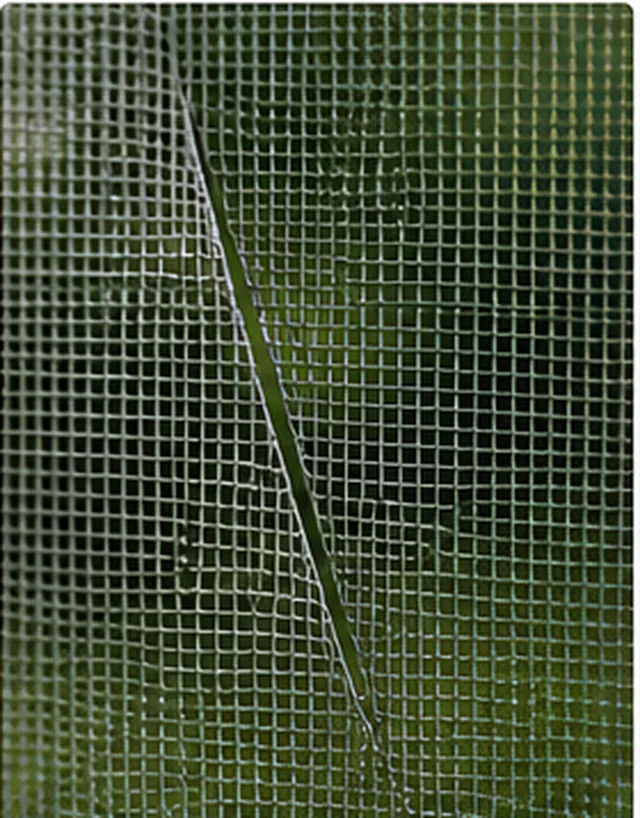 Mesh
Mesh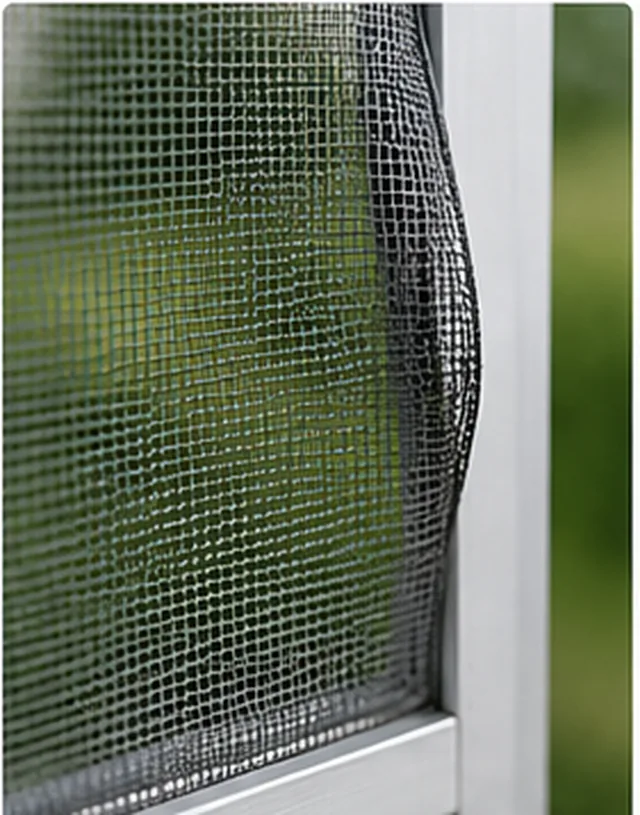 Mesh
Mesh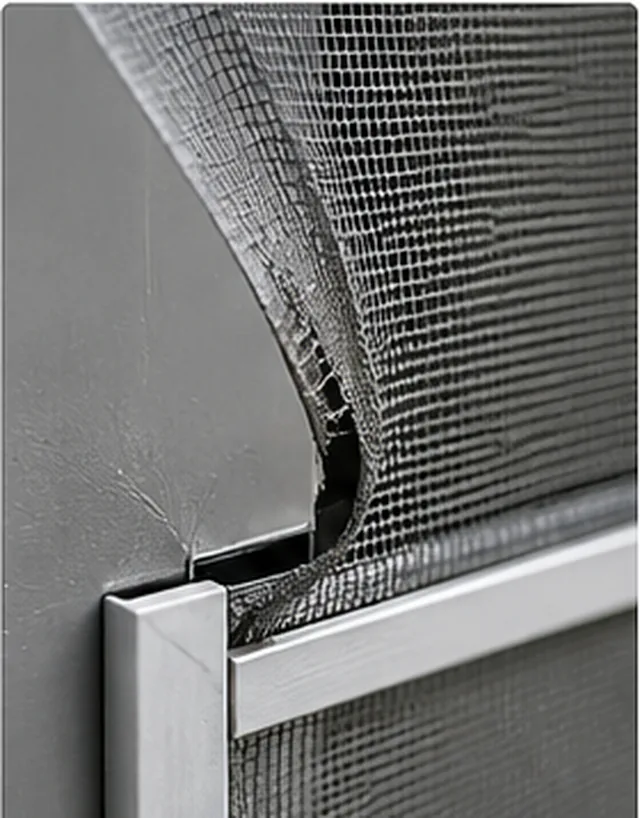 Mesh
Mesh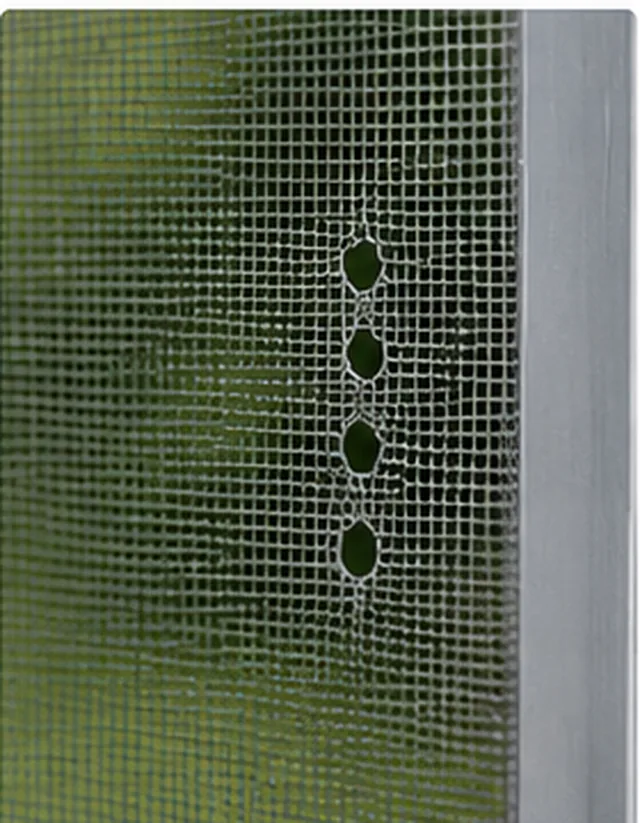 Mesh
Mesh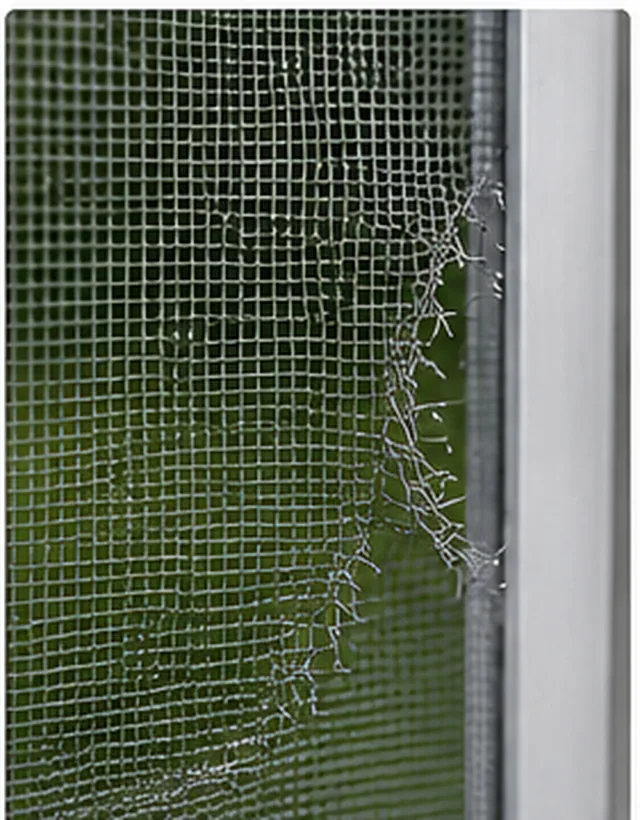 Mesh
Mesh Mesh
Mesh Mesh
Mesh Frame
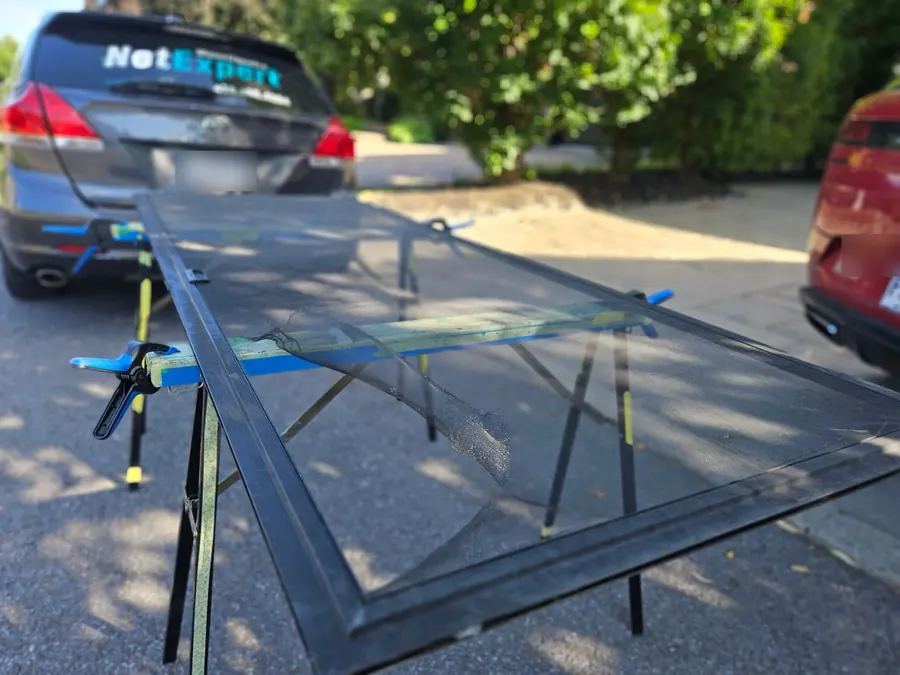
FrameThis job was not in Hemmingford (Canton) — it shows our method, the same everywhere: door off its track, new rollers, new mesh, frame squared up.
 1
1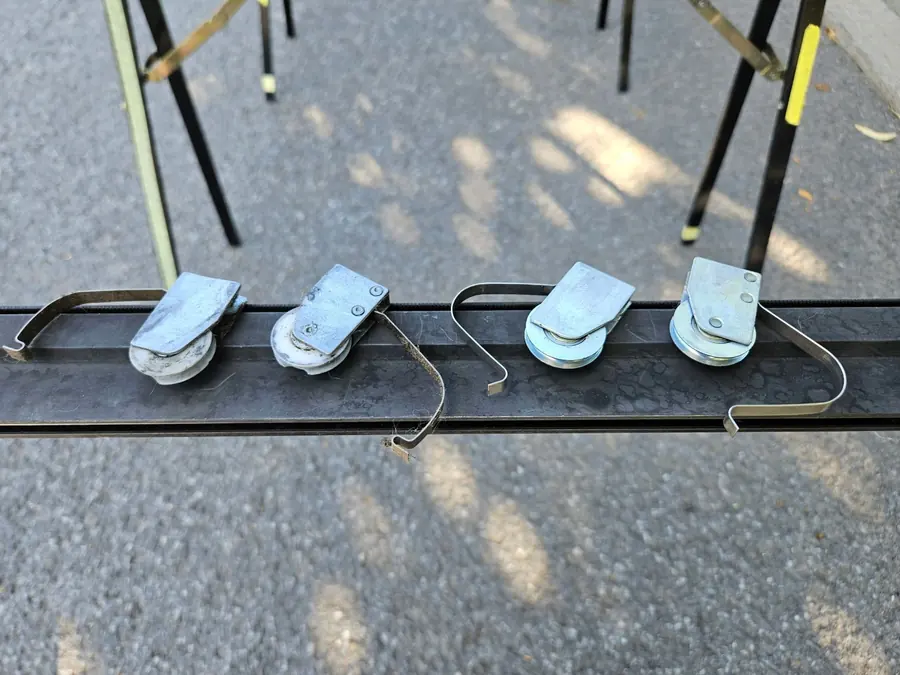 2
2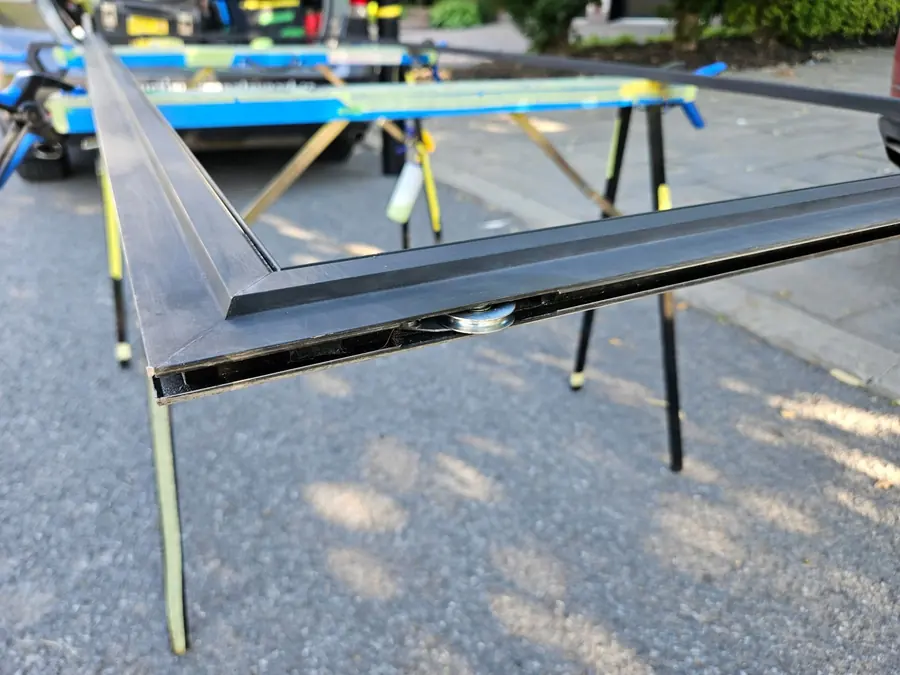 3
3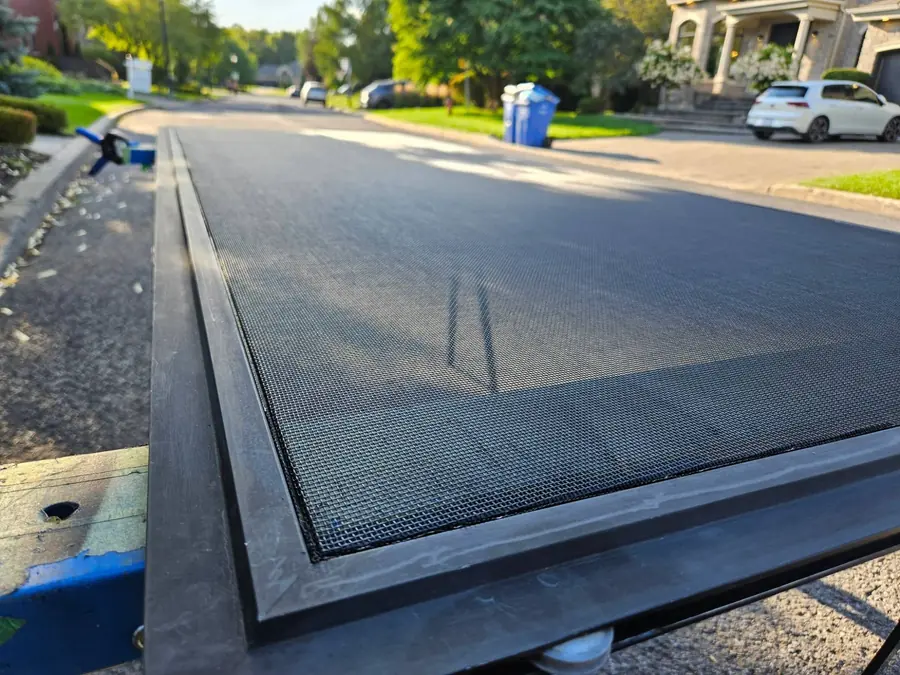 4
4« Great service! He was at my neighbour’s and agreed to fix my back screen even though we had no appointment. Very successful repair, and inexpensive! »
« Ludovic replaced my screen in record time. Professional, and with a great sense of humour. I recommend his services — don’t hesitate to contact him, he’ll come to your home and do beautiful work. »
« Excellent service. Clear explanations of the work to be done. I really appreciated his dedication: despite the rain he insisted on finishing the job, soaked through and still smiling. The work was very well done. »
Straight answers
Rarely. What fails on a door that age is the rollers, the track and the mesh, not the glass door. The aluminum screen panel of that generation is rescreened inside its existing frame, and rollers are matched once the mechanism is identified on site. A new frame only comes up if the old one is twisted or split past straightening.
Yes, and mostly through maintenance. The channel gets emptied, brushed out dry, then lubricated with something that does not hold dust — heavy grease is worse than nothing at the end of a gravel drive. Rollers are chosen accordingly. Rescreening without touching the track just pushes the problem out one season.
No: it is the screen panel that comes out, not the glass door. The glass door keeps opening and locking the whole time. The panel lifts out of its channel, gets rescreened and goes back adjusted on site; if the roller model for that door is not on the van, that one part calls for a return trip, and we say so before starting. Nothing leaves for a shop, and nothing is left open behind us.
Yes, at your home. We remove the screen door, replace the mesh or rollers on site, clean and lubricate the track, then reinstall it — usually in a single visit to Hemmingford (Canton).
Almost always the rollers: they wear out before the mesh and push the door off its track. We replace them and clean the track in the same intervention — forcing a derailing door eventually bends the frame, a costlier repair.
Rollers and hardware: from $30. A complete custom-built screen door: from $500, depending on format. The mesh alone on a door is priced on quote, from its dimensions. An exact quote is free.
One year on fabrication and installation — mesh, fitted rollers, built frames. Damage caused afterwards, by a pet or an impact, is not covered; for a dog, pet-resistant mesh is the real answer.
Pet-resistant mesh: about seven times stronger than standard fibreglass. On a patio door used daily, it is the difference between replacing the mesh yearly and being done with it for seasons.
Do you manage a building or a business in Hemmingford (Canton)?