
Slack or torn mesh
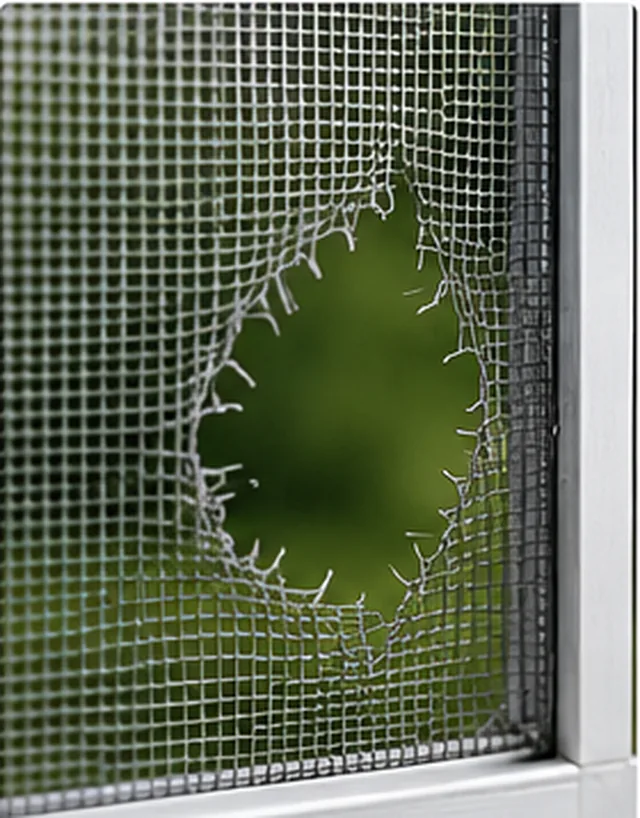
The mesh pulls out of the spline, billows in the wind or tore at the bottom — the classic. Re-meshed in your frame, fibreglass or reinforced.
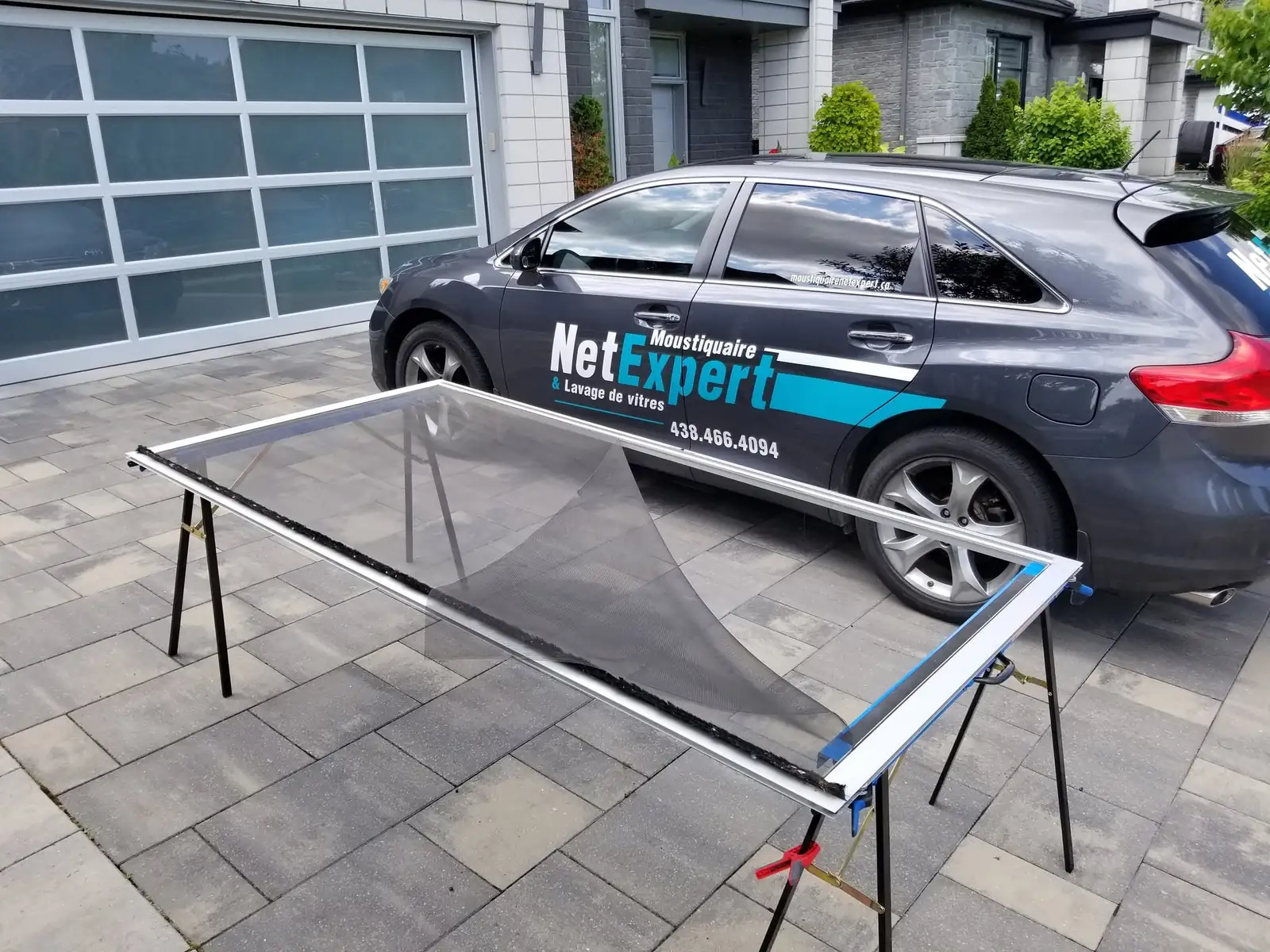
Patio door screens
Mesh, rollers, track, hardware: your screen door repaired at home in Châteauguay, usually in a single visit.
Three questions are enough to start. The official measurement is taken on site.
It is the most used screen in the house — opened and closed thousands of times a season. Four failures come up constantly, and all four are repaired on site.
The mesh pulls out of the spline, billows in the wind or tore at the bottom — the classic. Re-meshed in your frame, fibreglass or reinforced.
The door drags, jumps the track or scrapes. We replace the rollers and adjust the height — the most requested repair.
Sand, pet hair and debris jam the rolling. Cleaning, lubrication, light track straightening when needed.
The door no longer locks or the handle hangs loose. Hardware replaced, latch adjusted.
Along the Châteauguay River, the old summer cottages converted into year-round homes have almost all acquired a patio door, but rarely when they were first built. It came with the conversion: an extension, a closed-in porch, a wall pushed back to open the room toward the water. So it sits in framing that was never designed for it, at a height and width decided on the job site. Its screen panel follows those dimensions, which is exactly what makes it impossible to find in a store when it needs replacing. A single house can carry two patio doors from two eras — one in 1970s aluminum, the other in PVC from the latest renovation — with two roller systems that have nothing in common.
Farther from the riverbank, the post-war suburb unrolls its bungalows and split-levels from 1960 to 1985. There the sliding door is an original feature: narrow aluminum frame, screen panel in the same profile, rollers of a period model. In the split-levels it opens on the living-room level, onto a wooden deck that makes up the height of the lot. To the west, in the newer residential sectors, the door is PVC in common sizes, with a light panel and hardware that is replaced without a search. From one sector to the next, the same city therefore lines up three different roller systems, and it is the model recorded on site, not the brand of the door, that decides which part fits.
On the original doors of the bungalows and split-levels, the first failure is mechanical: the roller wears, the panel sags, scrapes the track, then racks because someone forced it. The fix is complete or it is nothing: correct-model rollers, track cleaned and lubricated, frame straightened, new mesh tensioned in the same visit. On the old cottages, the trouble often traces back to the installation: a door set into framing that has since settled is no longer square, so the screen panel rubs at the top on one side and leaves a gap at the bottom on the other. We adjust the rollers to compensate for what can be compensated, and rebuild the panel to the track’s real dimensions when the original frame can no longer keep up. In the newer sectors the mesh goes first, at a corner or under the dog’s claw; the PVC frame stays sound.
The challenge in Châteauguay is that there is no typical patio door. A converted-cottage door may be shorter than standard because it was fitted under an existing beam, or narrower because it took the place of a kitchen door. A split-level door has a panel taller than today’s sizes. A door in a newer sector is a common size. So nothing gets ordered in advance: we measure the track, the clear height and the squareness right at the door, and when a new frame is needed it is built to those numbers. Access is from the deck or from inside — there is never any need to work around a closed-in porch.
A patio door opening onto the river takes the damp and the wind off the water; on a large exposed door, aluminum mesh keeps its tension where soft fibreglass sags. The riverbank’s no-see-ums pass straight through a standard weave: if the door opens onto a riverside deck where you want to eat in the evening, tight-weave mesh is the only real remedy, at the cost of a little airflow. Wherever a dog or a cat goes through the door, pet-resistant mesh comes before everything else. In the sheltered yards of the newer sectors, standard fibreglass is enough.
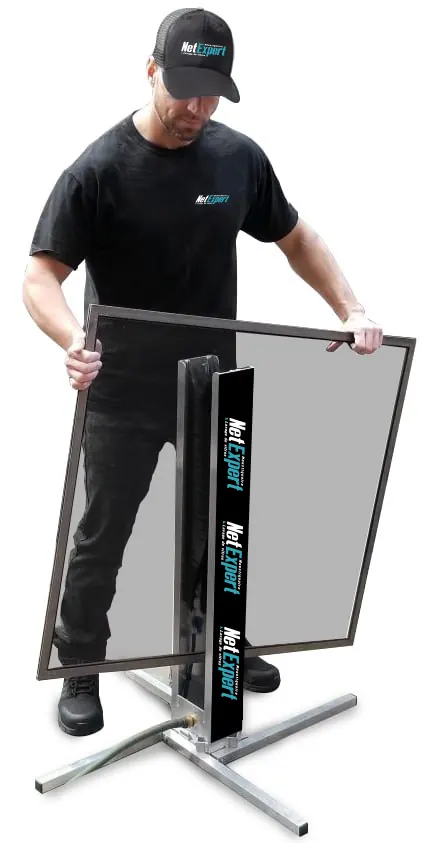
A patio door opens and closes more often than every window in the house combined — and it is the one the dog noses open and the cat climbs. Standard fibreglass mesh suits a lightly used door; for the others, we fit reinforced mesh, about seven times stronger, or pet-resistant mesh built for claws.
The extra cost is measured in tens of dollars; the yearly replacement it prevents, in hundreds. We carry both types in the vehicle — the decision can happen on the spot, with the door off its track in front of you.
Ten kinds of damage, one answer
If your screen looks like any of these, it can be repaired. Tap one to request a quote for that exact damage. We rarely replace a whole frame — in most cases only the mesh needs redoing.
 Mesh
Mesh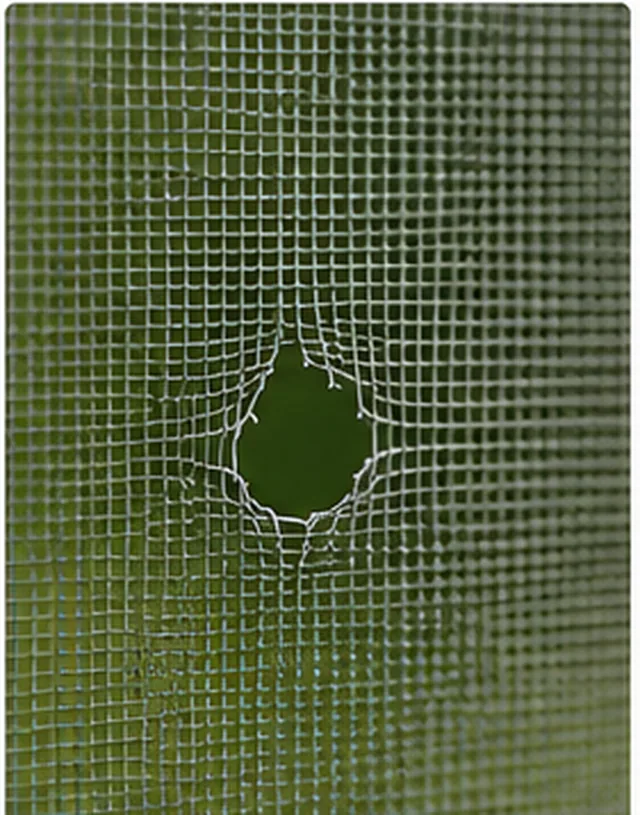 Mesh
Mesh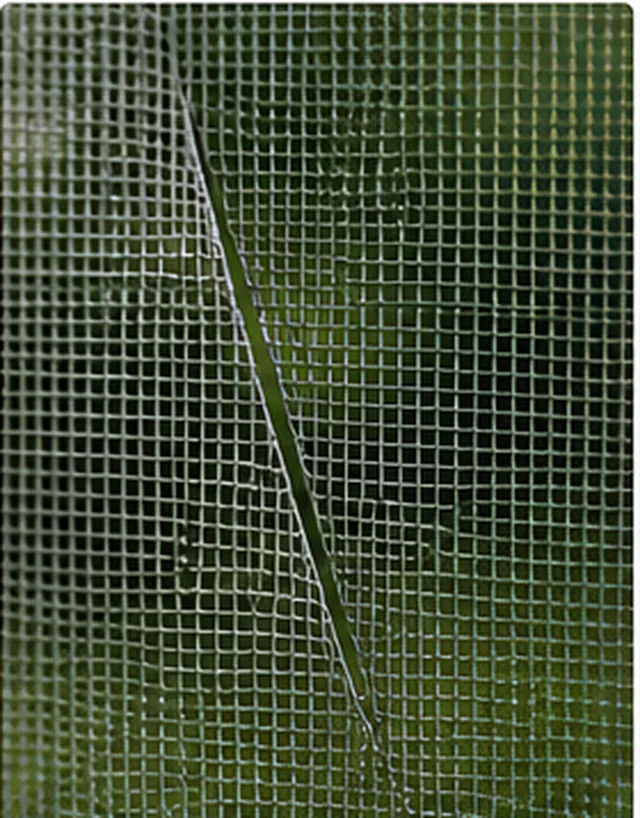 Mesh
Mesh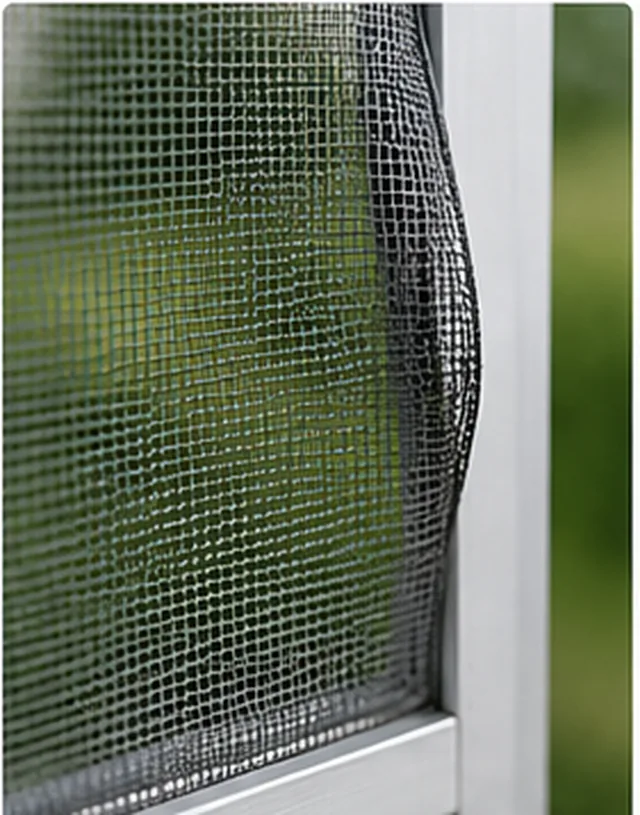 Mesh
Mesh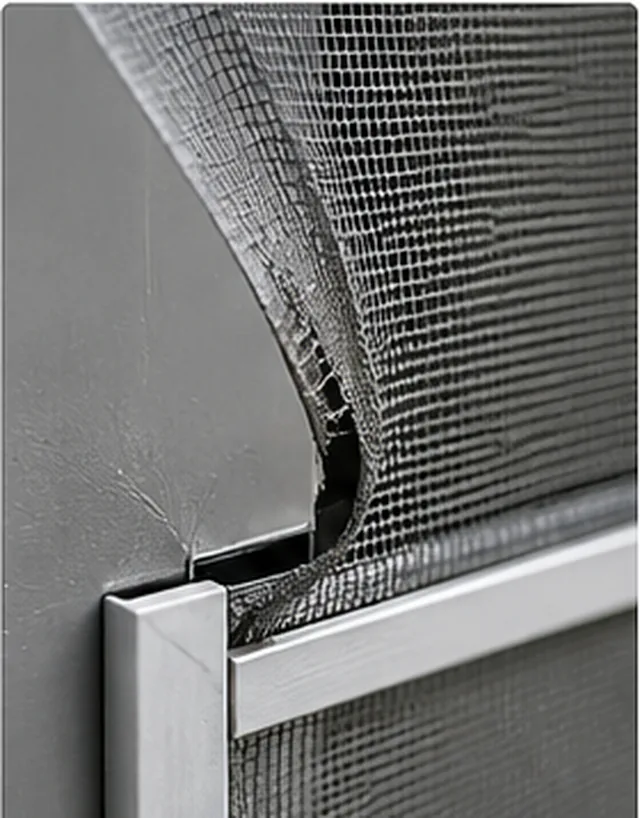 Mesh
Mesh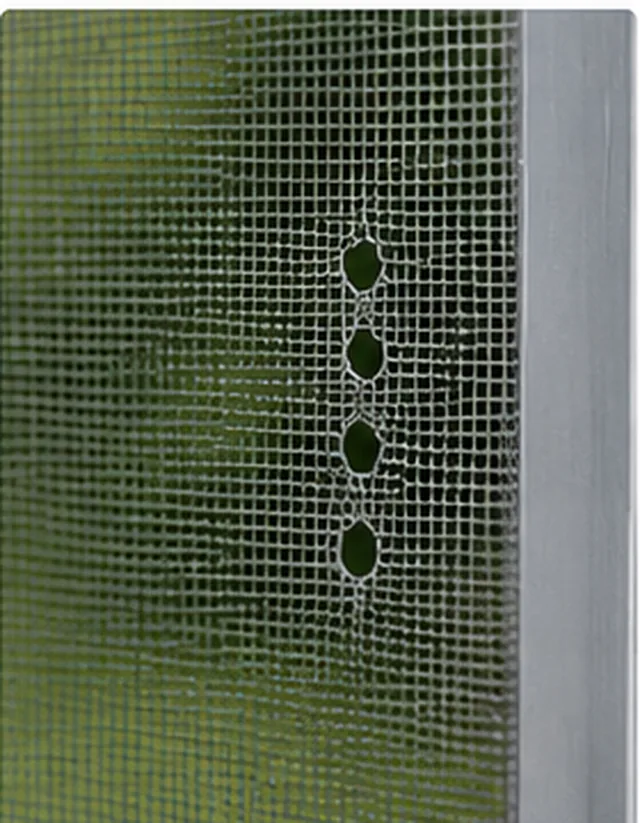 Mesh
Mesh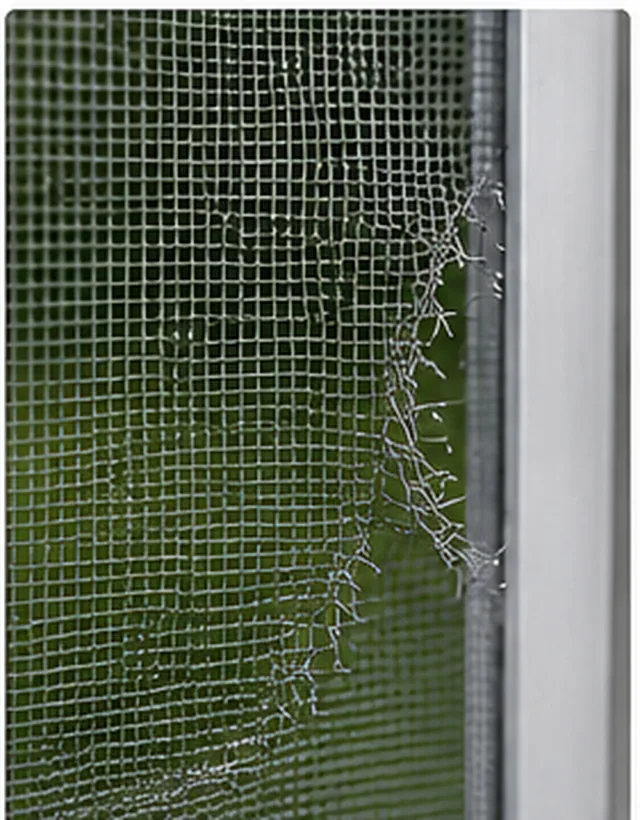 Mesh
Mesh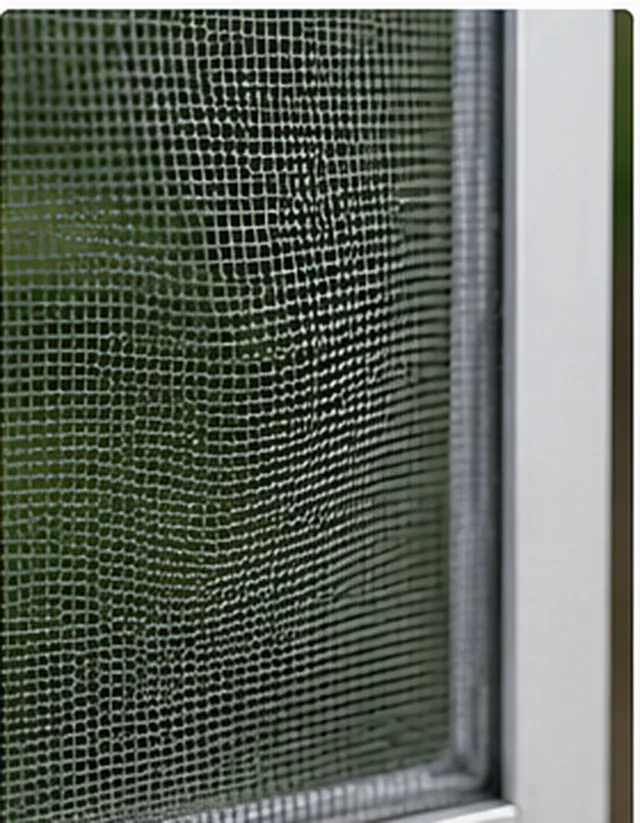 Mesh
Mesh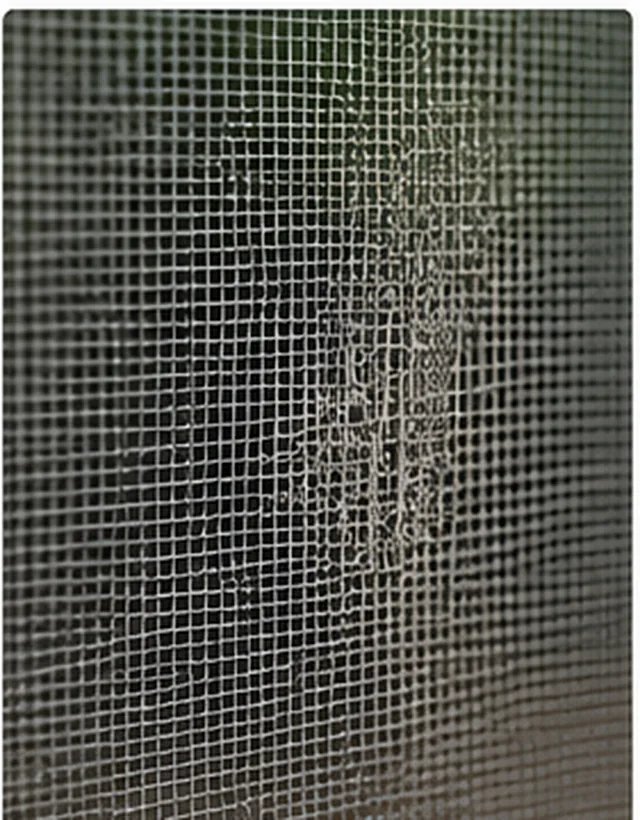 Mesh
Mesh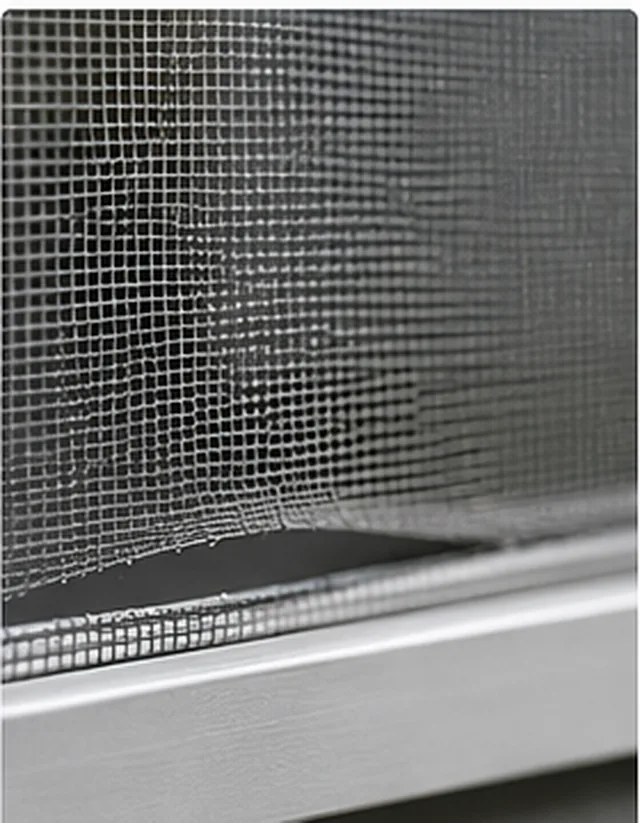 Frame
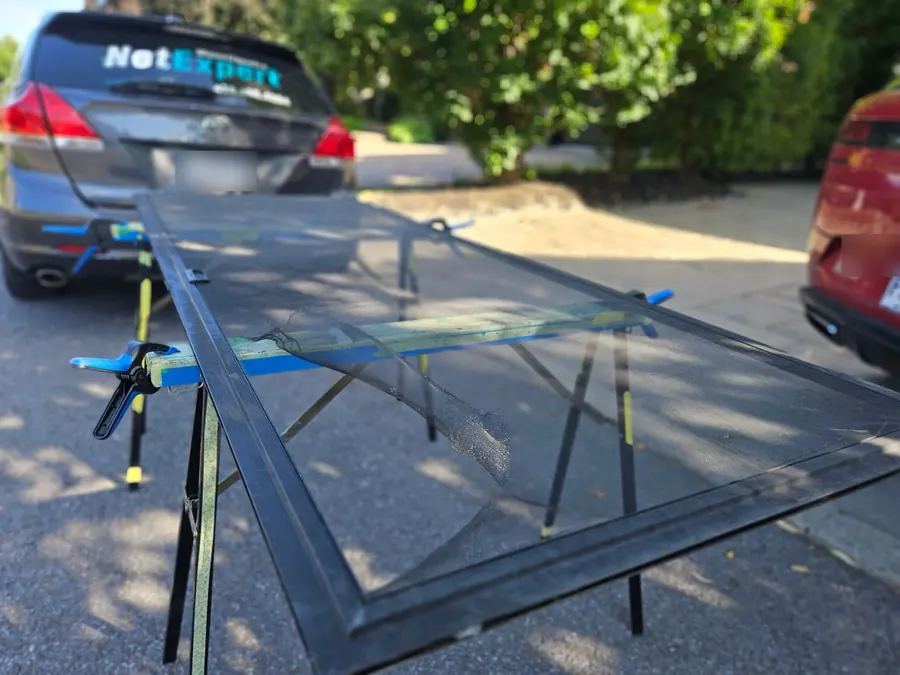
FrameThis job was not in Châteauguay — it shows our method, the same everywhere: door off its track, new rollers, new mesh, frame squared up.
 1
1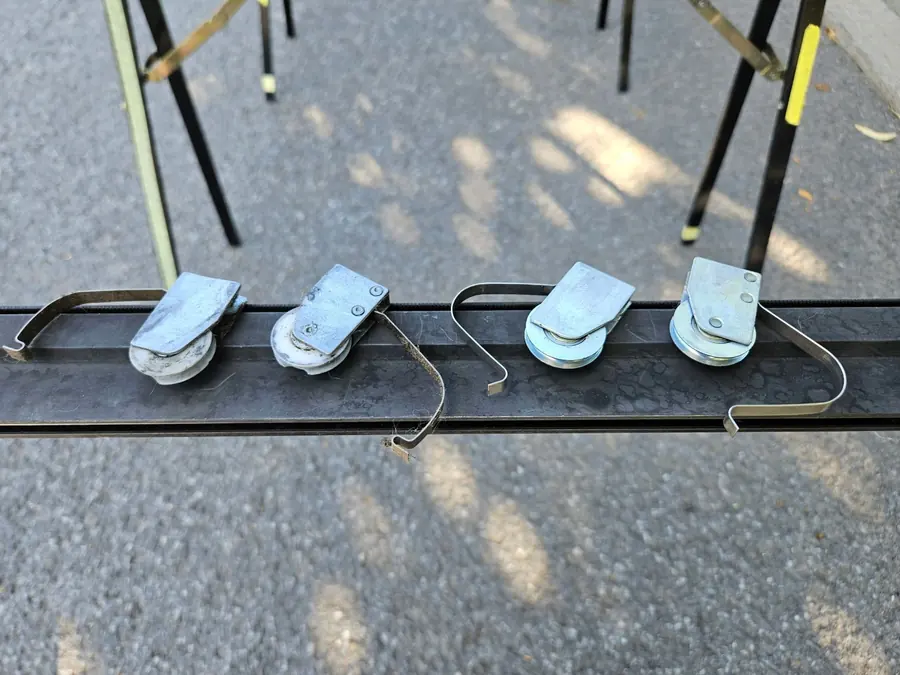 2
2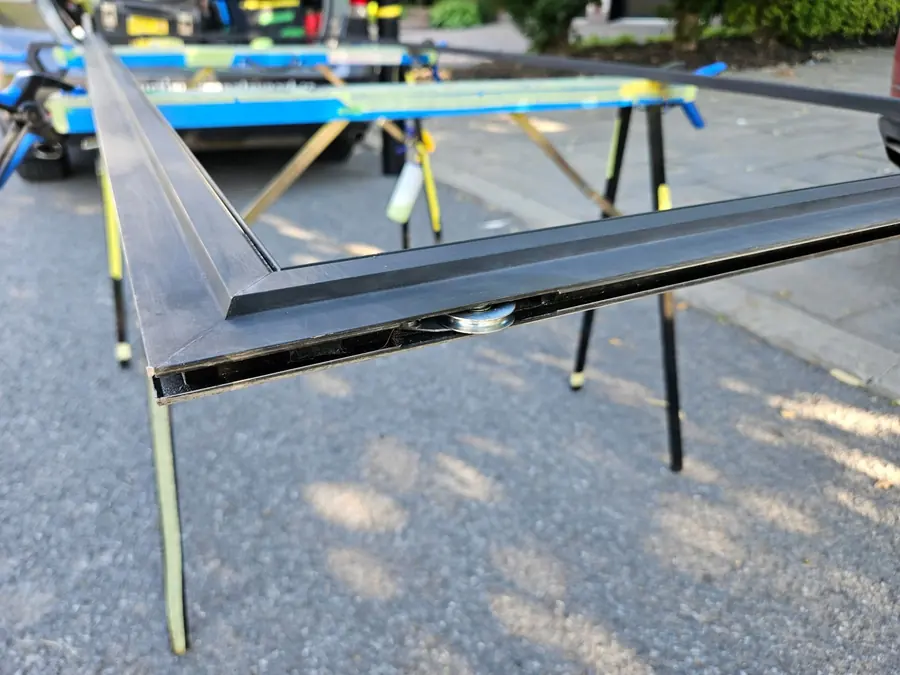 3
3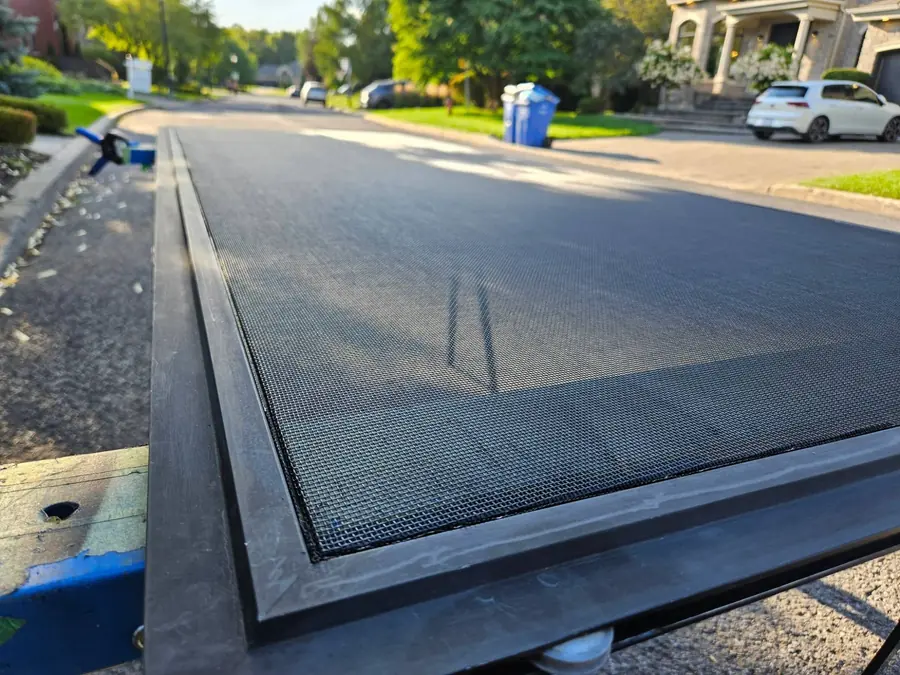 4
4« Great service! He was at my neighbour’s and agreed to fix my back screen even though we had no appointment. Very successful repair, and inexpensive! »
« Ludovic replaced my screen in record time. Professional, and with a great sense of humour. I recommend his services — don’t hesitate to contact him, he’ll come to your home and do beautiful work. »
« Excellent service. Clear explanations of the work to be done. I really appreciated his dedication: despite the rain he insisted on finishing the job, soaked through and still smiling. The work was very well done. »
Straight answers
We do not find one, we make one. A door fitted under a beam or into an extension has its own size, and its panel is built to measurements taken on site: track width, clear height, groove depth, and the diagonals if the frame has shifted. If an original panel survives and is still straight, we rescreen it and replace its hardware rather than build a new one.
First of all it is a panel that is no longer level: one roller has compressed more than the other, or the adjustment has drifted. We take the panel out, replace both rollers with the right model, set them to the same height and check that the panel seats against the jamb along its full length. The frame is only replaced if it is cracked at a corner or bent beyond straightening.
No. It is common on old cottages enlarged in stages: a 1970s aluminum door and a recent PVC one, with rollers that have nothing to do with each other. Both come apart, get rescreened and go back together in the same call. What we do before starting is identify each roller model, because no single part fits both doors.
Yes, at your home. We remove the screen door, replace the mesh or rollers on site, clean and lubricate the track, then reinstall it — usually in a single visit to Châteauguay.
Almost always the rollers: they wear out before the mesh and push the door off its track. We replace them and clean the track in the same intervention — forcing a derailing door eventually bends the frame, a costlier repair.
Rollers and hardware: from $30. A complete custom-built screen door: from $500, depending on format. The mesh alone on a door is priced on quote, from its dimensions. An exact quote is free.
One year on fabrication and installation — mesh, fitted rollers, built frames. Damage caused afterwards, by a pet or an impact, is not covered; for a dog, pet-resistant mesh is the real answer.
Pet-resistant mesh: about seven times stronger than standard fibreglass. On a patio door used daily, it is the difference between replacing the mesh yearly and being done with it for seasons.
Do you manage a building or a business in Châteauguay?