
Summer UV
Sun yellows and clouds the vinyl. Film that crackles to the touch is at end of life.
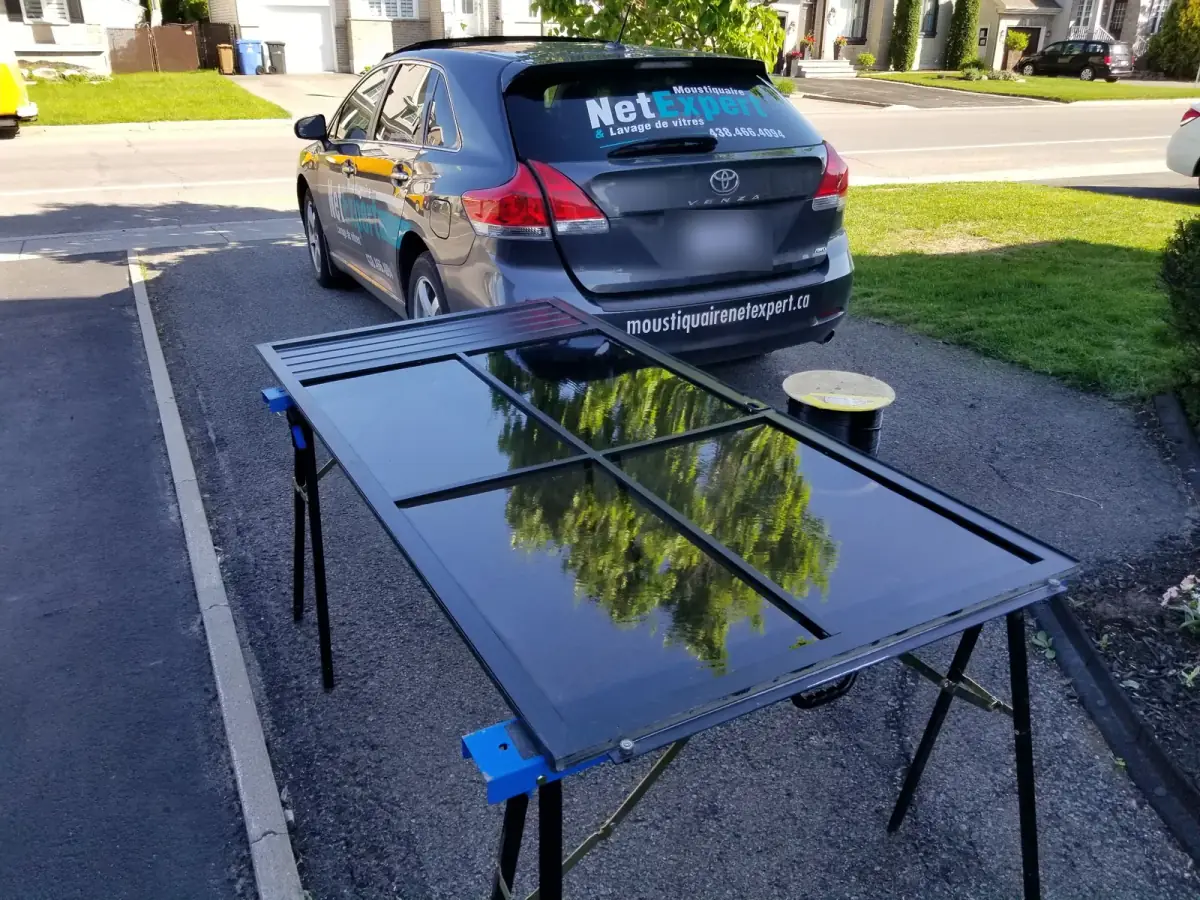
Gazebo and sun shelter specialty
Clear vinyl yellowed or torn? Replaced at your home in Sorel-Tracy, in the original frames — gazebos and sun shelters.
Three questions are enough to start. The official measurement is taken on site.
Whatever your retailer calls it — MICA film, clear vinyl, clear plastic, sun-shelter transparent fabric — it is the same material, and we replace it in Sorel-Tracy in your existing panels.
Sun yellows and clouds the vinyl. Film that crackles to the touch is at end of life.
Below freezing, MICA turns brittle — one handling or one gust splits it outright.
Slack vinyl flaps like a sail and eventually tears at the seams.
On the Tracy side, the streets of bungalows built between 1950 and 1970 for the plant workers have deep, flat backyards, often wide open — the natural home of the store-bought gazebo. An aluminum or steel frame out of a box, standard-size panels, set on the patio or on slabs at the back of the lot. Many of those gazebos have outlived their panels: the original clear vinyl has been through several winters, the screens have been taken down and put back every season, and the frames are starting to show the knocks. A Tracy bungalow yard usually leaves enough room to lay a panel flat on the grass and rebuild it right there, which makes every step simpler.
Old Sorel is another matter. Duplexes and flat-roofed houses, fronts tight to the street, short backyards closed in by fences or neighbouring walls. A gazebo there is rarely a standard one: when there is one, it is often an added structure in wood, built between two fences to the size of the lot, or a pergola dressed with panels cut to measure. Those panels are one of a kind and get measured on site, opening by opening. The flat roofs of these houses sometimes double as terraces, and a light gazebo may have gone up there: its panels then travel up and down through the house, one at a time, and get rebuilt on the roof.
On a store-bought gazebo of the kind that goes up in the Tracy bungalow yards, the clear vinyl (MICA film) is what gives first: full sun yellows and stiffens it, cold makes it brittle, then a gust splits it along a corner or a seam. The screen goes later — a tear at the corner where the mesh tucks under the spline, sagging in the middle of the big panels, a spline popping out of its groove. All of it happens at ground level in the yard itself: the panel laid flat, the pane measured where it lies, the vinyl trimmed to it and the mesh brought back to tension in its own frame — what an open bungalow yard allows and a cramped one does not. An aluminum frame that has been knocked out of square gets straightened before it is refilled. The structure itself is never touched.
Two kinds of structure, two ways of working. A store-bought gazebo comes apart panel by panel: the frames unclip or unscrew from the structure, get rebuilt at the mobile workshop in the yard, and go back up. A permanent wood structure in Old Sorel does not come apart the same way: its panels are screwed or nailed into openings that are not all square, and each opening is measured at all four corners before anything is cut. Access weighs in too — in the old quarter the yard is reached through a narrow passage or through the house, and a gazebo panel is long and fragile to steer down a hallway.
A port town is a windy town, and wind is the first enemy of clear vinyl. In a Tracy yard open to the neighbours, with no mature hedge, the film slaps against its frame at every gust and gives at the corner; pulled tight in a sound frame, it holds far better than a loose sheet ever will. The full sun on those treeless yards also yellows the vinyl and weakens the fibreglass of the screens. A tight-weave mesh earns its place as soon as a wet ditch or a stand of trees is nearby, and aluminum mesh holds its tension better on big panels facing the wind.
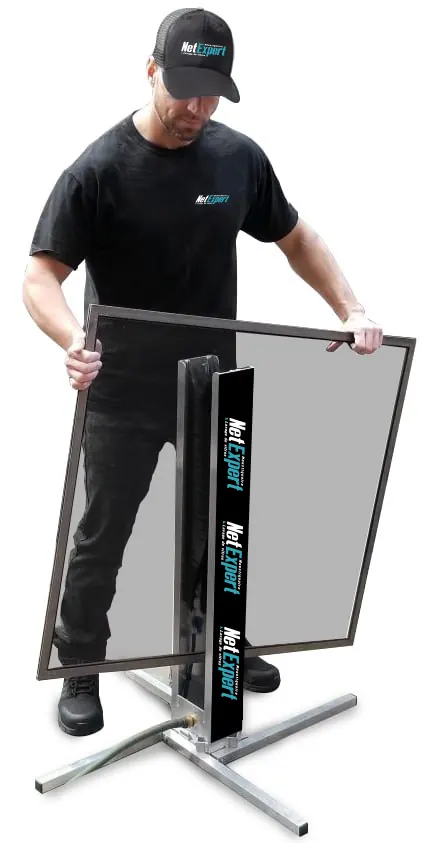
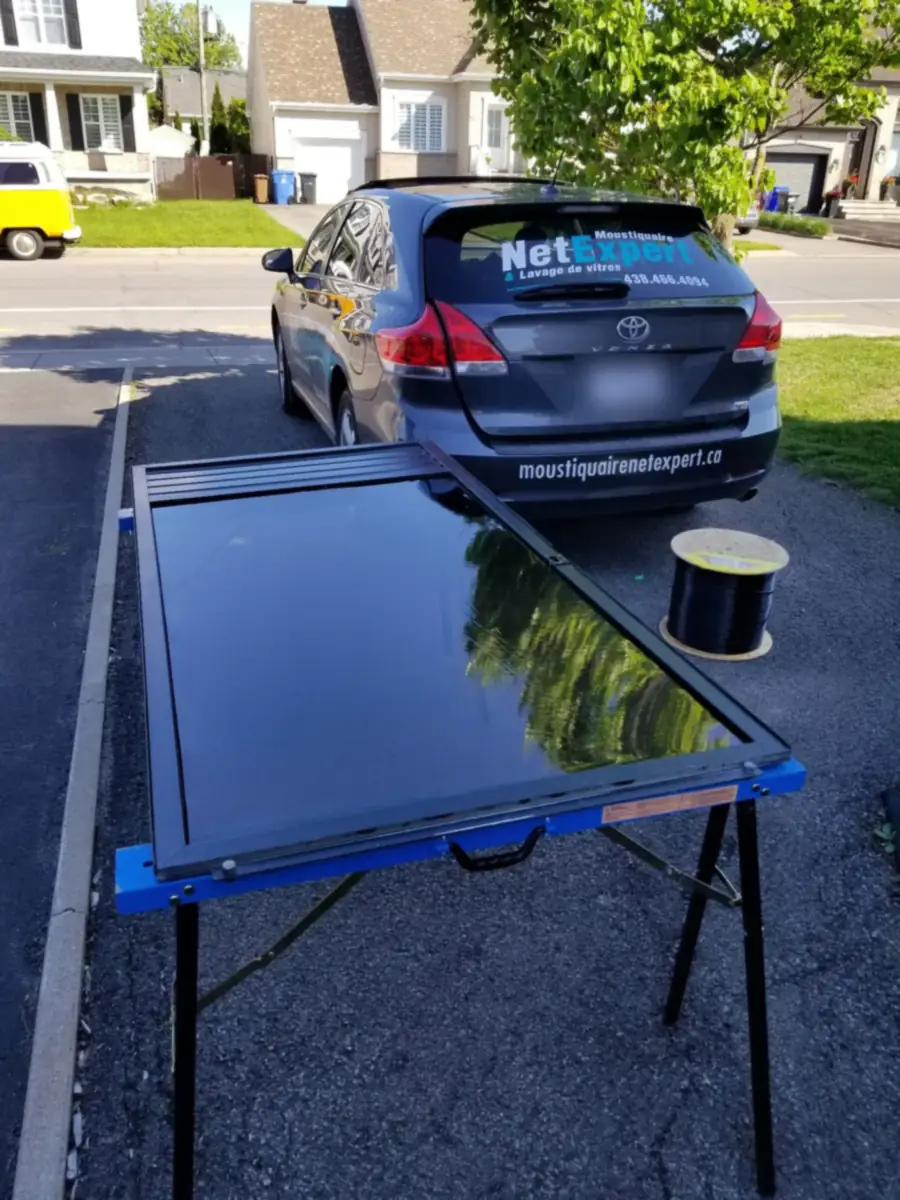
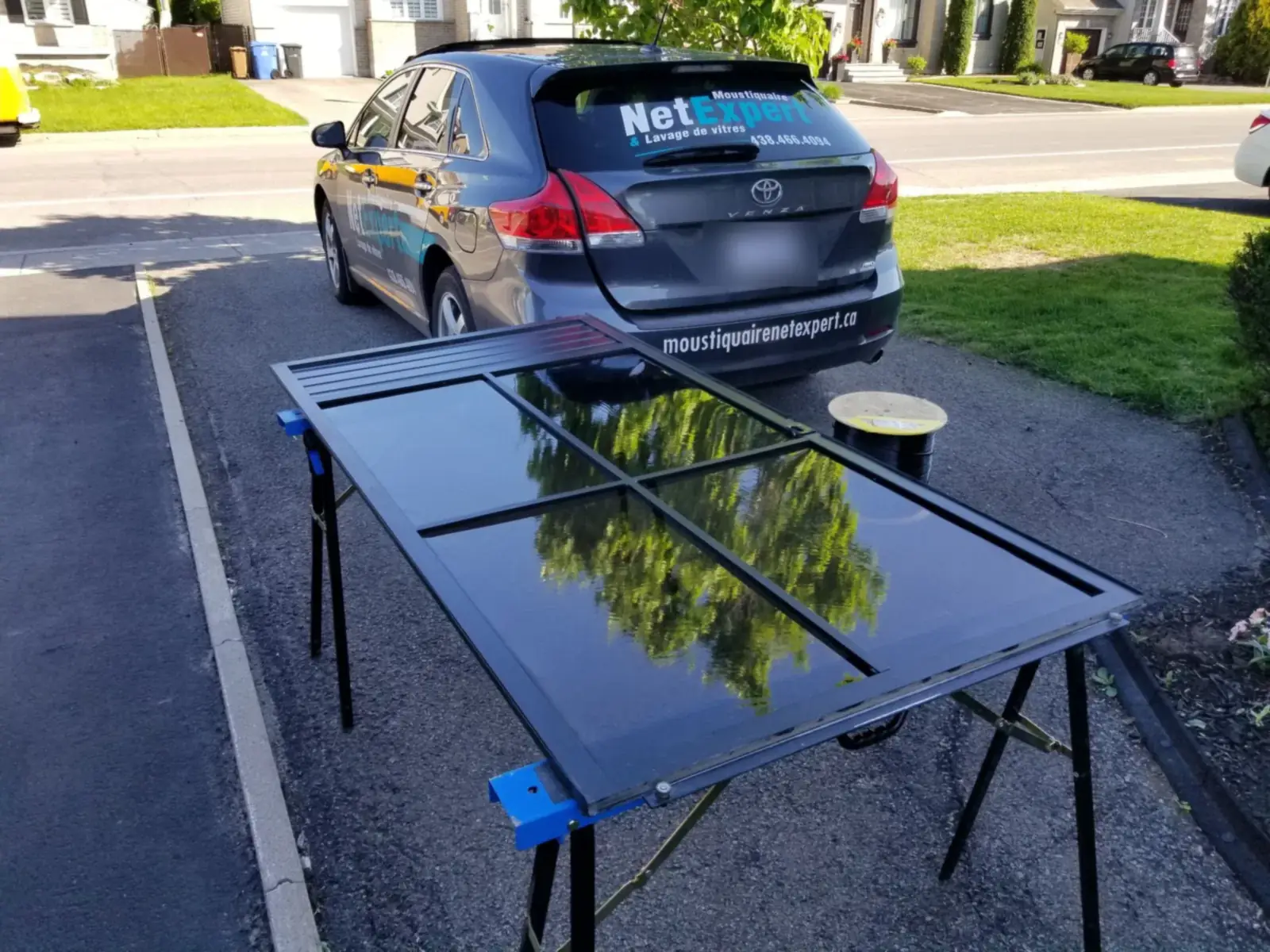
This job was not in Sorel-Tracy — it shows our method, the same everywhere: panels down, new vinyl pane by pane, panels back up.
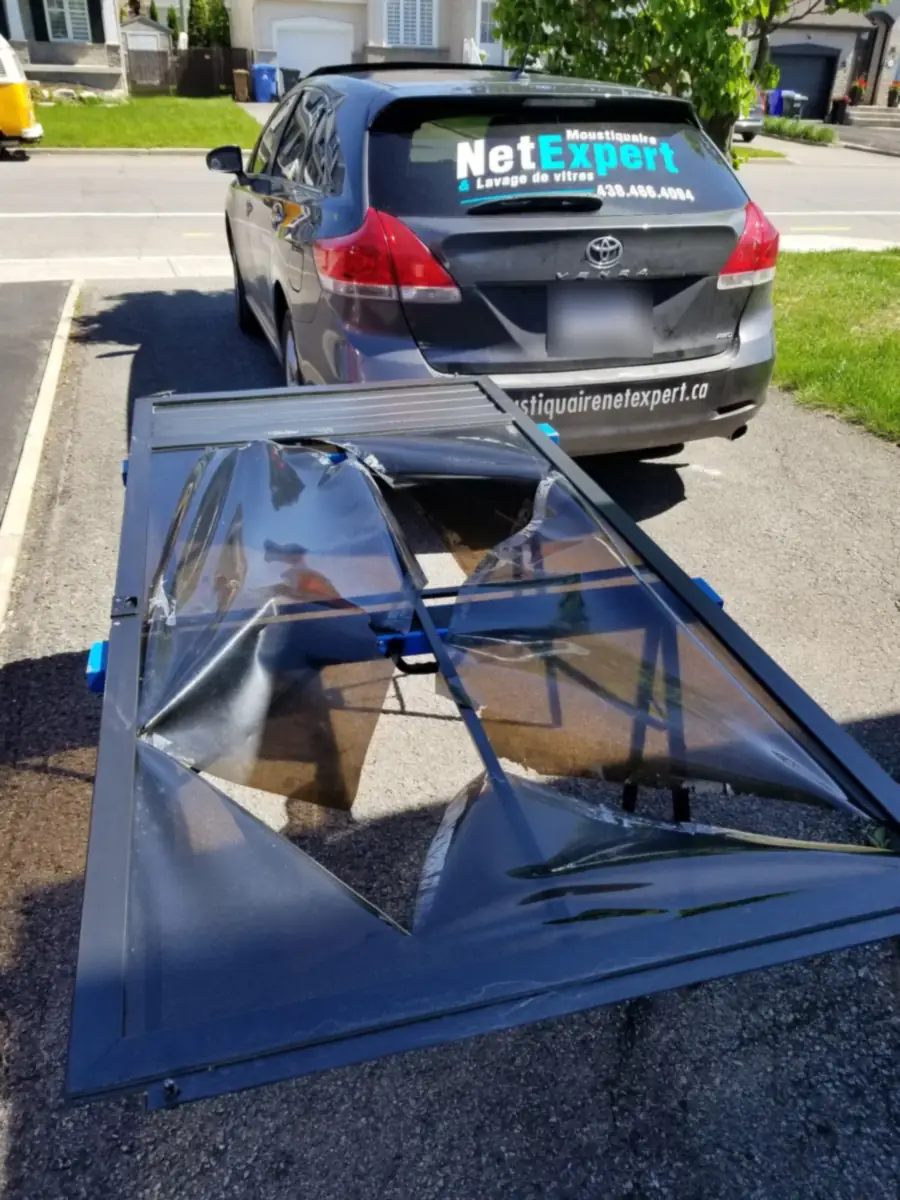
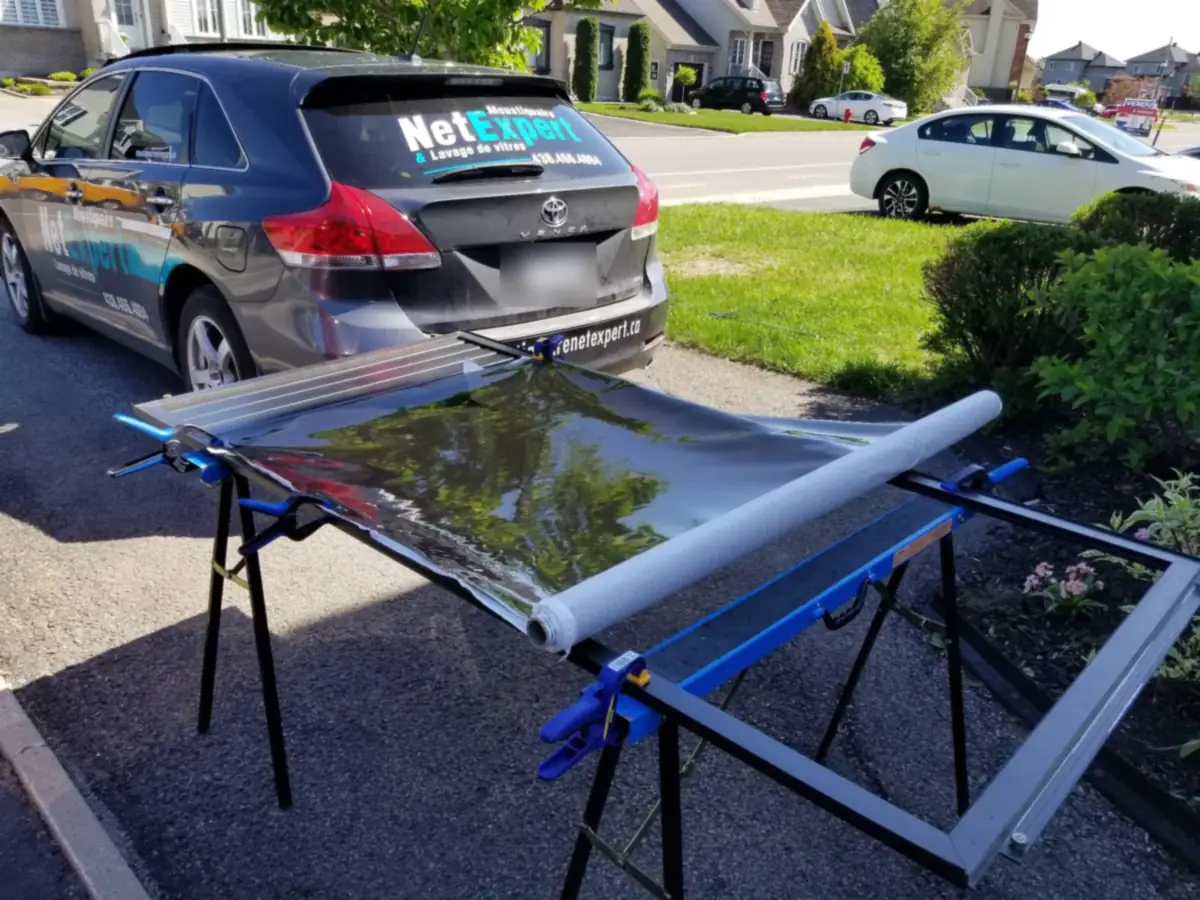
« Great service! He was at my neighbour’s and agreed to fix my back screen even though we had no appointment. Very successful repair, and inexpensive! »
« Ludovic replaced my screen in record time. Professional, and with a great sense of humour. I recommend his services — don’t hesitate to contact him, he’ll come to your home and do beautiful work. »
« Excellent service. Clear explanations of the work to be done. I really appreciated his dedication: despite the rain he insisted on finishing the job, soaked through and still smiling. The work was very well done. »
Straight answers
Yes, as long as the panel frames are straight. We do not hunt for a replacement panel from the manufacturer: we rescreen the mesh in the existing frame and cut new clear vinyl to its exact dimensions. A bent aluminum frame can usually be straightened; a frame snapped clean through is the only real limit. The structure stays put on its slab.
On site, opening by opening, at all four corners. A hand-built wood structure has no two identical openings, and the wood has moved since it was built. Screen and vinyl are cut to each opening rather than to a stock size, and fitted into the existing wood frame in the same grooves. Nothing is ordered ahead on a dimension given over the phone.
It is the best way to make it last. Direct sun yellows and stiffens clear vinyl much faster than cold ever damages it; vinyl panes taken down in spring and stored flat in the shade age far less than the ones left up all summer. If you would rather leave them in for the wind or the rain, you accept that they will need replacing sooner.
Yes, at your home. We travel to Sorel-Tracy, remove the panels, replace the MICA vinyl in the original frames and put everything back — the gazebo structure is never touched. It is one of our specialties.
Yes. Depending on the retailer it is called MICA film, clear vinyl, clear plastic or transparent fabric — the same flexible material that cuts wind and holds warmth. We replace it on gazebos and sun shelters alike.
Yes. The vinyl is replaced pane by pane, in the existing frame — no need to redo the whole panel for one tear. If several panes have yellowed, doing them together gives a uniform result.
On assessment: the price depends on the number of panels and their dimensions. The quote is free, and a photo is often enough to price without a visit. Fabrication and installation guaranteed one year.
Do you manage a building or a business in Sorel-Tracy?