
Summer UV
Sun yellows and clouds the vinyl. Film that crackles to the touch is at end of life.
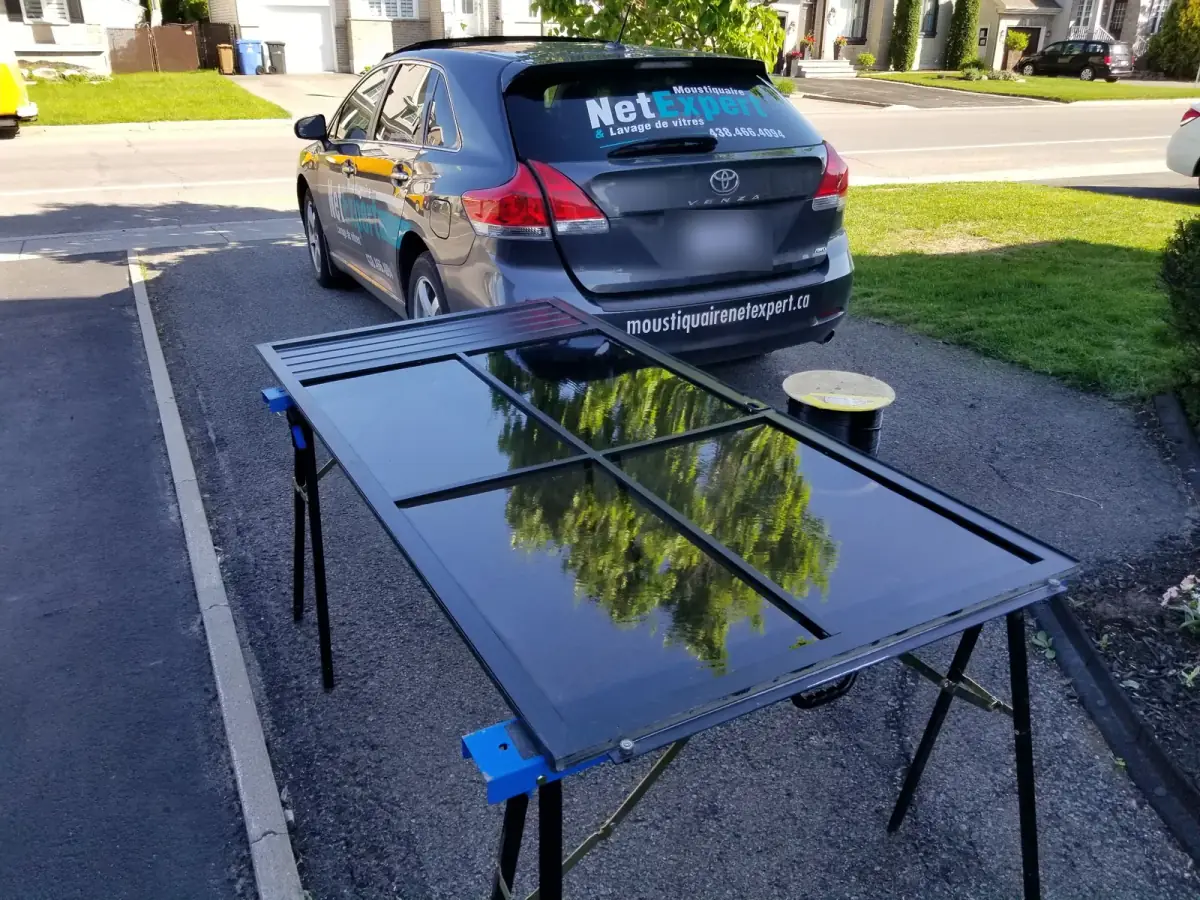
Gazebo and sun shelter specialty
Clear vinyl yellowed or torn? Replaced at your home in Charlemagne, in the original frames — gazebos and sun shelters.
Three questions are enough to start. The official measurement is taken on site.
Whatever your retailer calls it — MICA film, clear vinyl, clear plastic, sun-shelter transparent fabric — it is the same material, and we replace it in Charlemagne in your existing panels.
Sun yellows and clouds the vinyl. Film that crackles to the touch is at end of life.
Below freezing, MICA turns brittle — one handling or one gust splits it outright.
Slack vinyl flaps like a sail and eventually tears at the seams.
In Charlemagne, a gazebo is measured first against the room left over. On lots as narrow as those of this small city, the garden shelter is compact or it does not exist: what you find is a retailer model squeezed onto a back deck between two fences, or panels closing in an upper balcony on a duplex. Either way, the structure stands a few paces from the property line, often within earshot of a neighbour's window — and that fact counts as much as sun exposure when the time comes to choose what goes into the frames.
This closeness gives the panels a second role that large yards never ask of them. Clear vinyl cuts the wind and keeps the light, but it lets people see through from both sides; mesh, for its part, blurs the view as much as it stops insects. On a lot where the neighbour's fence is three paces away, the choice stops being purely technical. The other effect of tightness is quieter: hemmed in between two fences, a structure gets sun only a few hours a day, and not on every face. The panels of one gazebo therefore do not age at the same rate, which completely changes how a repair is approached.
The first instinct, when one panel fails, is to assume the others will follow. Here that is rarely true. The side facing the fence is sheltered from sun and wind, and its vinyl can stay clear long after the vinyl on the open side has yellowed and split. Panels are therefore redone one at a time, in the existing frames, according to the actual state of each — replacing the lot because one gave way means throwing out panels that are still sound. A form of wear peculiar to small lots comes on top of that: when the structure leans almost against a fence, the gap between the two never gets cleaned, and neighbourhood leaves pack in there until they hold damp against the frame. That is the side to inspect first. On an upper balcony, finally, the panels live with no eave: they take rain and sun head-on all year, and thick vinyl is what holds up best.
The difficulty is always the same in this city: room. A panel is redone flat, and a deck squeezed between two fences does not offer the surface needed — the work then falls back inside the dwelling or onto the sidewalk, which is something to arrange before we arrive rather than during the visit. Second constraint, you cannot always walk around the structure: when one side is against the fence, its panels are freed from inside the gazebo, not from outside. Third, parking: the streets are narrow, and it is better to know in advance where the vehicle can sit so the back and forth stays short.
A yard hemmed in between two fences gets almost no breeze, and that detail changes the choice of mesh. On an open lot, a tight weave costs a little airflow, which nobody notices; in a gazebo where the air already does not move, that same weave makes the shelter stifling on hot days. Tight weave is therefore kept for the side the small flies actually come in on, and the other faces keep an ordinary mesh, which lets through what little air movement there is. The nearness of neighbours pulls the other way: it favours mesh where privacy is wanted, and clear vinyl where the light is. On an upper balcony closed in year-round, thick vinyl is the choice, because it will go through the frost in place.
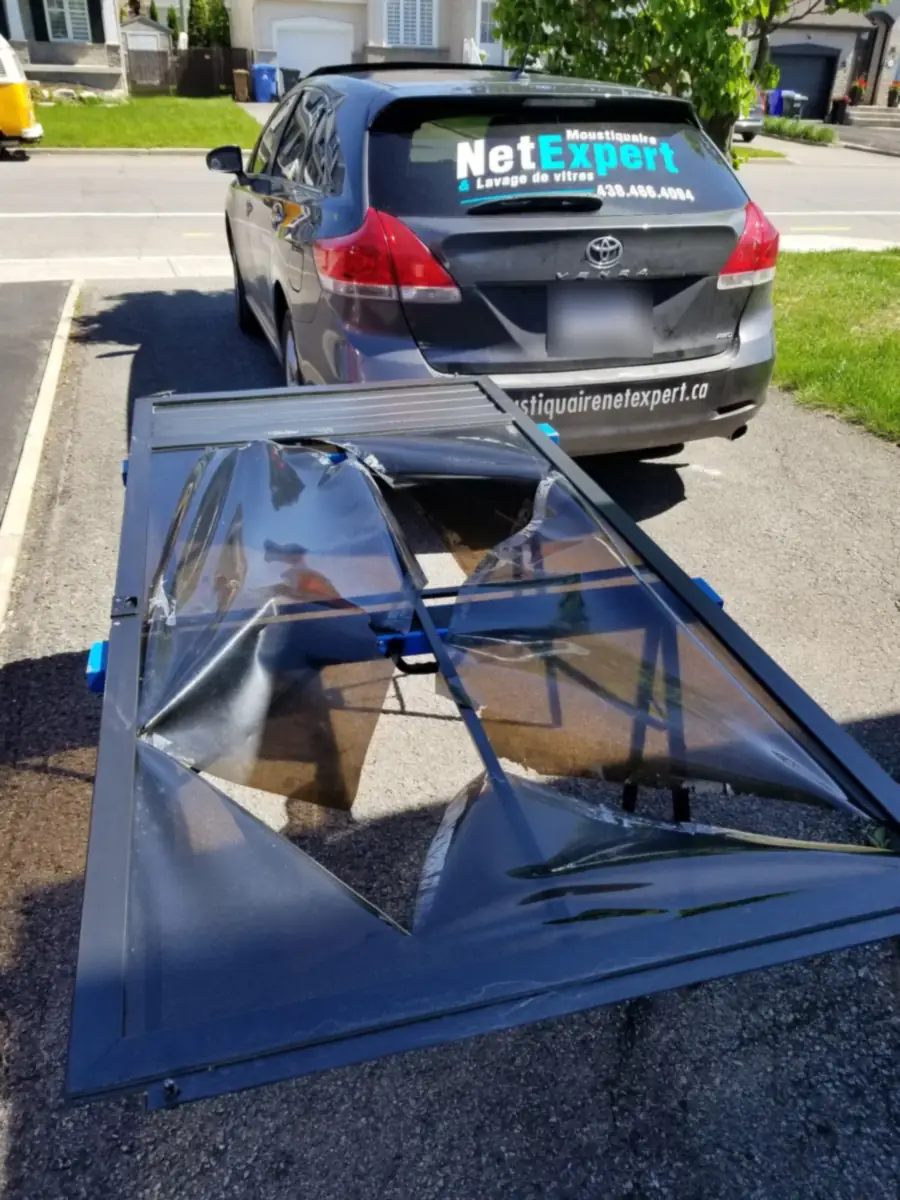
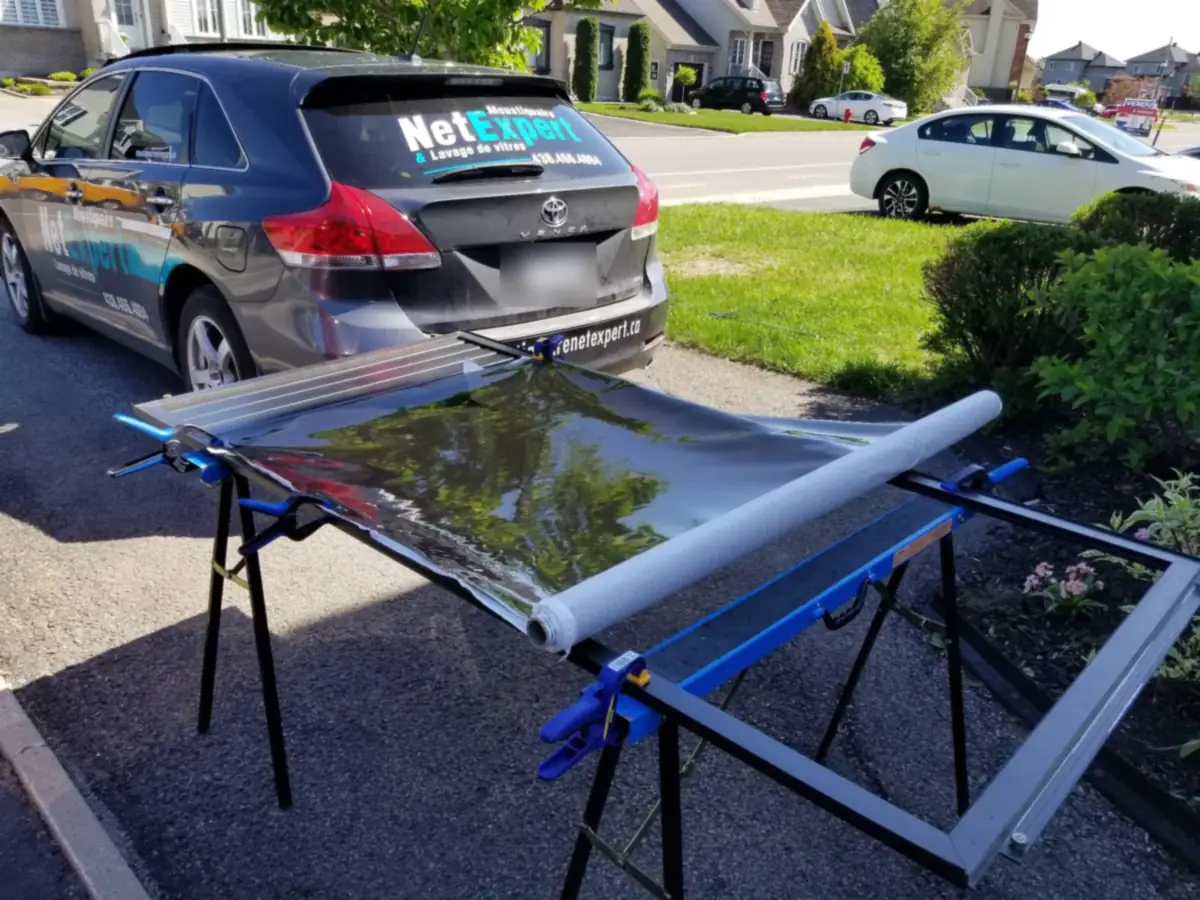
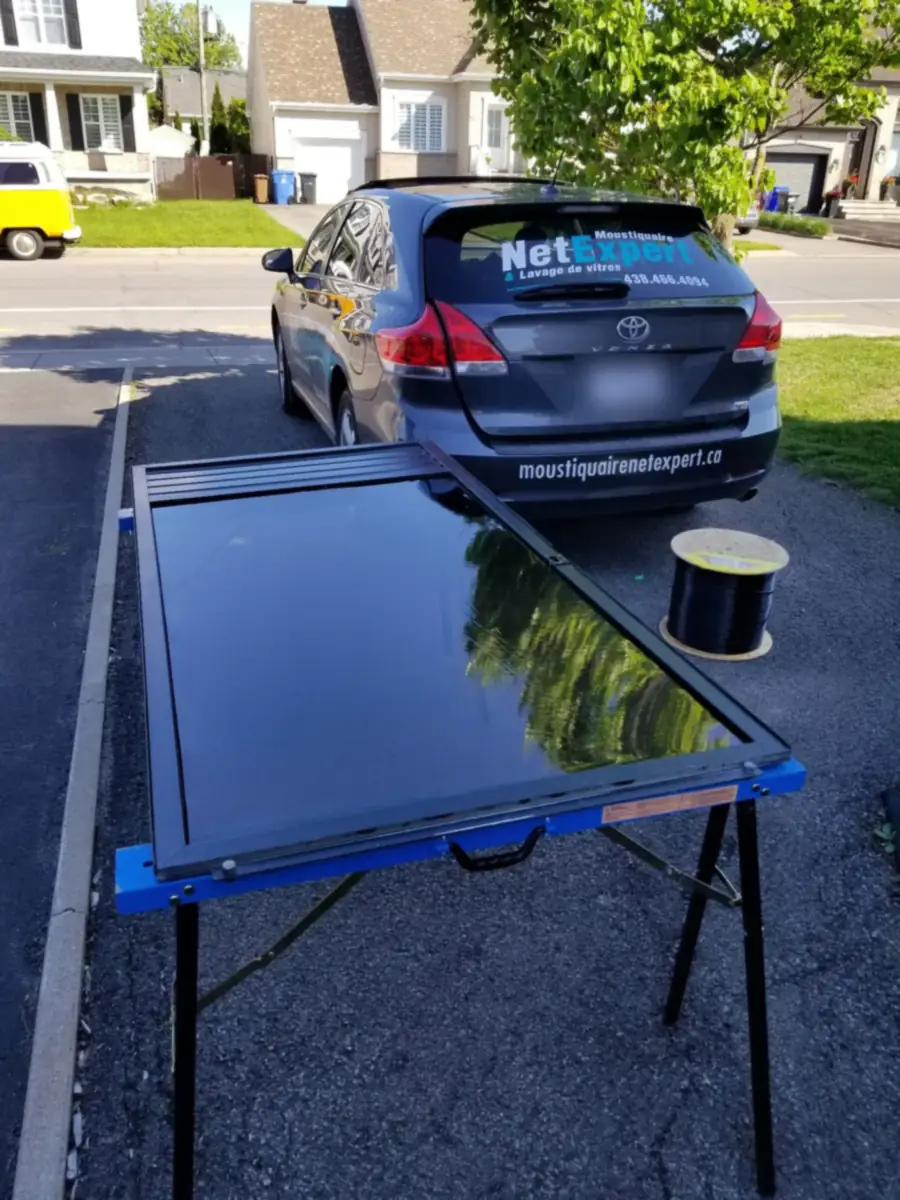
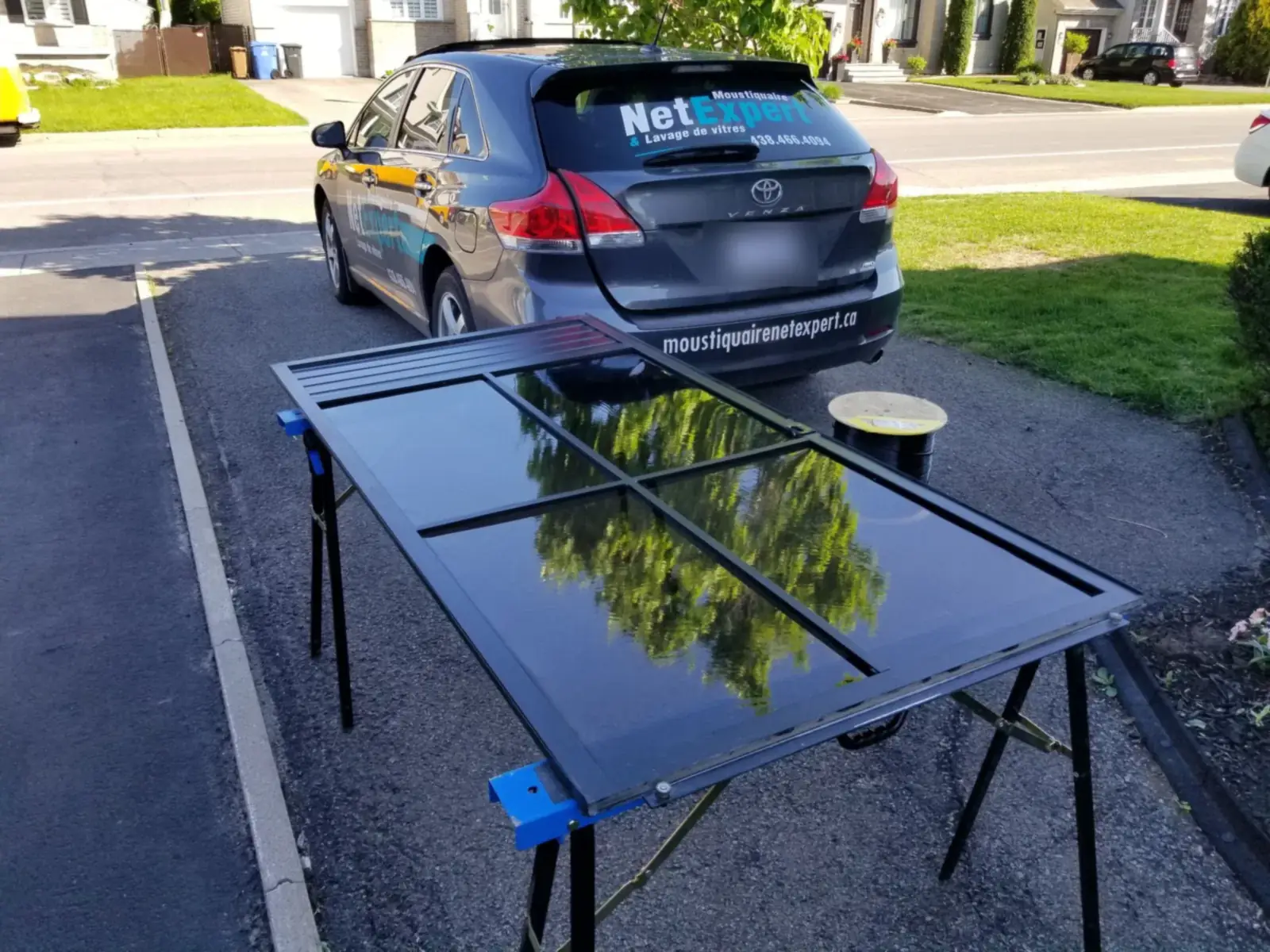
This job was not in Charlemagne — it shows our method, the same everywhere: panels down, new vinyl pane by pane, panels back up.
« Excellent service. Clear explanations of the work to be done. I really appreciated his dedication: despite the rain he insisted on finishing the job, soaked through and still smiling. The work was very well done. »
« Great service! He was at my neighbour’s and agreed to fix my back screen even though we had no appointment. Very successful repair, and inexpensive! »
« Ludovic replaced my screen in record time. Professional, and with a great sense of humour. I recommend his services — don’t hesitate to contact him, he’ll come to your home and do beautiful work. »
Straight answers
No, and on a small lot it would be waste. A structure wedged between two fences takes sun and wind very unevenly: the sheltered side can stay sound for years after the exposed side has gone. Each panel is judged for what it is, and the ones that need it are redone in their original frames.
No. Panels on an inaccessible side are freed from inside the structure, which stays standing. Just take a look at the gap between the frame and the fence before you call: that is where leaves gather and hold damp against the frame, and it is often that side that has suffered most without anyone seeing it.
Possibly. A tight weave, made to stop biting midges and black flies, lets less air through than an ordinary mesh. In a yard where a breeze moves, that goes unnoticed; in a yard closed in by two fences, it is very noticeable. The usual answer is to keep the tight weave on the one side the small flies come in on, and let the other faces breathe.
Yes, at your home. We travel to Charlemagne, remove the panels, replace the MICA vinyl in the original frames and put everything back — the gazebo structure is never touched. It is one of our specialties.
Yes. Depending on the retailer it is called MICA film, clear vinyl, clear plastic or transparent fabric — the same flexible material that cuts wind and holds warmth. We replace it on gazebos and sun shelters alike.
Yes. The vinyl is replaced pane by pane, in the existing frame — no need to redo the whole panel for one tear. If several panes have yellowed, doing them together gives a uniform result.
On assessment: the price depends on the number of panels and their dimensions. The quote is free, and a photo is often enough to price without a visit. Fabrication and installation guaranteed one year.
Do you manage a building or a business in Charlemagne?