
Summer UV
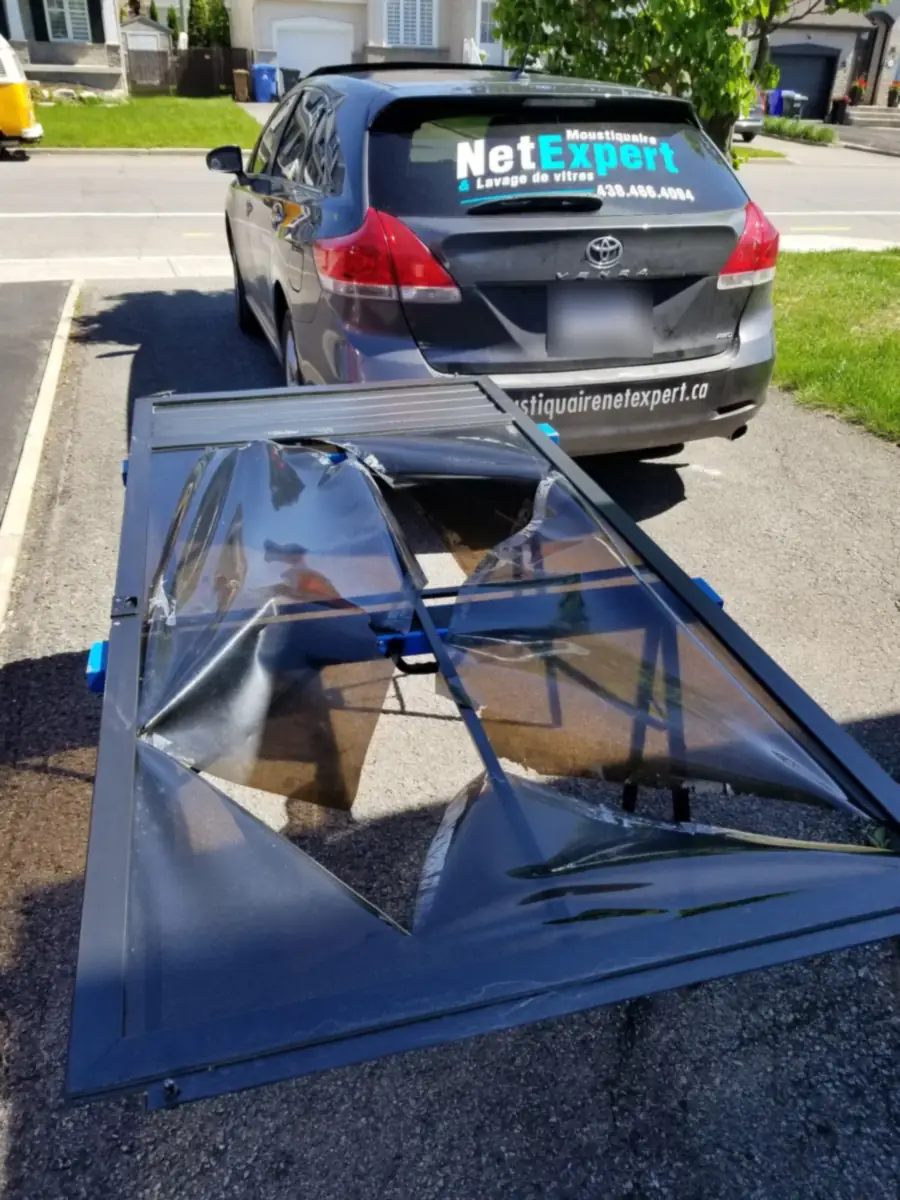
Sun yellows and clouds the vinyl. Film that crackles to the touch is at end of life.
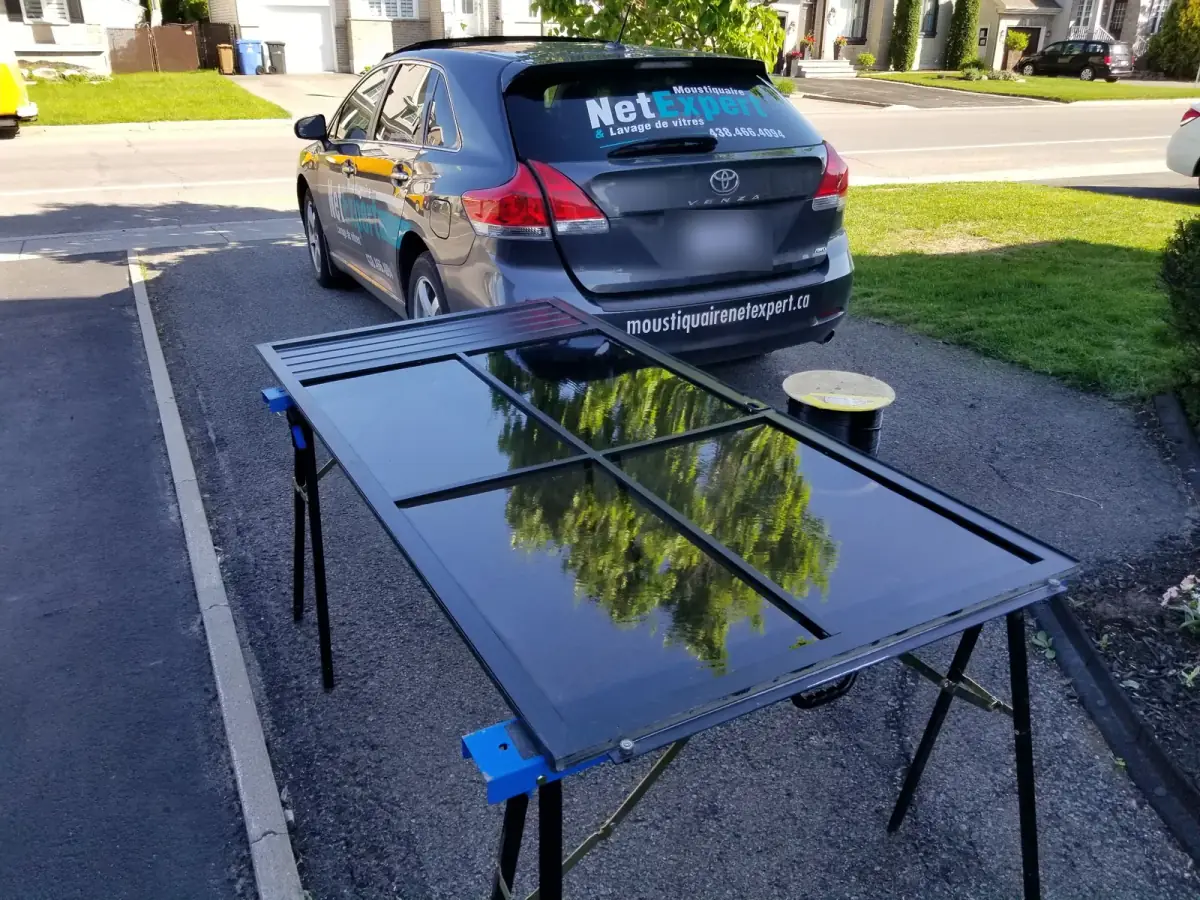
Gazebo and sun shelter specialty
Clear vinyl yellowed or torn? Replaced at your home in L'Assomption, in the original frames — gazebos and sun shelters.
Three questions are enough to start. The official measurement is taken on site.
Whatever your retailer calls it — MICA film, clear vinyl, clear plastic, sun-shelter transparent fabric — it is the same material, and we replace it in L'Assomption in your existing panels.
Sun yellows and clouds the vinyl. Film that crackles to the touch is at end of life.
Below freezing, MICA turns brittle — one handling or one gust splits it outright.
Slack vinyl flaps like a sail and eventually tears at the seams.
In L'Assomption, a gazebo leads an entirely different life depending on whether it stands in the village or out on a concession road. Behind the stone and brick houses of the old core, the yards are narrow and deep, hemmed in between closely set buildings and often covered by long-established trees: the sun reaches down only a few hours a day, and the air barely moves. On a concession road the opposite holds: the structure sits fully in the open, fields around it to the horizon, with not a building or a line of trees to break anything. Between the two, the suburban belt built from the 1960s through the 1990s offers the middle case: a retailer model on a back deck of ordinary size.
The difference is not merely a matter of comfort. What wears out clear vinyl is sun first, wind second, and here a third factor joins in that the suburbs never see: field dust. Fine and abrasive, it settles on the panels in spring and at harvest, and it does not behave like the dust of a suburban street. On a concession road all three act together. In the village none of the three acts strongly, but shade and still air keep up a dampness that goes after the frames instead. Two settings, two forms of wear, and two ways of approaching the same panels.
The gesture that damages vinyl most here is a maintenance gesture: wiping dust off dry. That dust is mineral and angular; taken with a cloth without being wetted first, it scratches vinyl the way a fine abrasive would, and the haze of scratches never lifts. Rinse thoroughly first, wipe second. The rest depends on which side you are on. On a concession road the sun beats down all day and the wind crosses through: vinyl yellows quickly and splits from a corner if it is not stretched tight, and the faces exposed to the prevailing wind often do better keeping aluminium mesh than vinyl. In a village yard, shaded and sheltered, vinyl lasts a long time; it is the FRAME that gets inspected, because a structure that dries poorly between rains holds damp at its joints. In every case the panels are redone one at a time, without taking the structure apart.
On a concession road two things combine. The address is isolated, so the count has to be complete first time — the gazebo panels, but also those of the veranda and the secondary buildings, forgotten because they are not on the house. And the structures out there are often permanent, custom built in wood at the far end of the property: their panels are larger and heavier than a retailer model's, they are freed one at a time without forcing the wood, and they take two people to carry on sloping or gravel ground. In the village the constraint changes character: the back yard is sometimes reached through a narrow passage between two buildings, and a large panel will only go through one way. That is something to arrange, not to discover.
Concession road and village call for opposite choices. Out in the fields, the sun is direct from morning to evening, the wind meets nothing, and farm dust adds itself to both: that is where a thicker vinyl, stretched tight, earns its keep, and where keeping aluminium on the windward faces avoids starting over every year. The fields also bring a marked insect pressure at dusk, which argues for a tight weave on the side where people sit — bearing in mind that it lets through a little less air. In a shaded village yard the calculation reverses: vinyl ages slowly there, an ordinary mesh is enough, and attention goes to drying and to the state of the frames. On a gazebo sheltering a spa and closed in over winter, thick vinyl is the choice on both sides of the territory.
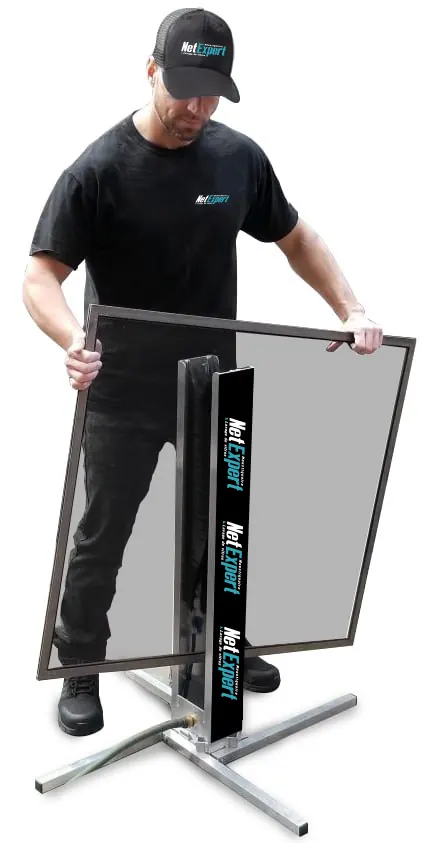
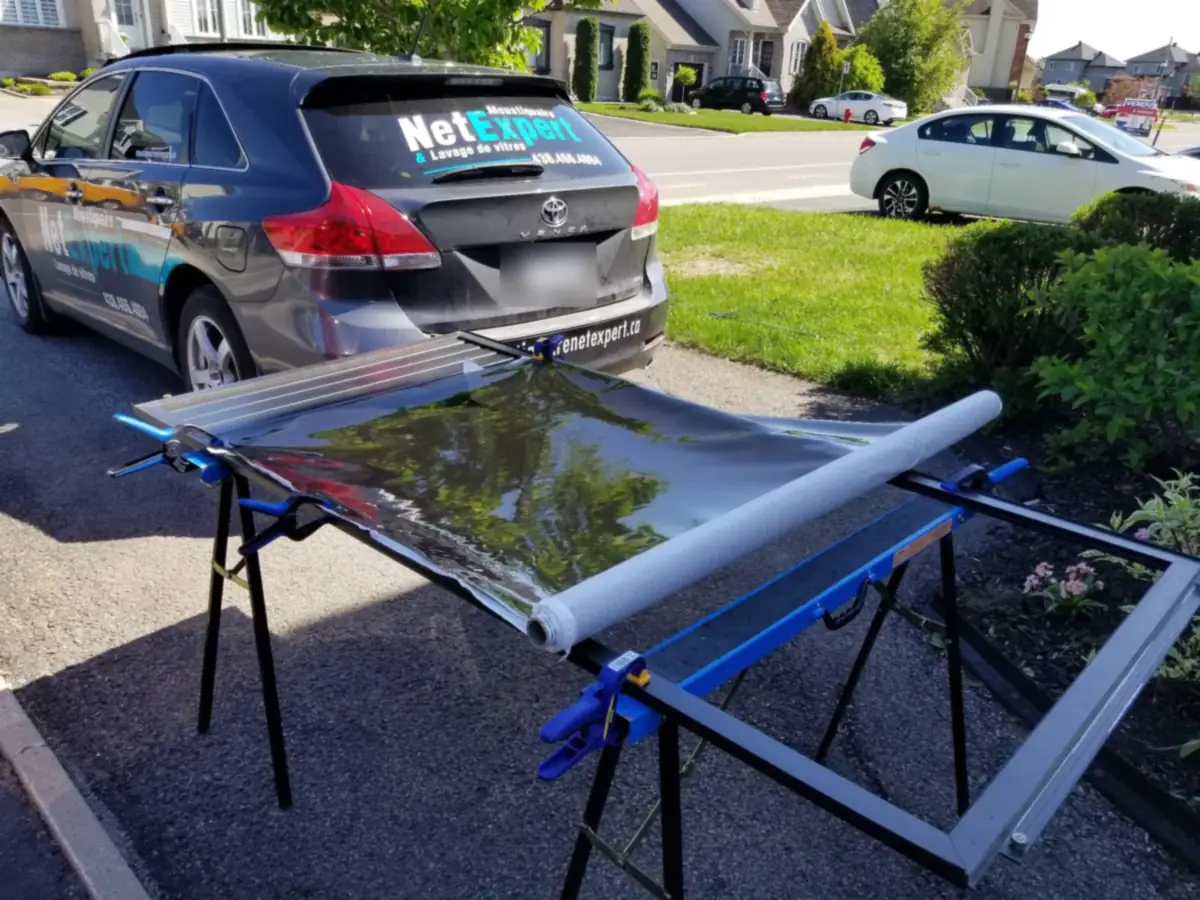
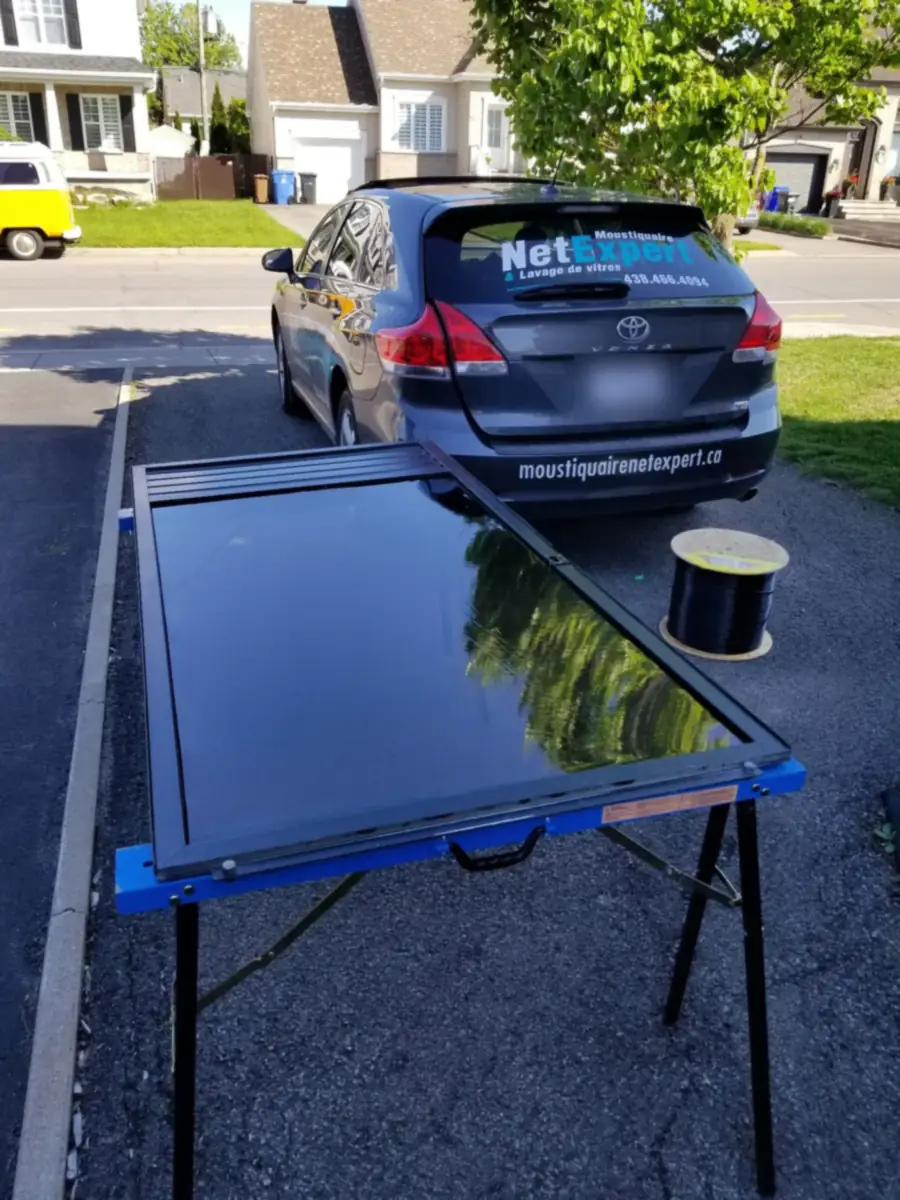
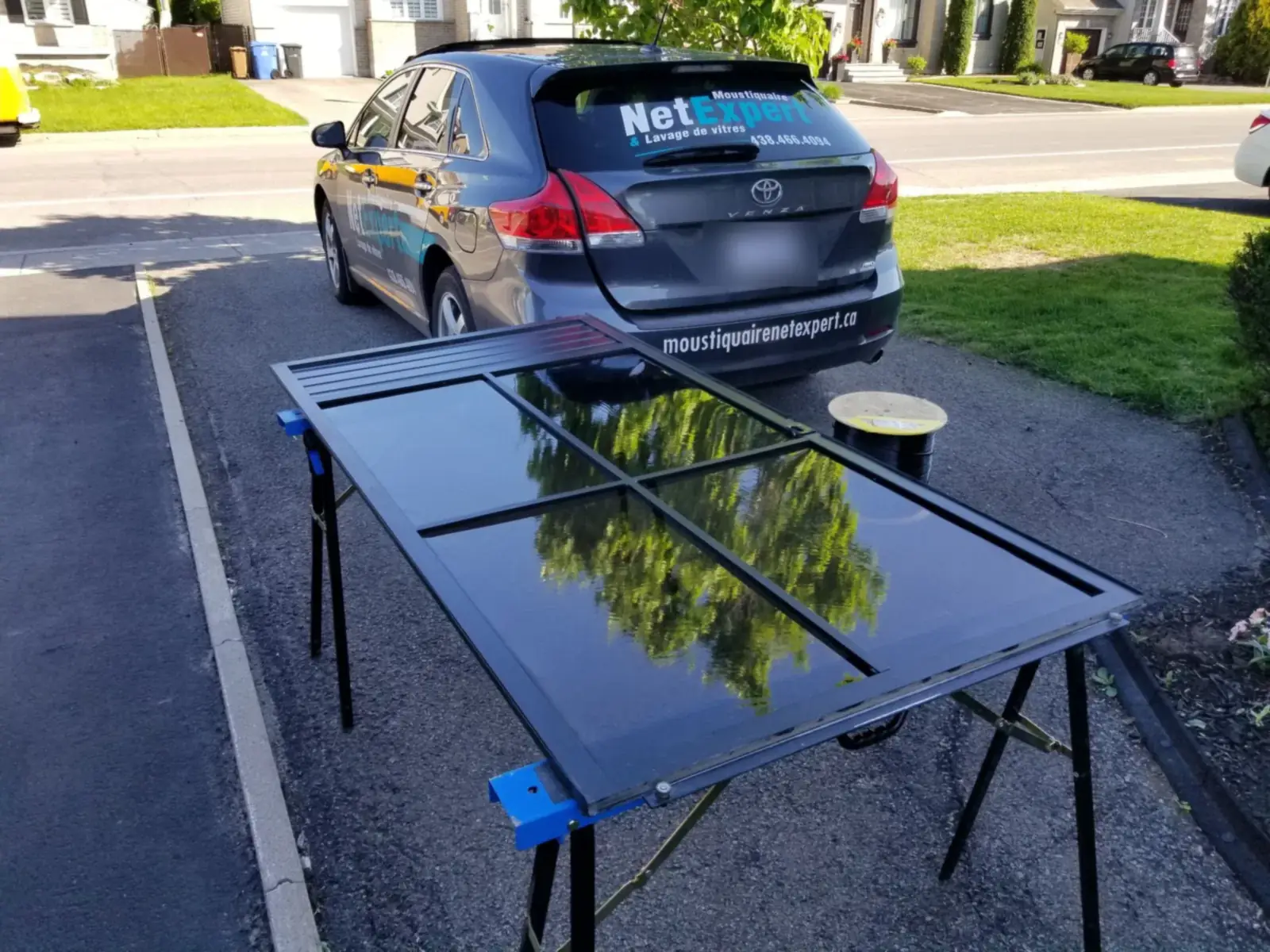
This job was not in L'Assomption — it shows our method, the same everywhere: panels down, new vinyl pane by pane, panels back up.
« Excellent service. Clear explanations of the work to be done. I really appreciated his dedication: despite the rain he insisted on finishing the job, soaked through and still smiling. The work was very well done. »
« Great service! He was at my neighbour’s and agreed to fix my back screen even though we had no appointment. Very successful repair, and inexpensive! »
« Ludovic replaced my screen in record time. Professional, and with a great sense of humour. I recommend his services — don’t hesitate to contact him, he’ll come to your home and do beautiful work. »
Straight answers
It is probably not the product, it is the order of operations. Field dust is mineral and angular: taken with a dry cloth, it scratches vinyl like a fine abrasive, and those scratches never come out. Rinse thoroughly first, wipe second. A panel already hazed with scratches is redone in its existing frame.
Yes, and the structure stays standing. The panels are freed one at a time from the framing without forcing the wood, redone to their own dimensions and put back. Every bay of a custom-built structure has its own measurements: everything is measured pane by pane. Just plan on a large panel taking two people to carry over sloping or gravel ground.
Yes, and the gap is entirely explained by exposure. A village yard hemmed in between buildings and covered by trees gets sun only a few hours a day; a gazebo out in the fields gets it from morning to evening, with wind on top. A thicker vinyl, stretched tight, holds up better — and on the windward faces, keeping aluminium mesh saves coming back every year.
Yes, at your home. We travel to L'Assomption, remove the panels, replace the MICA vinyl in the original frames and put everything back — the gazebo structure is never touched. It is one of our specialties.
Yes. Depending on the retailer it is called MICA film, clear vinyl, clear plastic or transparent fabric — the same flexible material that cuts wind and holds warmth. We replace it on gazebos and sun shelters alike.
Yes. The vinyl is replaced pane by pane, in the existing frame — no need to redo the whole panel for one tear. If several panes have yellowed, doing them together gives a uniform result.
On assessment: the price depends on the number of panels and their dimensions. The quote is free, and a photo is often enough to price without a visit. Fabrication and installation guaranteed one year.
Do you manage a building or a business in L'Assomption?