
Slack or torn mesh
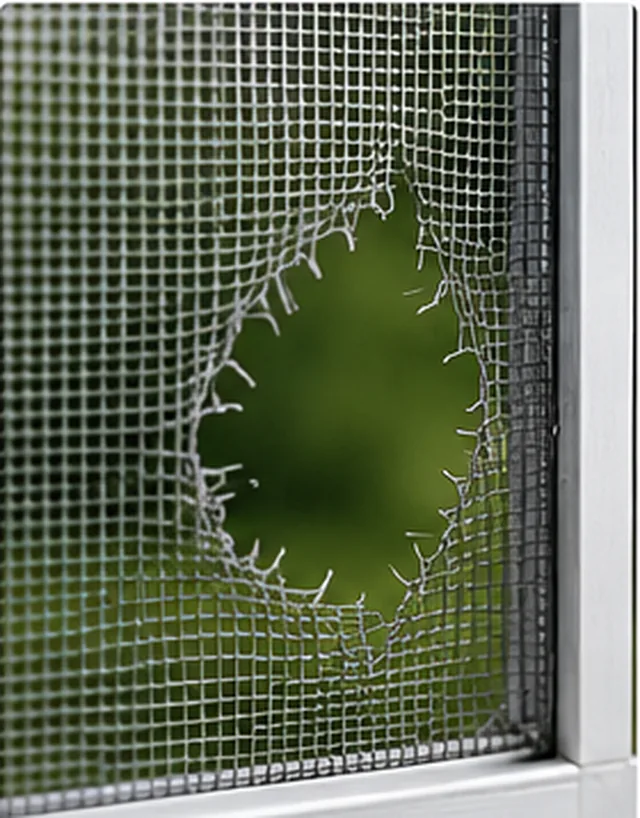
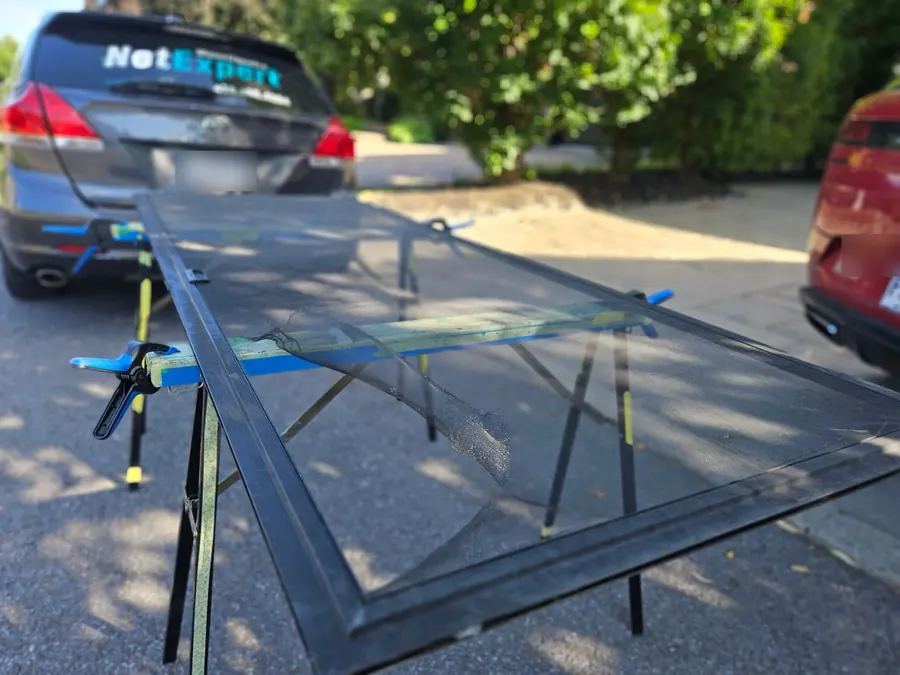
The mesh pulls out of the spline, billows in the wind or tore at the bottom — the classic. Re-meshed in your frame, fibreglass or reinforced.
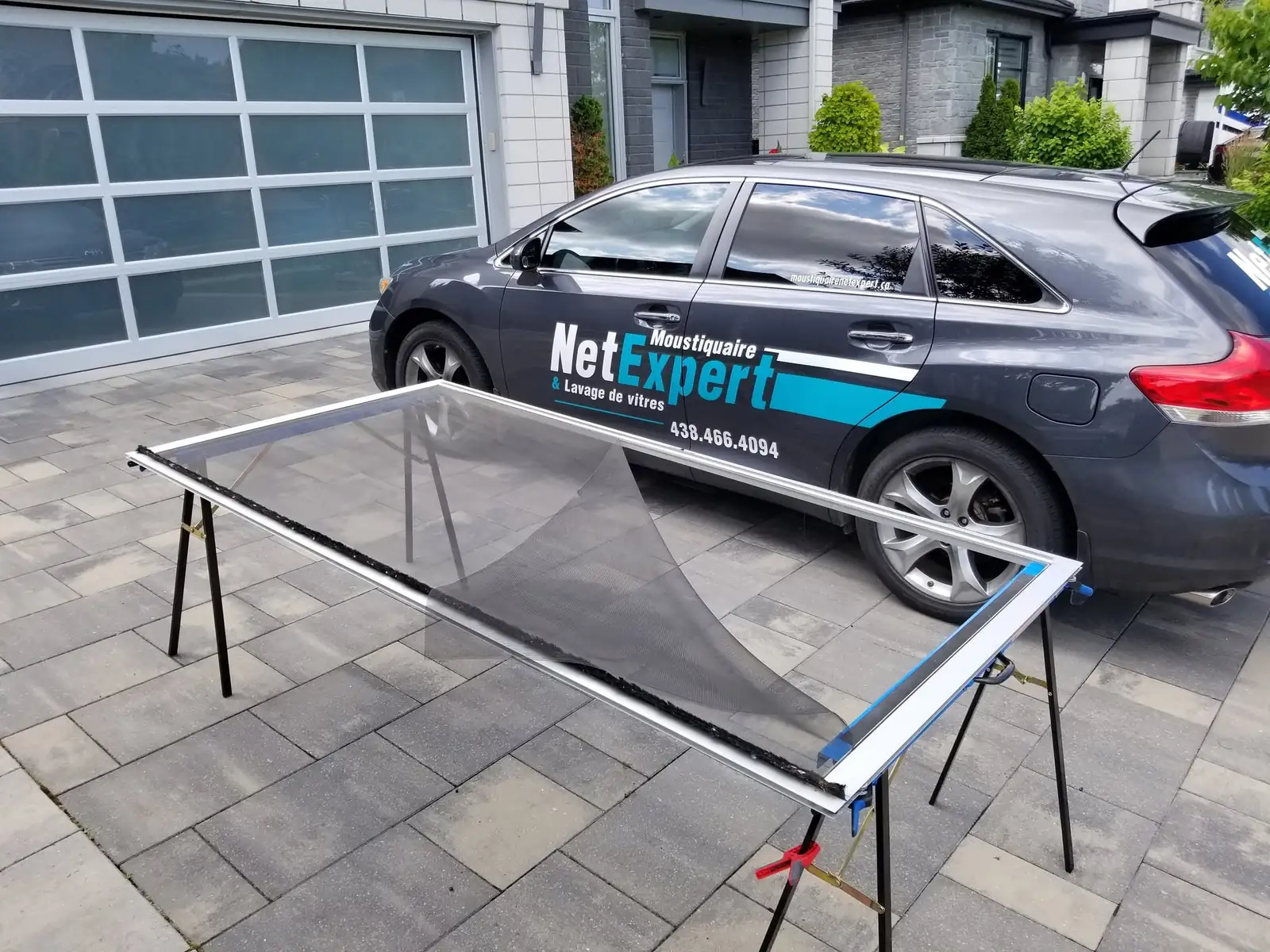
Patio door screens
Mesh, rollers, track, hardware: your screen door repaired at home in L'Assomption, usually in a single visit.
Three questions are enough to start. The official measurement is taken on site.
It is the most used screen in the house — opened and closed thousands of times a season. Four failures come up constantly, and all four are repaired on site.
The mesh pulls out of the spline, billows in the wind or tore at the bottom — the classic. Re-meshed in your frame, fibreglass or reinforced.
The door drags, jumps the track or scrapes. We replace the rollers and adjust the height — the most requested repair.
Sand, pet hair and debris jam the rolling. Cleaning, lubrication, light track straightening when needed.
The door no longer locks or the handle hangs loose. Hardware replaced, latch adjusted.
In L'Assomption, the patio door tells you fairly well how far from the old village you live. In the village core on the peninsula it is rare: the nineteenth-century stone and brick houses have galleries and hinged doors, and where a slider does exist it almost always belongs to an extension added at the back. Its opening then straddles old masonry and recent framing, and matches no catalogue size. In the suburban belt built from the 1960s through the 1990s you find the common case instead: a sliding door at the back, a wooden deck, a screen panel in widespread dimensions.
The third case belongs to the concession roads, and it is the most demanding one for a screen panel. On a farmhouse, the back door often opens onto the fields with no building, no solid fence and no line of trees in the way: wind crosses the deck from end to end, and the sun beats on it unobstructed from morning to evening. These houses have also been extended more than once, so a single property can carry a recent slider on one side and a much older veranda door on the other. The count here is not made on one door but on all of the building's doors.
The failure typical of the concession roads comes from the track, and it does not resemble a suburban one. The dust raised by field work is fine and abrasive: it does not sit on the surface the way garden soil does, it settles to the bottom of the track and packs there. The rollers grind it with every pass, wear hollow, and the panel ends up dragging. The classic mistake is then to oil the track so things slide better: oil turns that dust into paste and the binding comes back worse a few weeks later. A track is emptied dry, with a brush, and lubricated dry if it needs lubricating at all. In the suburban belt the faults are those of every suburb of that era: tired roller springs, a panel hanging and scraping, a broken latch, a frame corner opened after being forced. And on an extension grafted onto an old house in the core, measurement is the problem before mechanics ever are.
The difficulties sort themselves by ring. On a concession road the address is isolated: the count given has to cover the whole building, veranda and summer-kitchen doors included, because a forgotten unit cannot be picked up the same day. In the village core it is the narrow streets and the lack of parking at the door, plus the fact that a door set in an extension is never measured from a stated size. In the suburban belt the constraint comes down to the deck: it is the work surface, and it carries the season's furniture. Clearing it before we arrive is the one piece of preparation that genuinely changes things.
On the concession roads two forces act together and push toward the same answer. Wind first, crossing a deck open to the fields: standard fibreglass bellies at the centre there and flaps in its frame, while aluminium mesh holds its tension. Dust second, wearing the mesh through constant abrasion — and aluminium takes that abrasion far longer. In the suburban belt, where the trees planted at construction now stand mature and break the wind, standard fibreglass does the job perfectly well on a door panel, provided it is properly tensioned and locked in with a spline of the right size. A house dog going through the door several times a day, though, settles the question everywhere: pet-resistant mesh is what holds at the bottom of the panel.
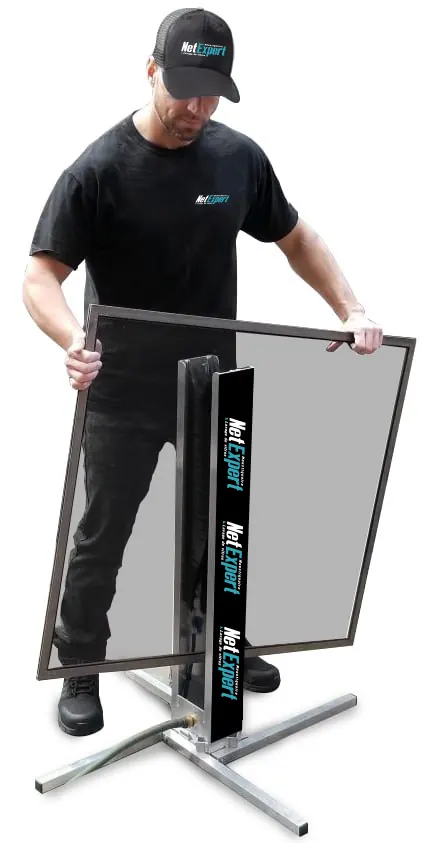
A patio door opens and closes more often than every window in the house combined — and it is the one the dog noses open and the cat climbs. Standard fibreglass mesh suits a lightly used door; for the others, we fit reinforced mesh, about seven times stronger, or pet-resistant mesh built for claws.
The extra cost is measured in tens of dollars; the yearly replacement it prevents, in hundreds. We carry both types in the vehicle — the decision can happen on the spot, with the door off its track in front of you.
Ten kinds of damage, one answer
If your screen looks like any of these, it can be repaired. Tap one to request a quote for that exact damage. We rarely replace a whole frame — in most cases only the mesh needs redoing.
 Mesh
Mesh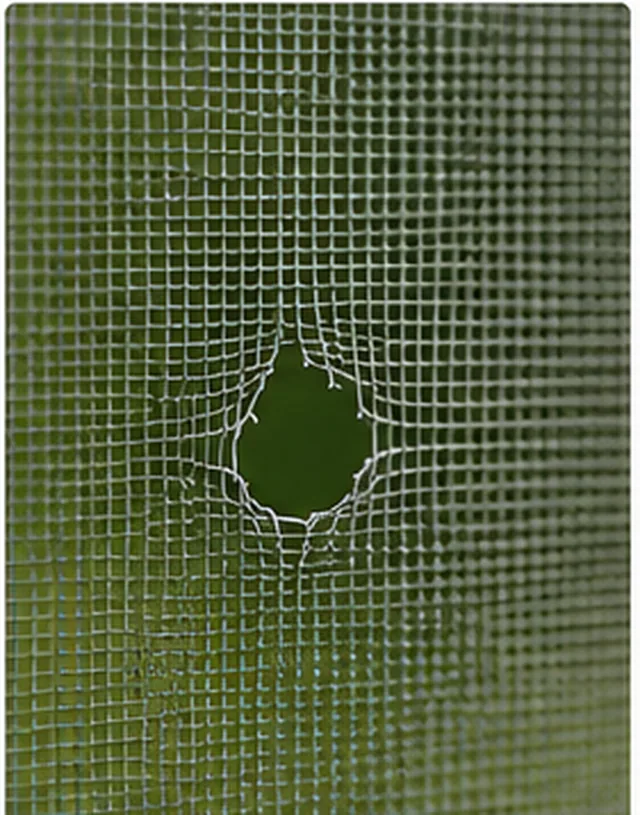 Mesh
Mesh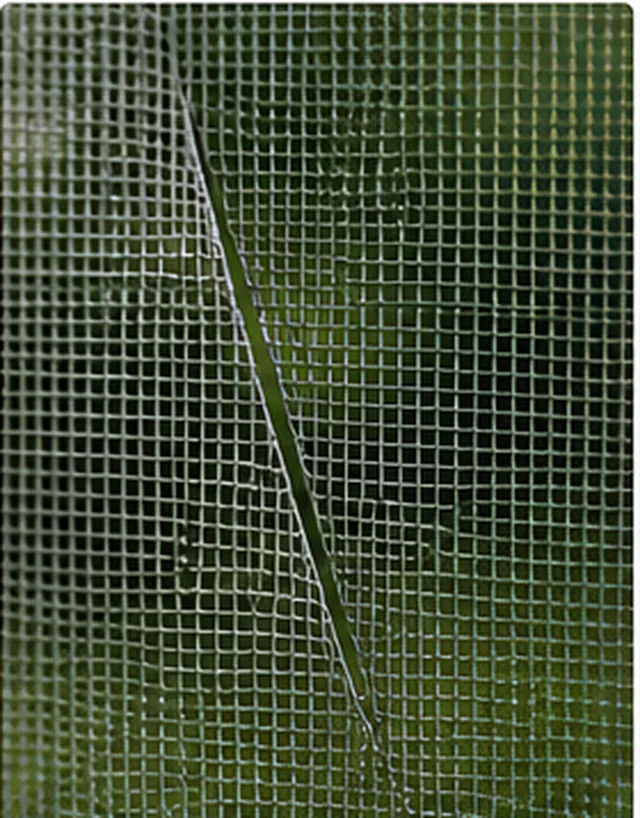 Mesh
Mesh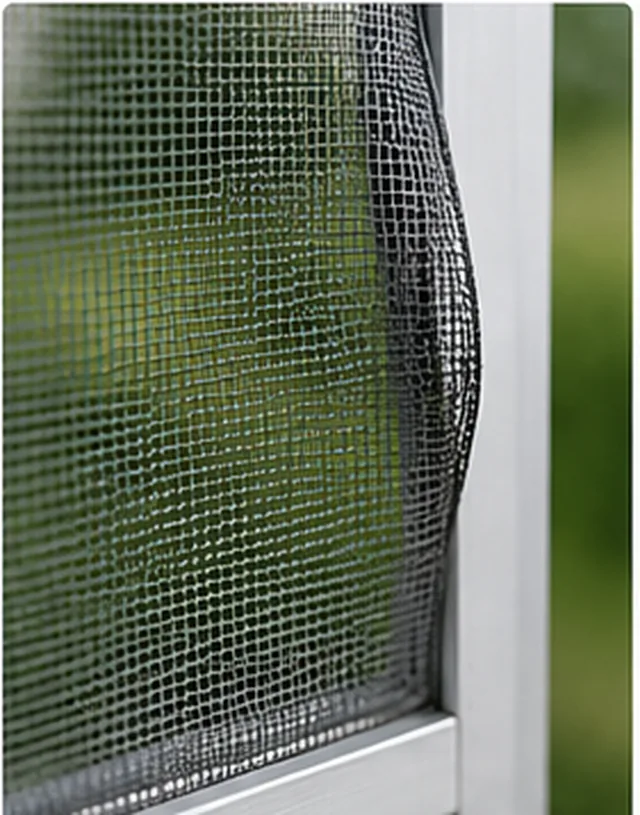 Mesh
Mesh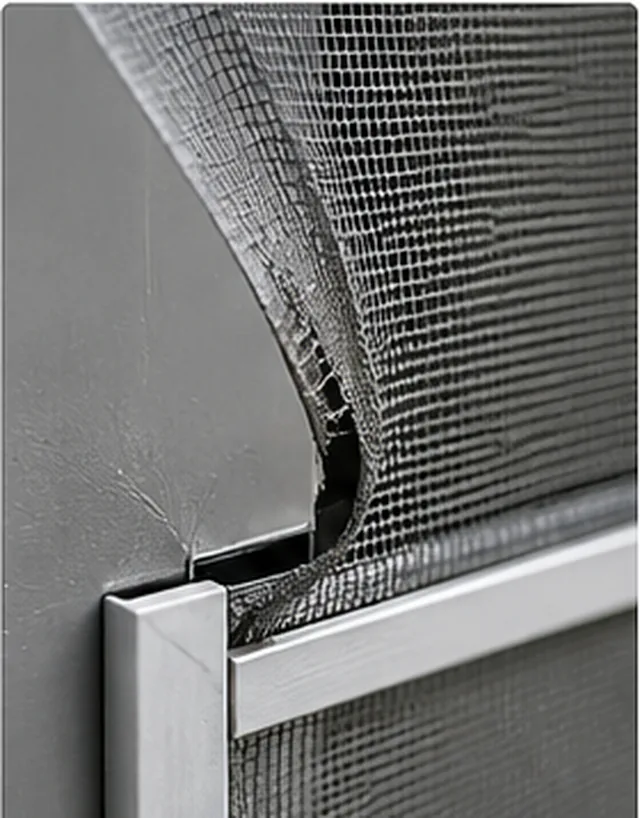 Mesh
Mesh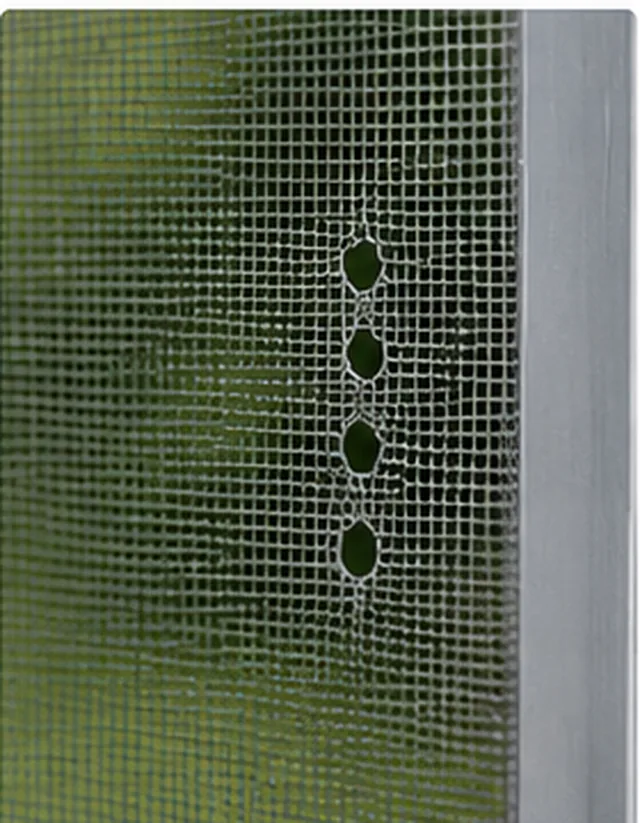 Mesh
Mesh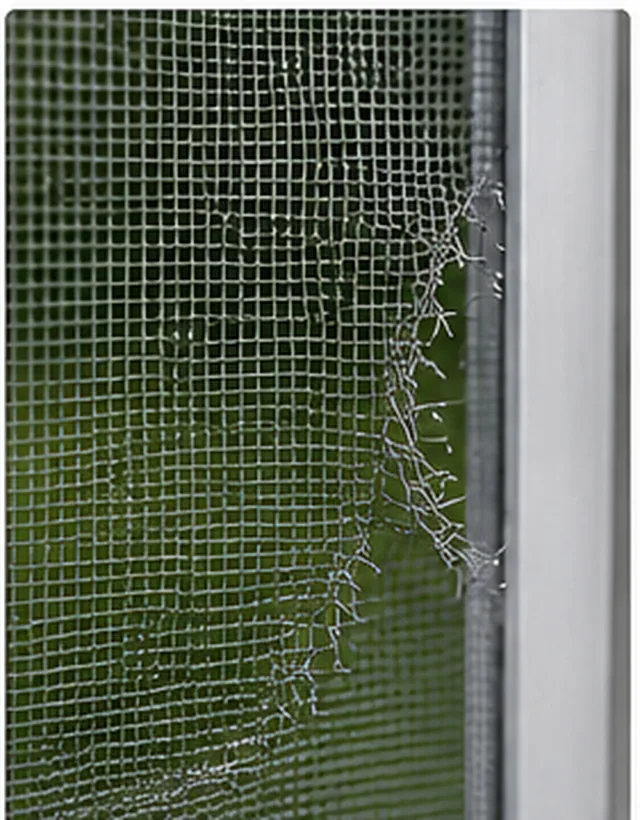 Mesh
Mesh Mesh
Mesh Mesh
Mesh Frame
FrameThis job was not in L'Assomption — it shows our method, the same everywhere: door off its track, new rollers, new mesh, frame squared up.
 1
1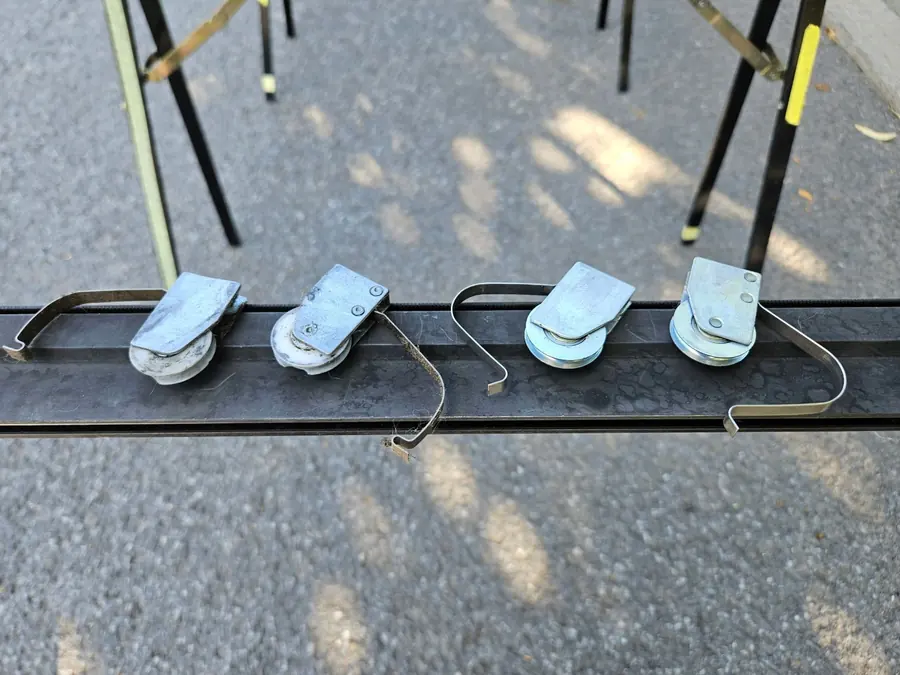 2
2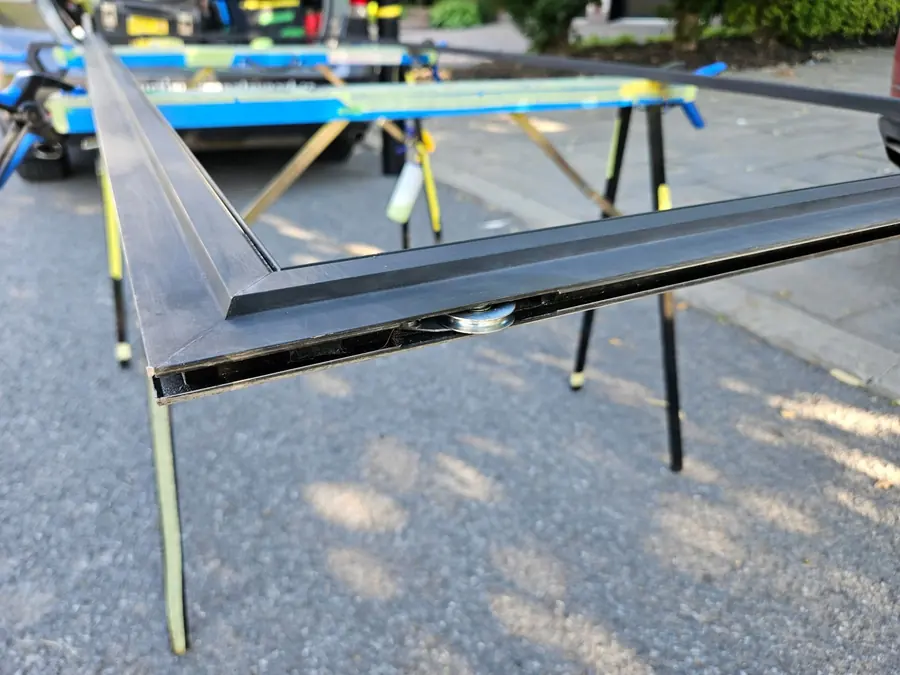 3
3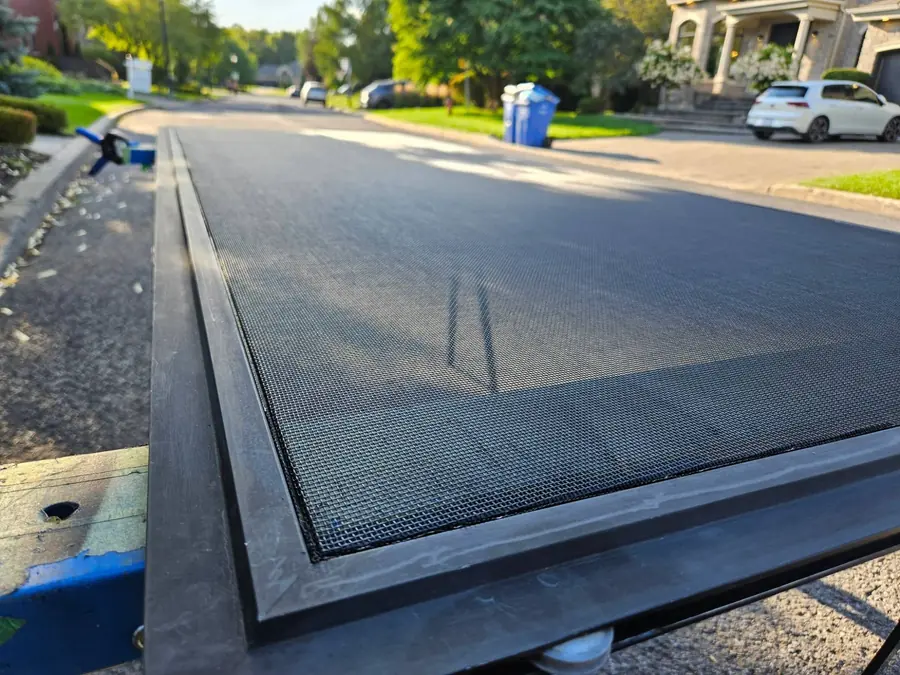 4
4« Ludovic replaced my screen in record time. Professional, and with a great sense of humour. I recommend his services — don’t hesitate to contact him, he’ll come to your home and do beautiful work. »
« Excellent service. Clear explanations of the work to be done. I really appreciated his dedication: despite the rain he insisted on finishing the job, soaked through and still smiling. The work was very well done. »
« Great service! He was at my neighbour’s and agreed to fix my back screen even though we had no appointment. Very successful repair, and inexpensive! »
Straight answers
Empty it dry, with a brush, at the start of the season and after heavy field work. That dust is fine and abrasive: it packs at the bottom of the track and the rollers grind it until they wear hollow. If the rollers have already suffered, they get replaced and the panel recovers its run. It is a few minutes of maintenance that noticeably extends the life of the part.
Yes, unfortunately. Oil holds dust and turns it into paste, which jams the run instead of freeing it — the effect is dramatic near fields. The track has to be cleaned out thoroughly to remove that mixture, then kept to a dry lubricant if lubrication is needed at all. A clean, dry track slides better than an oiled one.
Yes, but the measuring cannot happen over the phone. An opening straddling old masonry and recent framing almost never carries the dimensions of a common size, and the panel is built from the door's actual tracks. Everything is taken on site, then adjusted at fitting: that is the normal way to work in the old village.
Yes, at your home. We remove the screen door, replace the mesh or rollers on site, clean and lubricate the track, then reinstall it — usually in a single visit to L'Assomption.
Almost always the rollers: they wear out before the mesh and push the door off its track. We replace them and clean the track in the same intervention — forcing a derailing door eventually bends the frame, a costlier repair.
Rollers and hardware: from $30. A complete custom-built screen door: from $500, depending on format. The mesh alone on a door is priced on quote, from its dimensions. An exact quote is free.
One year on fabrication and installation — mesh, fitted rollers, built frames. Damage caused afterwards, by a pet or an impact, is not covered; for a dog, pet-resistant mesh is the real answer.
Pet-resistant mesh: about seven times stronger than standard fibreglass. On a patio door used daily, it is the difference between replacing the mesh yearly and being done with it for seasons.
Do you manage a building or a business in L'Assomption?