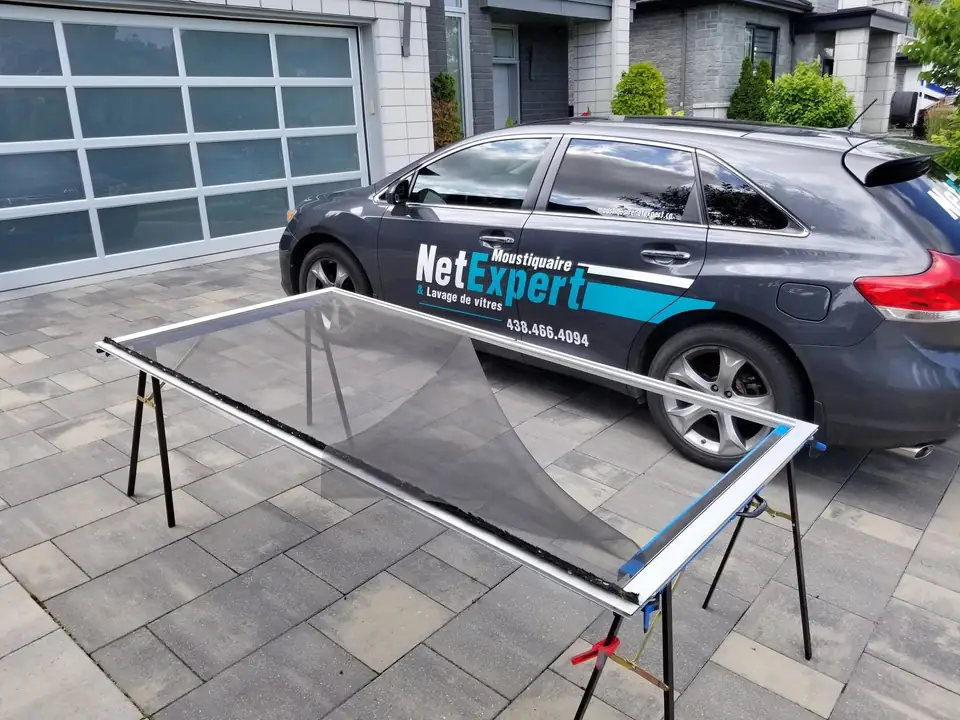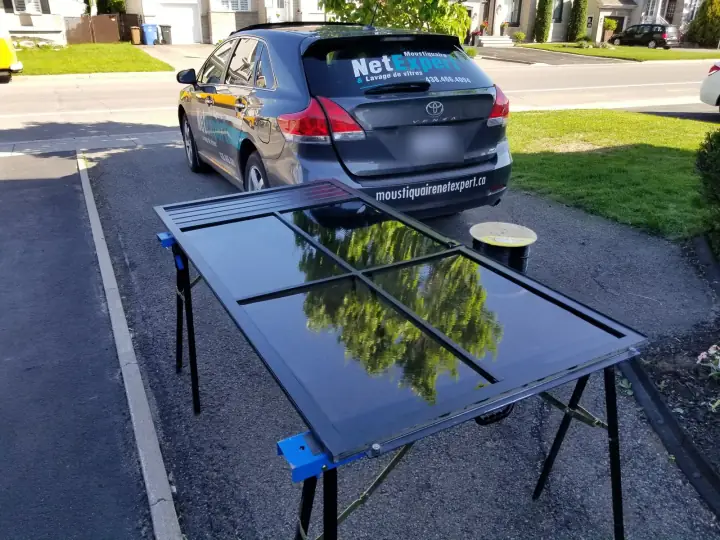
Screen rescreening (window)
From$30per screen
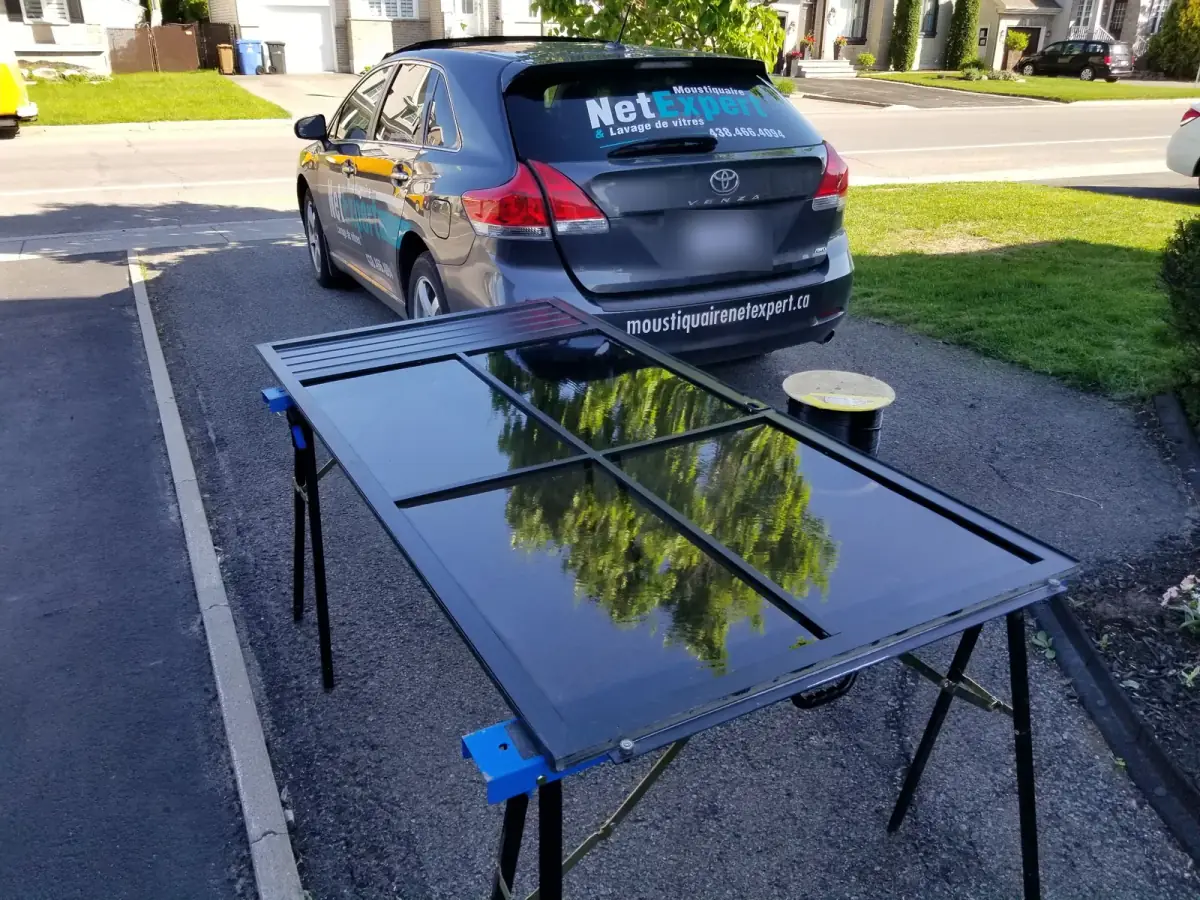
From Brossard, across Greater Montréal
Mobile on-site service in Henryville and nearby. Mesh, rollers, frames, patio doors.
Three questions are enough to start. The official measurement is taken on site.
Six services, one trade
One trade, done properly. We don’t sell windows — we repair window screens, and that is all we do.
 Repair
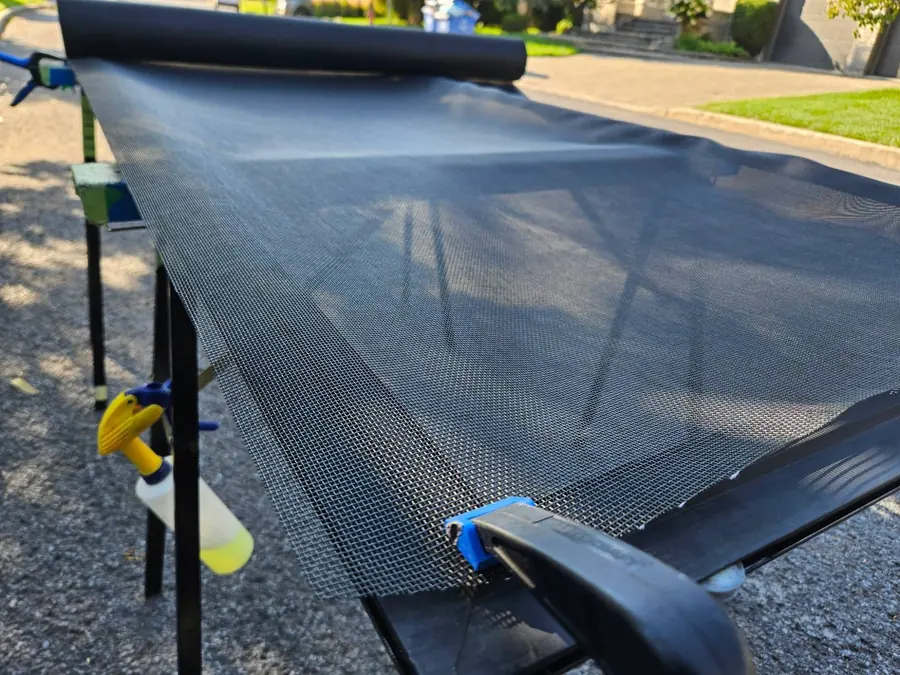
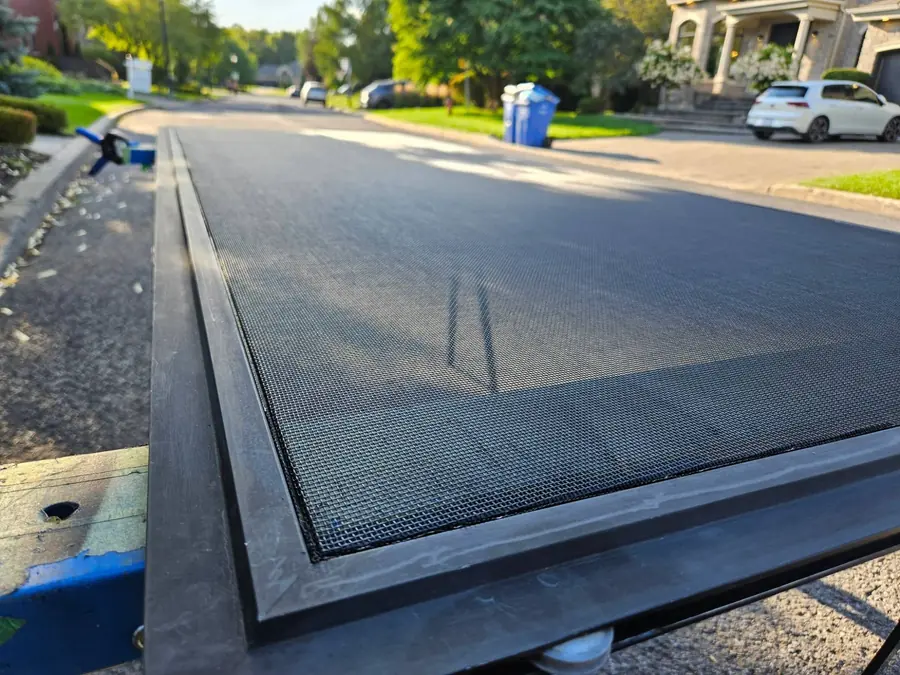
Torn, punctured or sagging mesh, replaced in your existing frame.
 Repair
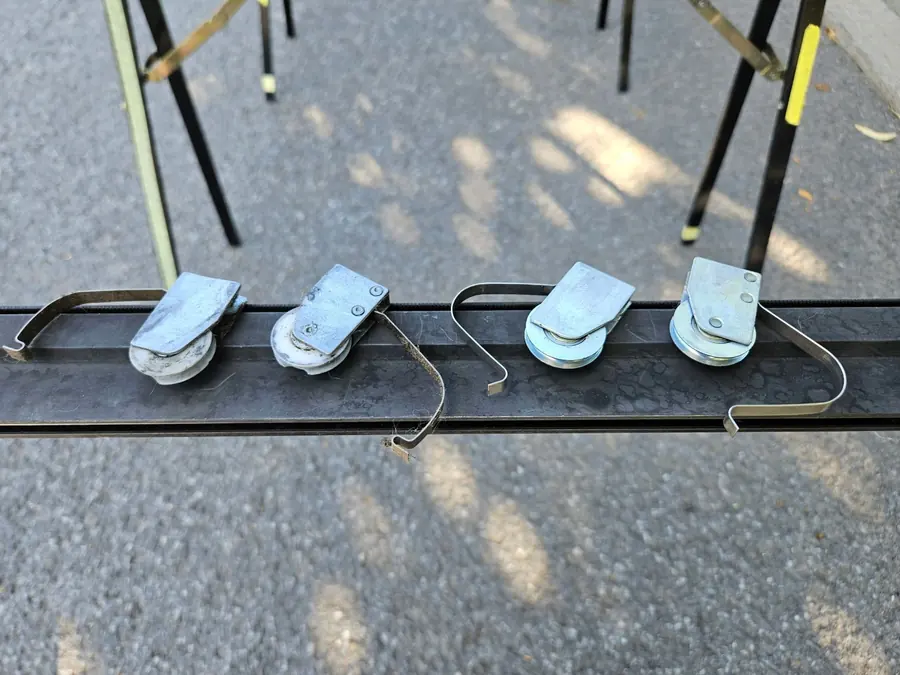
A screen that sticks, jumps the track or no longer closes.
 Repair
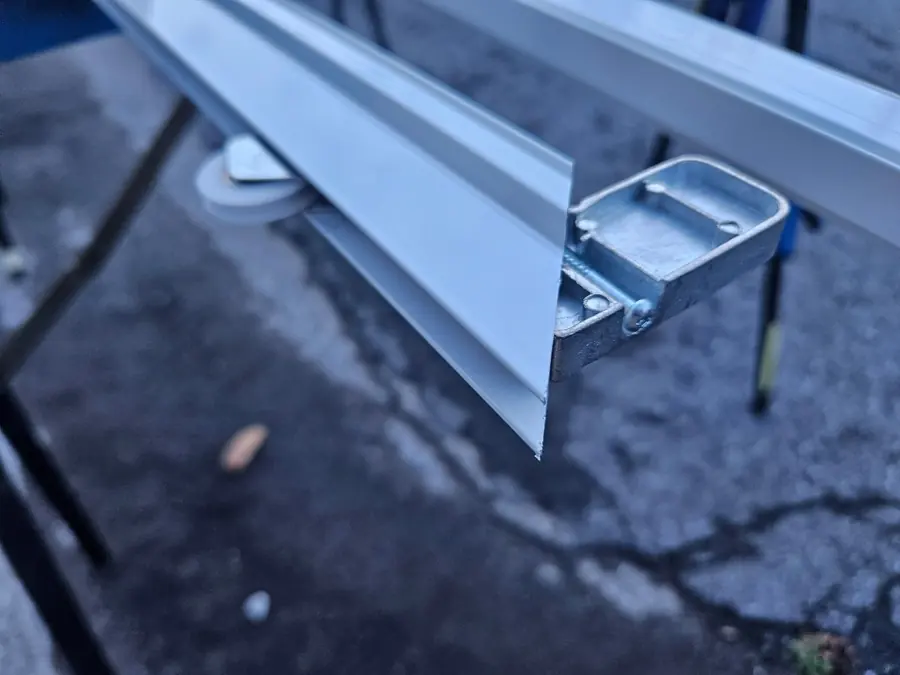
Bent frame, separated corner, split moulding.
 Repair
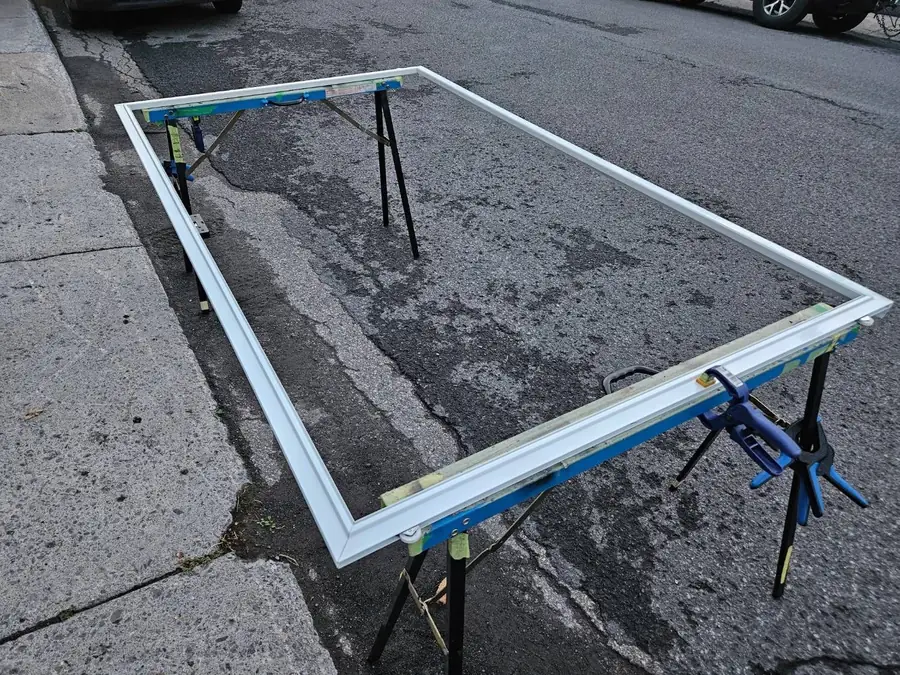
A missing screen, or an opening with no original to copy.
 Patio door
The part that breaks most often, and gets used most.
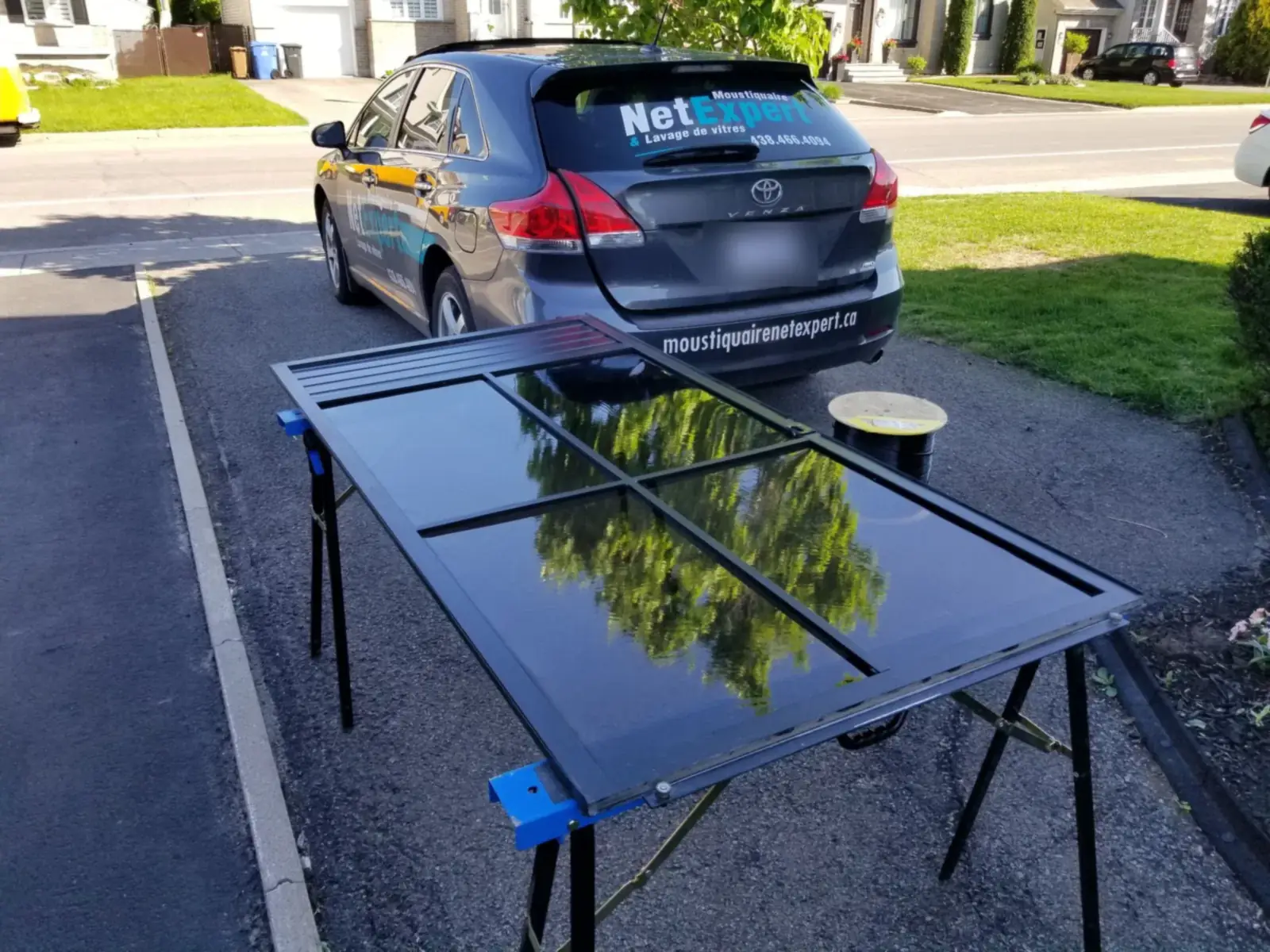 Gazebo · MICA
Screen panels and clear MICA vinyl, replaced on site.
Clear prices
Most companies in this trade publish no prices at all. Here are ours, as starting prices — the exact amount depends on size, mesh type and how many units per visit; the free quote sets it.
From$30per screen
From$30per screen
From$40per screen
From$120per screen
From$500per door
The price depends on the panel count and the vinyl: set on site.
A $125 travel fee applies to every visit, whatever the number of screens — it is shared across all your items, which is why grouping them pays.
$125
Grouping several screens in one visit brings the price of each one down: the travel fee is shared. An exact quote is free and reaches you promptly.
1-year warranty on fabrication and installation. Damage caused by the client is not covered. Payment: Visa, MasterCard, Interac, Bank transfer.
Any price provided is strictly a summary estimate. If work must be added once on site, prices will be adjusted — and always explained before we start.
Not all mesh is equal, and the right one depends on your window, your pets and your surroundings. We carry all four types in the vehicle — the choice happens at your home, not in a store.
Ten kinds of damage, one answer
If your screen looks like any of these, it can be repaired. Tap one to request a quote for that exact damage. We rarely replace a whole frame — in most cases only the mesh needs redoing.
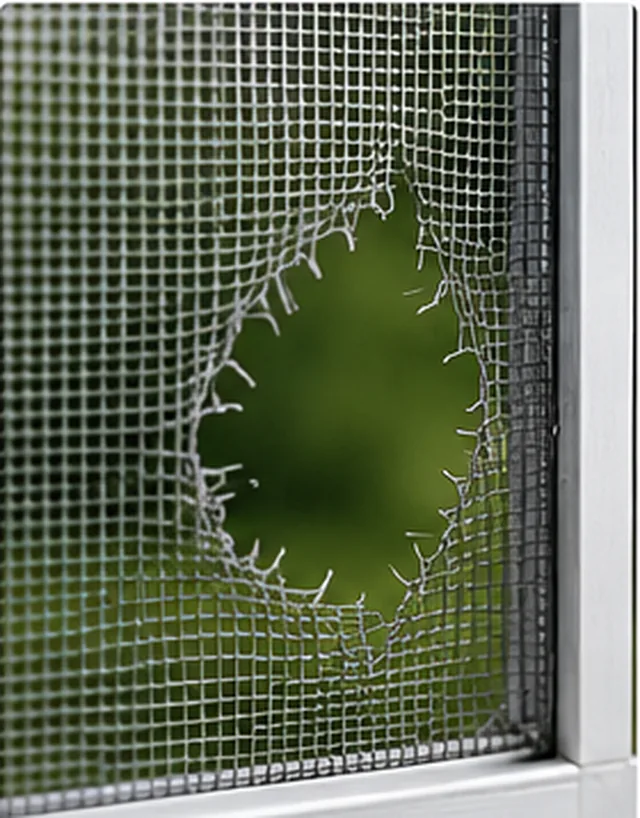 Mesh
Mesh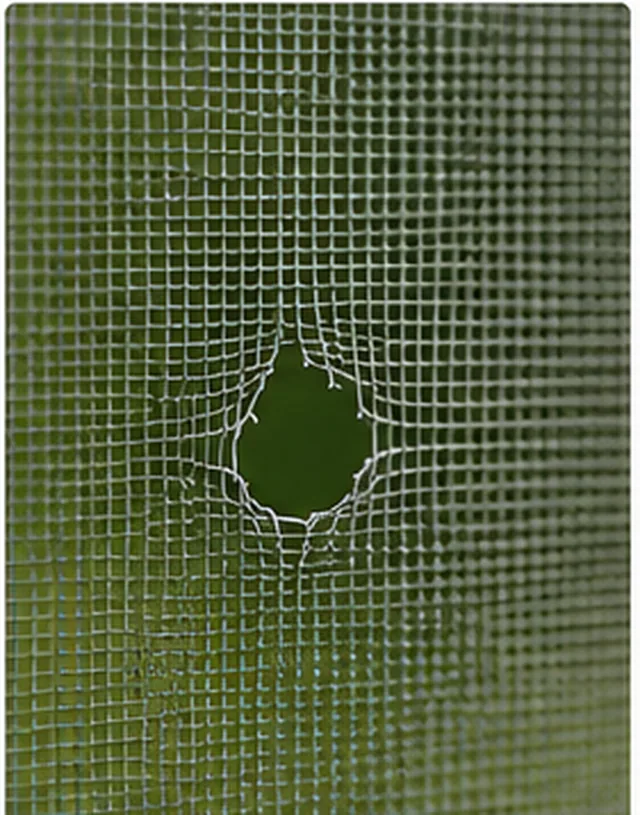 Mesh
Mesh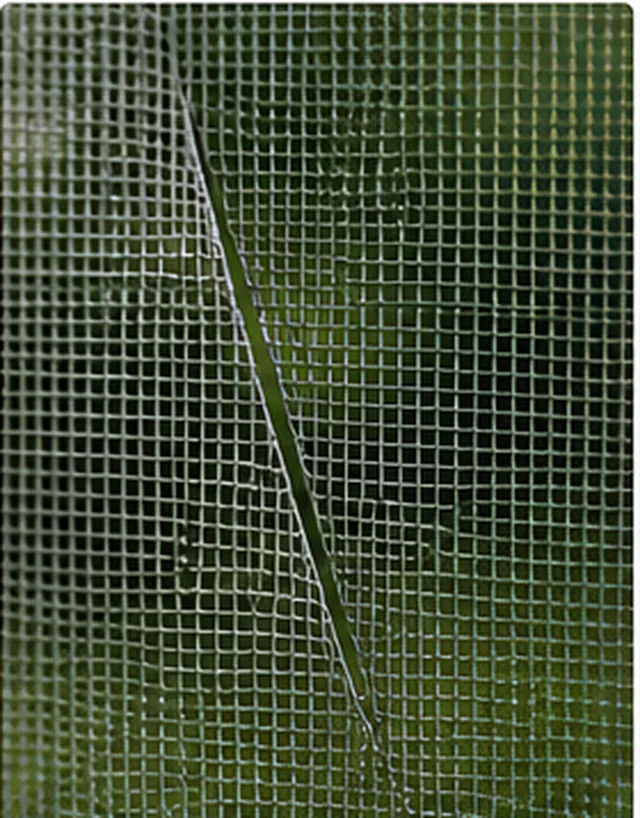 Mesh
Mesh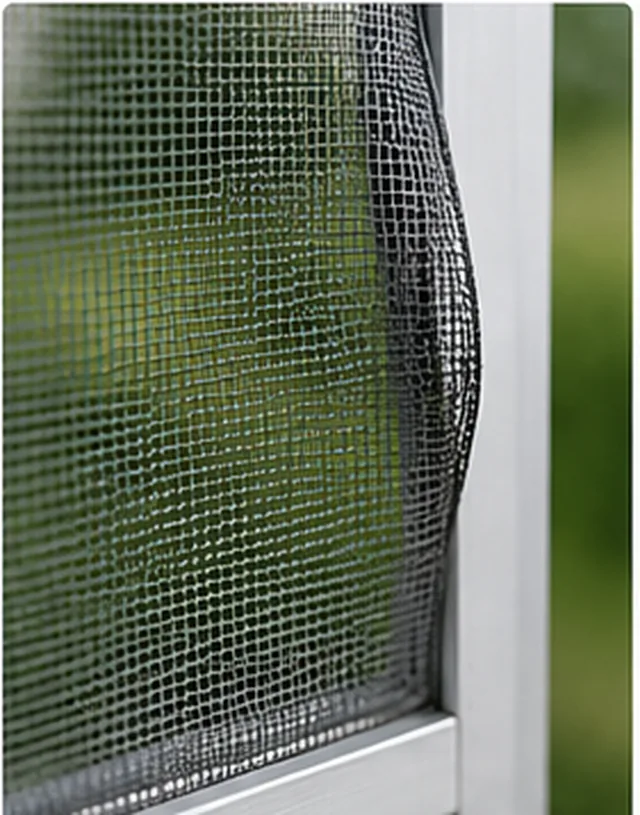 Mesh
Mesh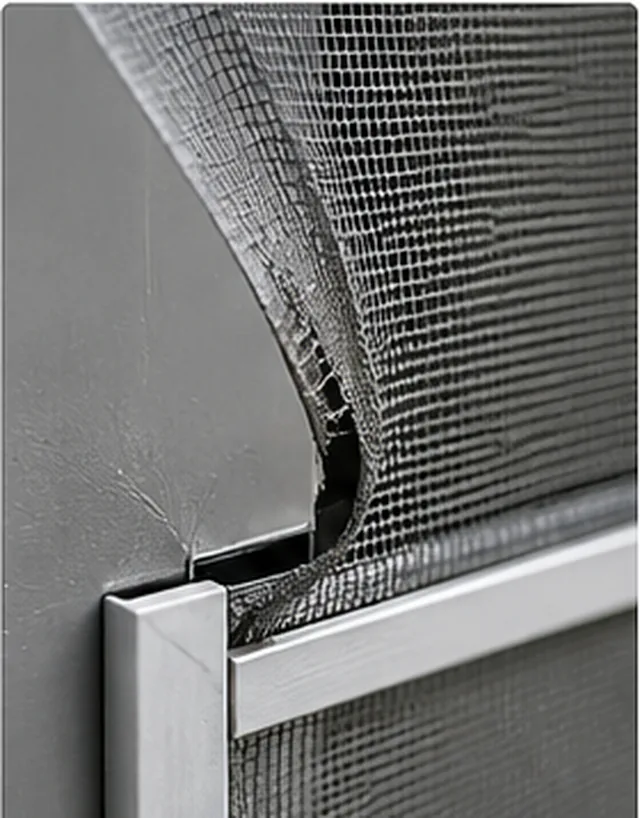 Mesh
Mesh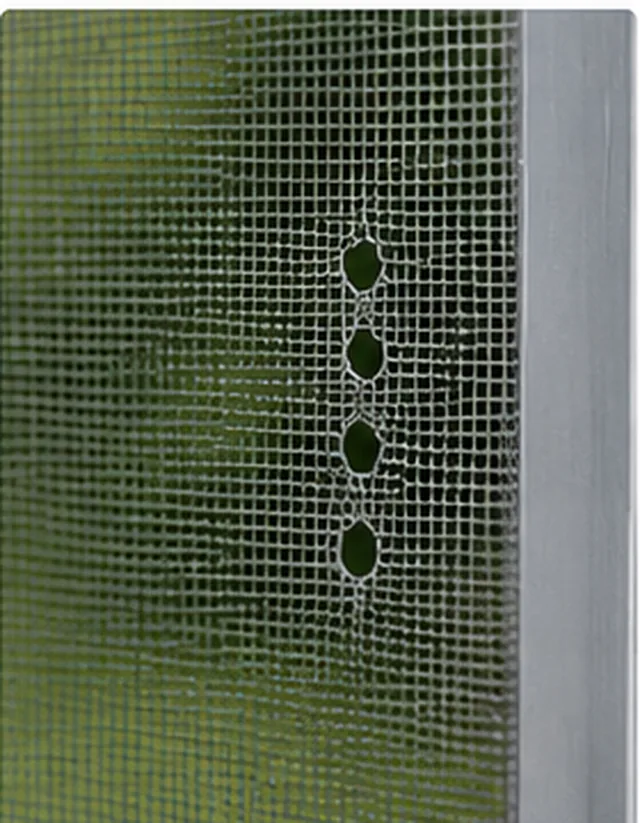 Mesh
Mesh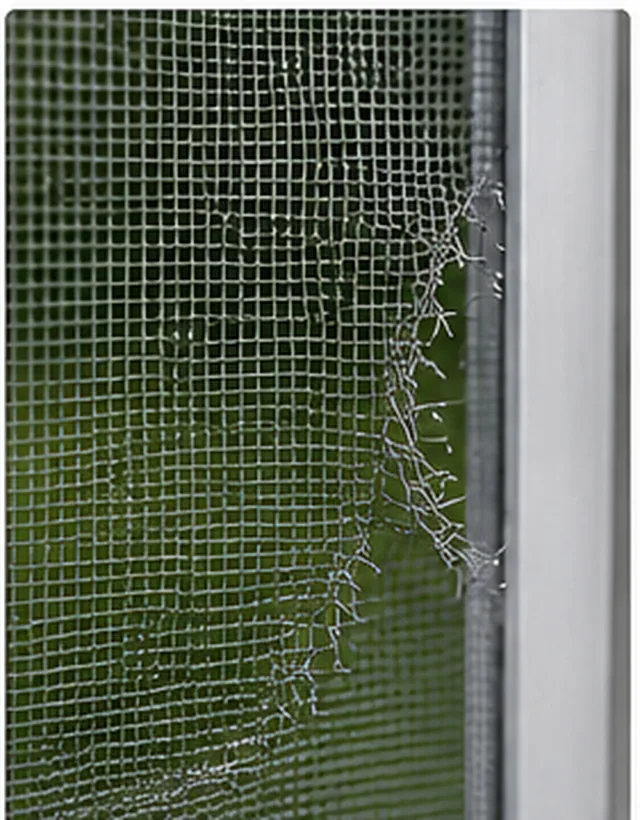 Mesh
Mesh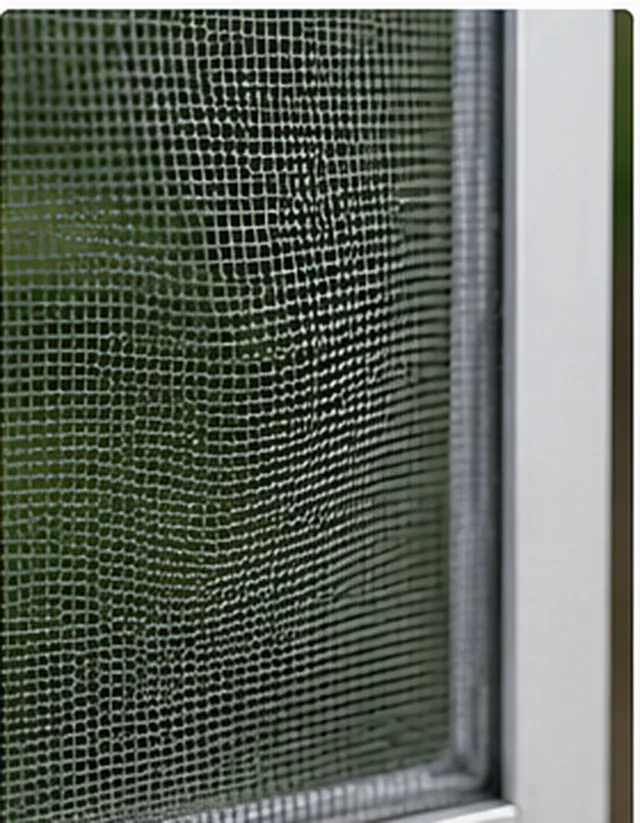 Mesh
Mesh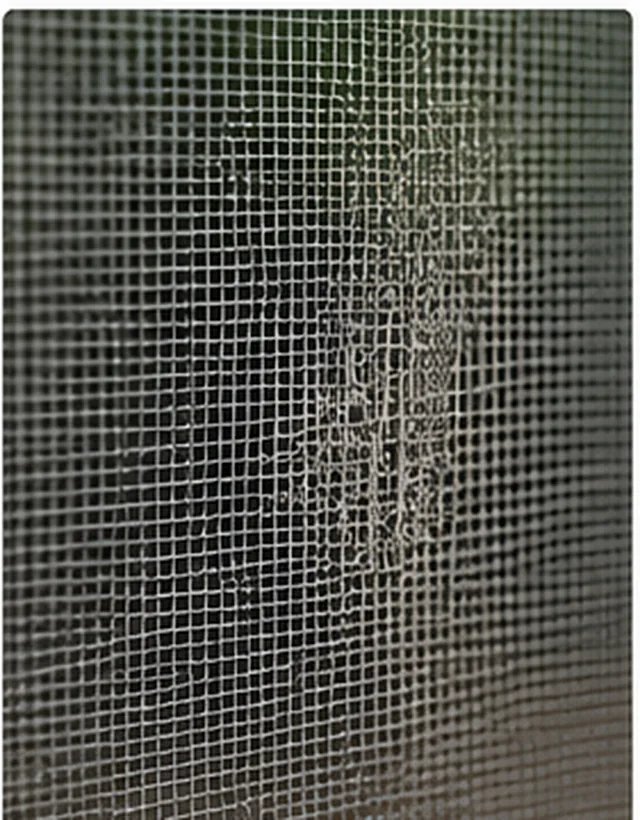 Mesh
Mesh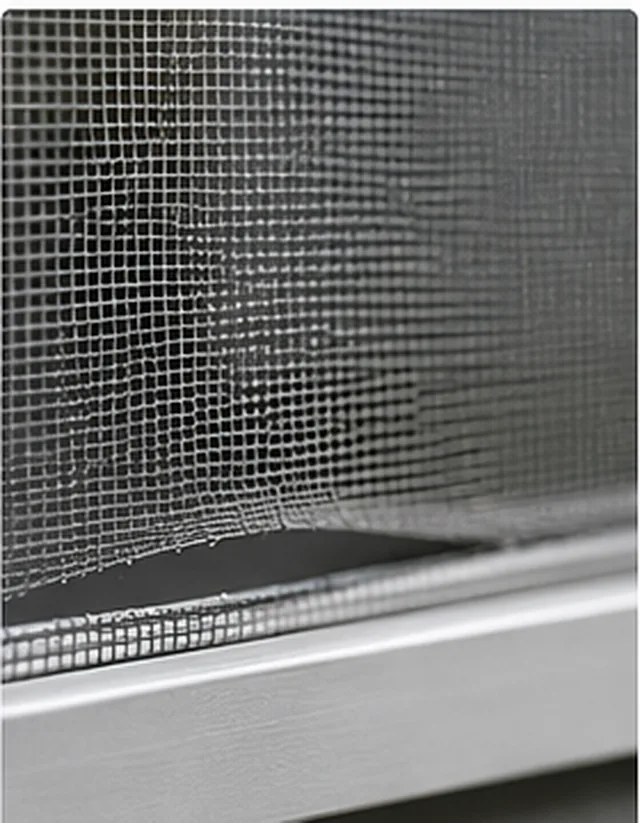 Frame
FrameThree steps
By phone or through the form. A photo helps but is not required.
We give you a time window for Henryville, not a whole day.
We remove, repair and reinstall. You pay once you have seen and approved the work.
Do you manage a building or a business in Henryville?
Why us
The workshop is in the vehicle: no trips to a store.
5.0from 143 Google reviews
Public and verifiable, on our Google listing.
No windows or doors to sell: we repair what you own.
6 a.m. to 8 p.m., April to October, in French and English.
7+years in the trade
Mesh taut without a ripple, frame square, rollers set.
1 yrwritten warranty
Workmanship and installation. If our work fails, we come back.
« Ludovic replaced my screen in record time. Professional, and with a great sense of humour. I recommend his services — don’t hesitate to contact him, he’ll come to your home and do beautiful work. »
« Excellent service. Clear explanations of the work to be done. I really appreciated his dedication: despite the rain he insisted on finishing the job, soaked through and still smiling. The work was very well done. »
« Great service! He was at my neighbour’s and agreed to fix my back screen even though we had no appointment. Very successful repair, and inexpensive! »
Straight answers
Two possible causes, and we check both. Either what is getting through is smaller than the weave — no-see-ums and black flies pass through standard mesh easily, and only tight-weave mesh stops them. Or the mesh is fine but the panel does not close: a bowed frame, an open corner, play around the edges in an older opening. A gap of a few millimetres is all it takes.
Wood takes on moisture in a river corridor and swells, then dries and shrinks again in the fall. The door did not shift all at once; it moves with the season. We bring it back to square, redo the hinges and the joints, and keep a deliberate gap at the bottom. Planing it in the middle of a humid stretch fixes July and leaves a gap standing open all through November.
Yes, pet-resistant mesh: a heavier, tougher weave built to take claws and repeated shoving. It is the usual answer on a farm, where the gallery door is the hardest-used part of the building. We often fit it on the door alone and keep standard mesh on the windows, which take none of that abuse.
Yes. We are a mobile business: we come to your home in Henryville, remove the screens, repair them on site and reinstall them before we leave.
Replacing the mesh of a window screen, in its existing frame, starts from $30. The exact amount depends on size, mesh type and how many units you have, and the quote sets it. The more screens in the same visit, the lower the price of each. A $125 travel fee applies to every visit, whatever the number of screens — it is shared across all your items, which is why grouping them pays.
Yes: one year on fabrication and installation. If our work fails, we come back at no charge. Damage caused afterwards is not covered.
Written for Henryville
Henryville is a farming village in the Haut-Richelieu, crossed by the rivière du Sud, and that river explains a good share of what gets repaired here. The village core is made up of older wooden houses with front galleries; around it, farms scattered along the concession roads; on the edges, a few newer residential streets. Old wood and a river corridor are a poor match: humid air keeps frames and doors moving, joints work loose, and hinge screws lose their grip in aged wood. A gallery screen door that closes without effort in October can drag on the floor in July — the door did not shift all at once, the wood simply took on moisture again. We bring it back to square rather than plane it down, because planing done in the middle of a humid stretch leaves a gap under the door the following winter.
The village's three building types call for three different approaches, and it is worth knowing which one you have before calling. The older village houses carry wooden-framed screens and gallery doors, which get repaired and rescreened rather than replaced. The farms along the concession roads have large openings, often a closed-in gallery or a screened summer kitchen, and doors that take heavy use from spring to fall. The newer residential streets have PVC windows in common sizes: casements with interior screens on latches, sliders with a side panel on rollers, hardware still available and repairs generally quick per unit. One trip can cover all three, as long as we know in advance what is waiting.
On the newer houses the split is clear-cut. A casement takes an interior screen held by latches: it comes off from inside, gets rescreened in its own frame, and goes back — no ladder, no glass touched. A slider carries a side panel on a track, and on that type the roller wears out before the mesh does; a panel that binds gets forced, and a panel that gets forced ends up bowed. We replace the rollers and clean the track before mesh even enters the conversation. A patio door, where there is one, follows the same rule: square the frame, rollers, track, then mesh last. It is the order that makes the repair hold, not the grade of mesh.
On the older village houses and the farms, the work is mostly woodwork. Wooden-framed screens have their mesh stapled under a bead: we lift the bead, stretch new mesh by hand, set the bead back, and the original frame stays where it is. Gallery doors are straightened and rescreened the same way, with a mandatory stop at the hinges and the closer. Closed-in galleries and gazebos are handled panel by panel: mesh where people sit, and clear MICA film on the windward sides so the space can be used earlier in spring and later in fall. On a farm, those large panels are what take the most wind.
Two constraints cross in Henryville. The first is how spread out it is: farms sit scattered along the concession roads, and a trip has to cover everything at the address that carries a screen — house, closed-in gallery, shed, summer kitchen — rather than just the unit mentioned on the phone. The second comes down to wood and the humidity of the river corridor. On an old building the gallery floor is no longer quite level, and neither is the door opening, so a door fitted tight in a dry stretch binds in a humid one. We keep a deliberate gap at the bottom and work on the hinges and the square rather than on the material. A door planed too short cannot be lengthened, and the gap it leaves in November never closes again.
Between the rivière du Sud, the farm ditches and the fields, insect pressure here is heavy and it starts early. Mosquitoes dominate, but the wooded banks also produce no-see-ums and black flies, which pass through standard weave without the slightest difficulty — they are simply smaller than it is. On a front gallery or a closed-in gallery, tight-weave mesh is the defensible choice, even though it darkens things slightly and costs a bit of airflow. On a farm with a dog or cats, pet-resistant mesh on the door solves the problem that comes back every year: the door always gives before the windows do.