Screen rescreening (window)
From$30per screen
From Brossard, across Greater Montréal
Mobile on-site service in Pointe-Claire and nearby. Mesh, rollers, frames, patio doors.
Three questions are enough to start. The official measurement is taken on site.
Six services, one trade
One trade, done properly. We don’t sell windows — we repair window screens, and that is all we do.
 Repair
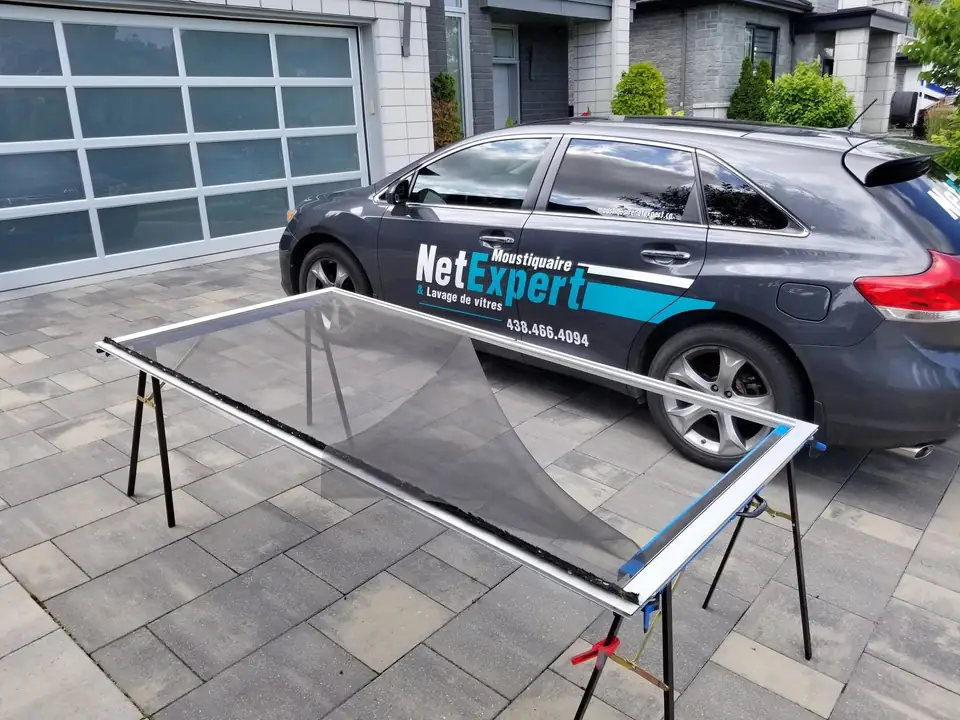
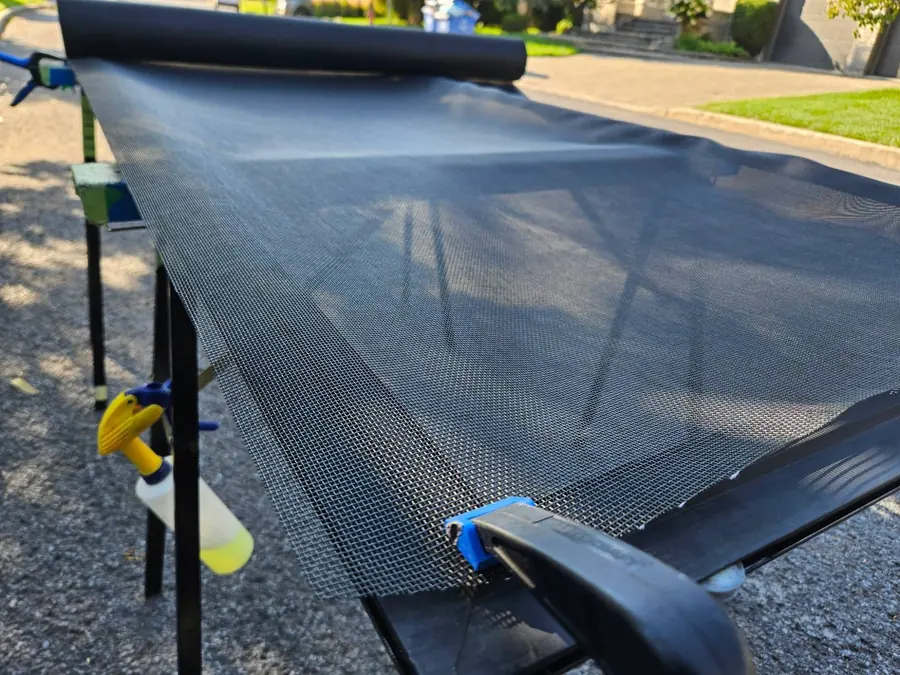
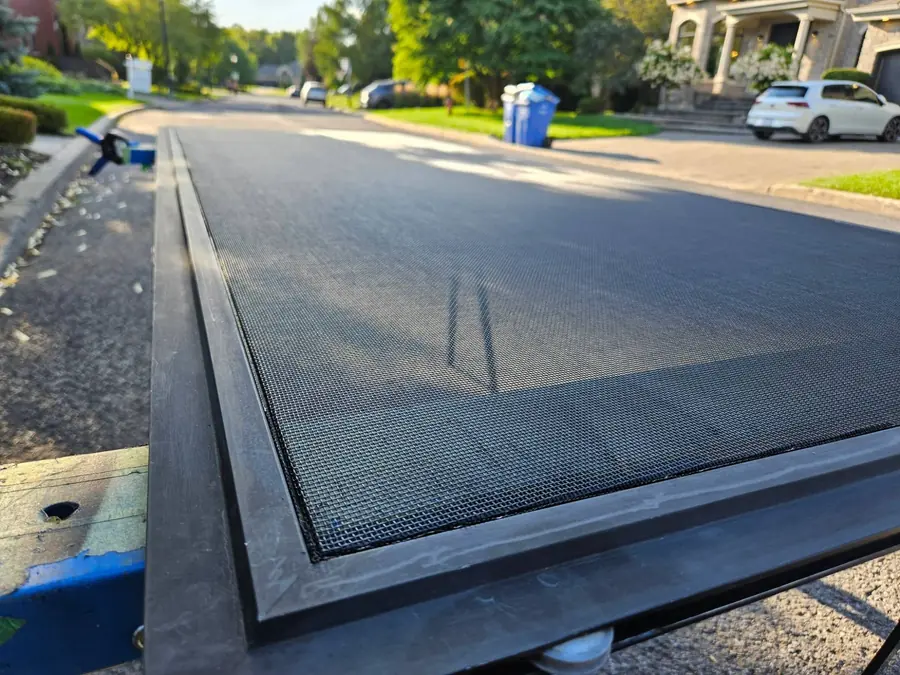
Torn, punctured or sagging mesh, replaced in your existing frame.
 Repair
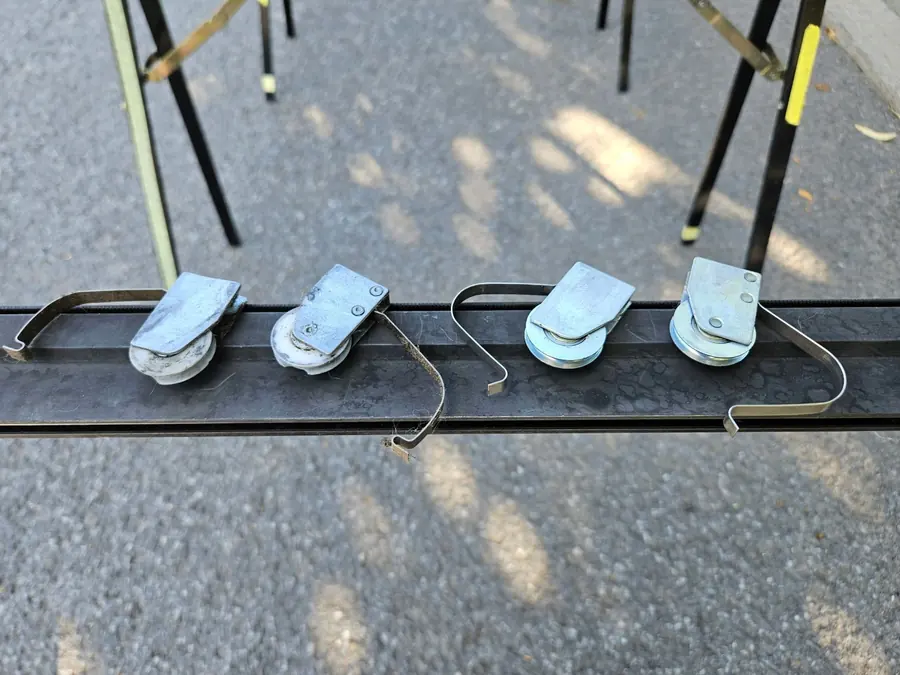
A screen that sticks, jumps the track or no longer closes.
 Repair
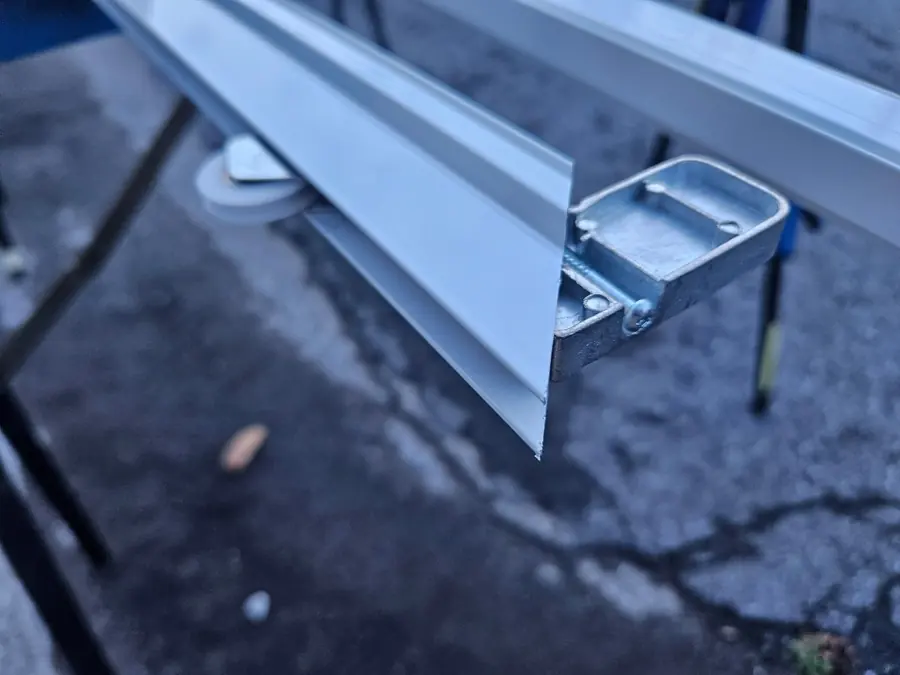
Bent frame, separated corner, split moulding.
 Repair
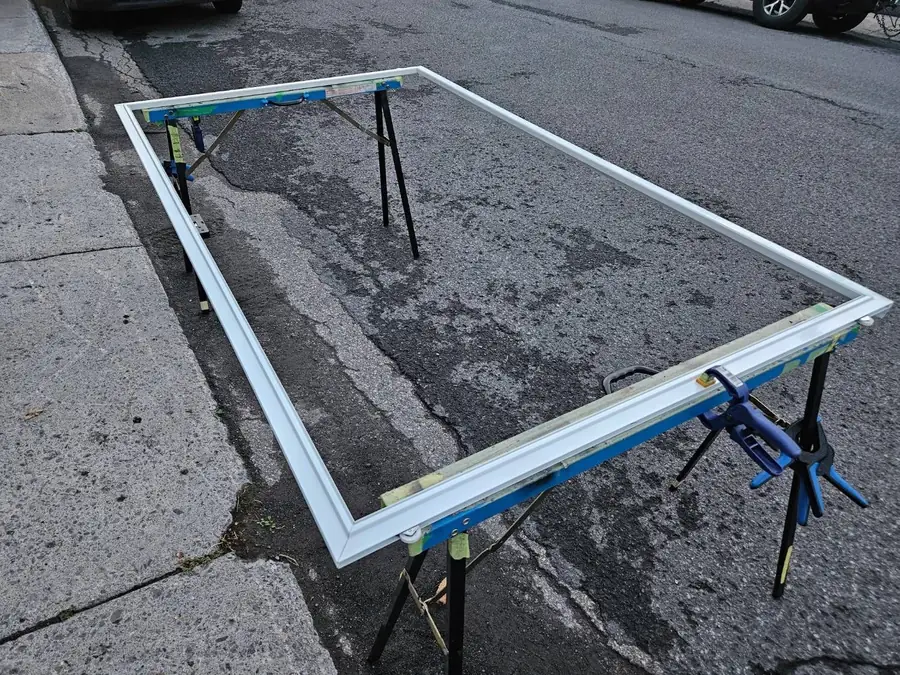
A missing screen, or an opening with no original to copy.
 Patio door
The part that breaks most often, and gets used most.
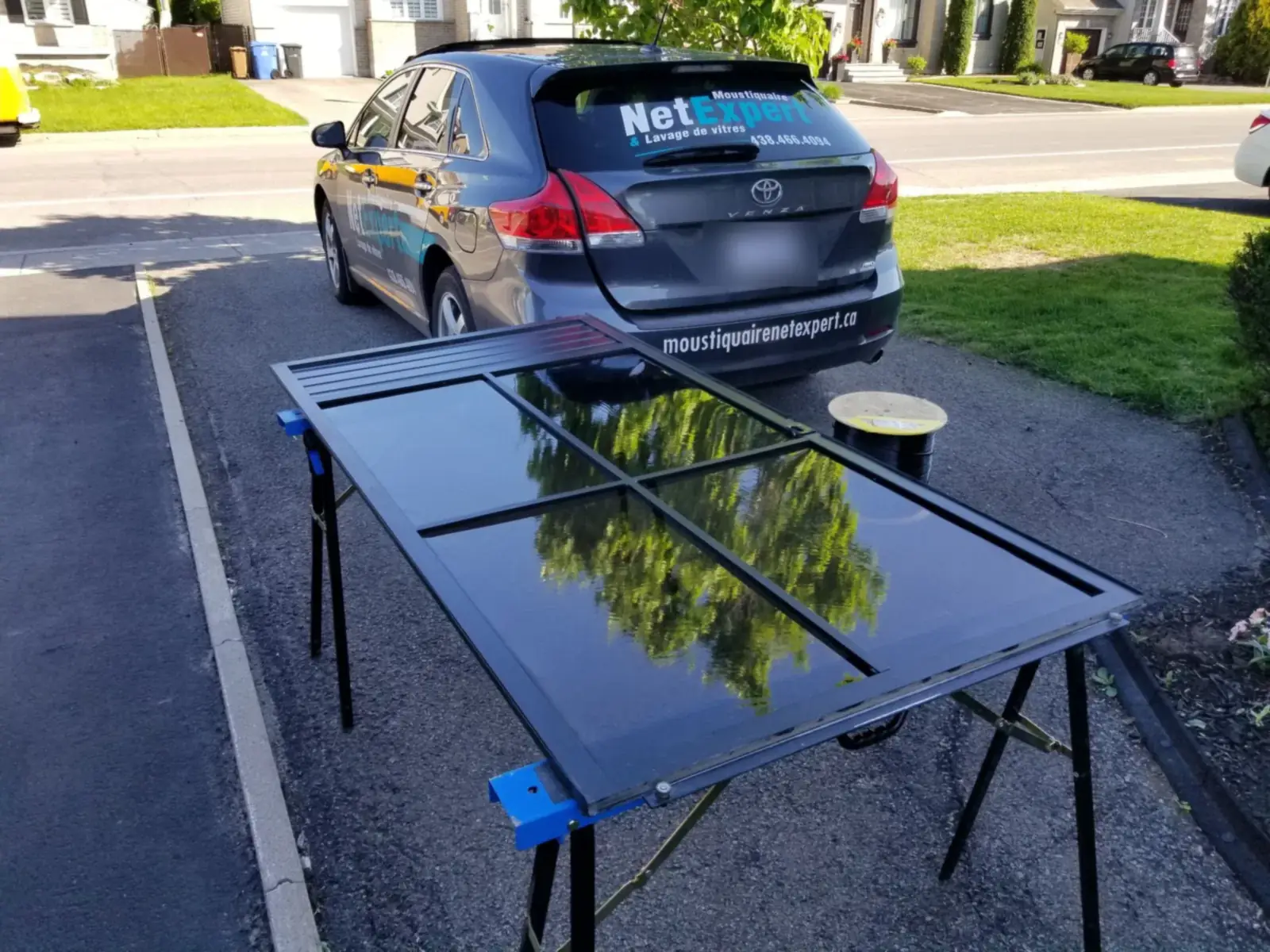 Gazebo · MICA
Screen panels and clear MICA vinyl, replaced on site.
Clear prices
Most companies in this trade publish no prices at all. Here are ours, as starting prices — the exact amount depends on size, mesh type and how many units per visit; the free quote sets it.
From$30per screen
From$30per screen
From$40per screen
From$120per screen
From$500per door
The price depends on the panel count and the vinyl: set on site.
A $125 travel fee applies to every visit, whatever the number of screens — it is shared across all your items, which is why grouping them pays.
$125
Grouping several screens in one visit brings the price of each one down: the travel fee is shared. An exact quote is free and reaches you promptly.
1-year warranty on fabrication and installation. Damage caused by the client is not covered. Payment: Visa, MasterCard, Interac, Bank transfer.
Any price provided is strictly a summary estimate. If work must be added once on site, prices will be adjusted — and always explained before we start.
Not all mesh is equal, and the right one depends on your window, your pets and your surroundings. We carry all four types in the vehicle — the choice happens at your home, not in a store.
Ten kinds of damage, one answer
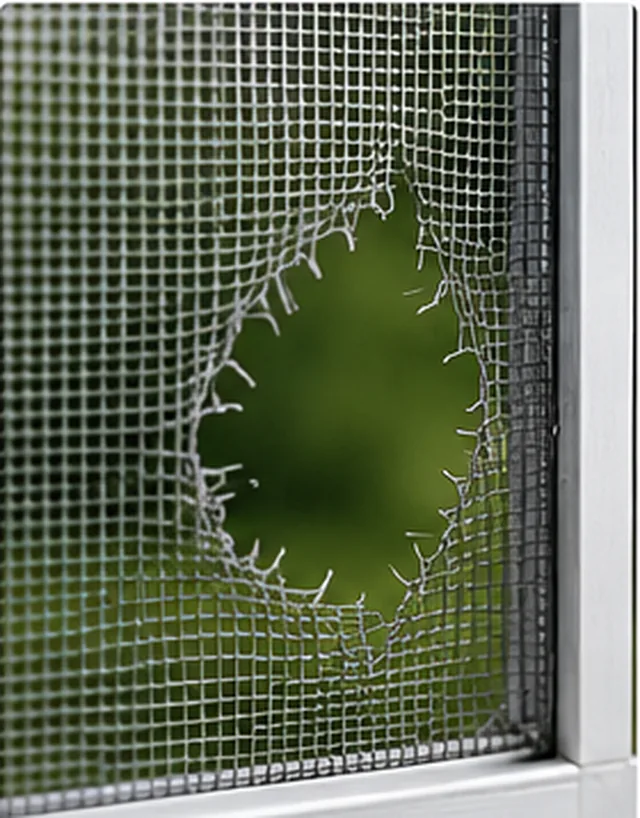
If your screen looks like any of these, it can be repaired. Tap one to request a quote for that exact damage. We rarely replace a whole frame — in most cases only the mesh needs redoing.
 Mesh
Mesh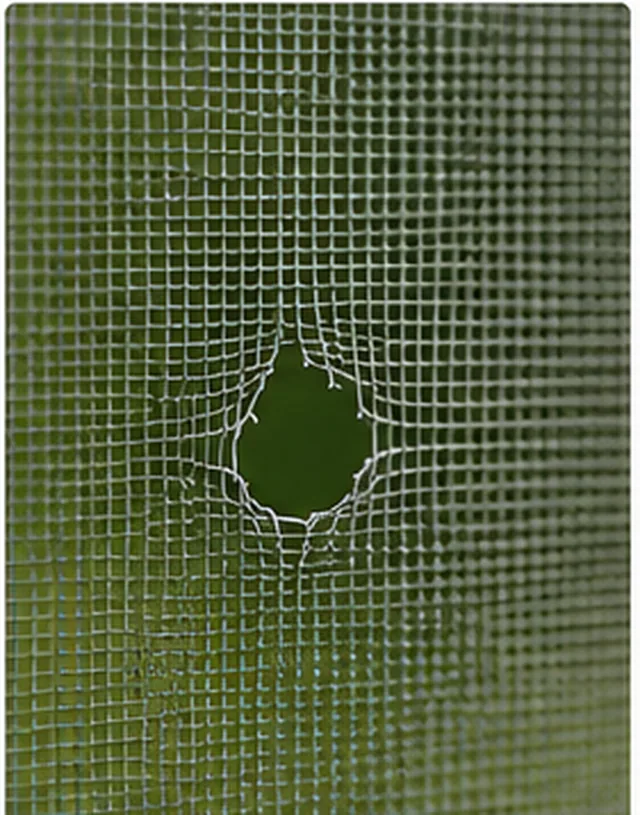 Mesh
Mesh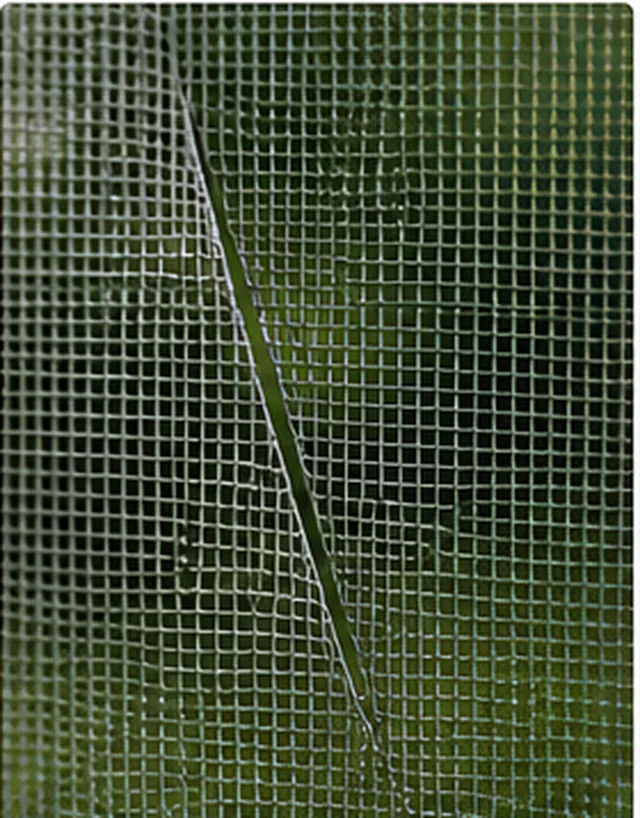 Mesh
Mesh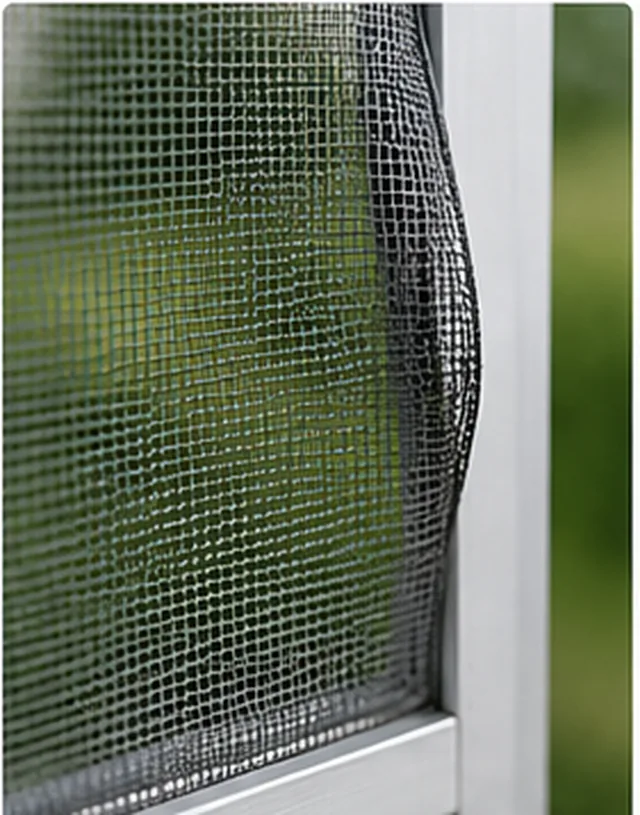 Mesh
Mesh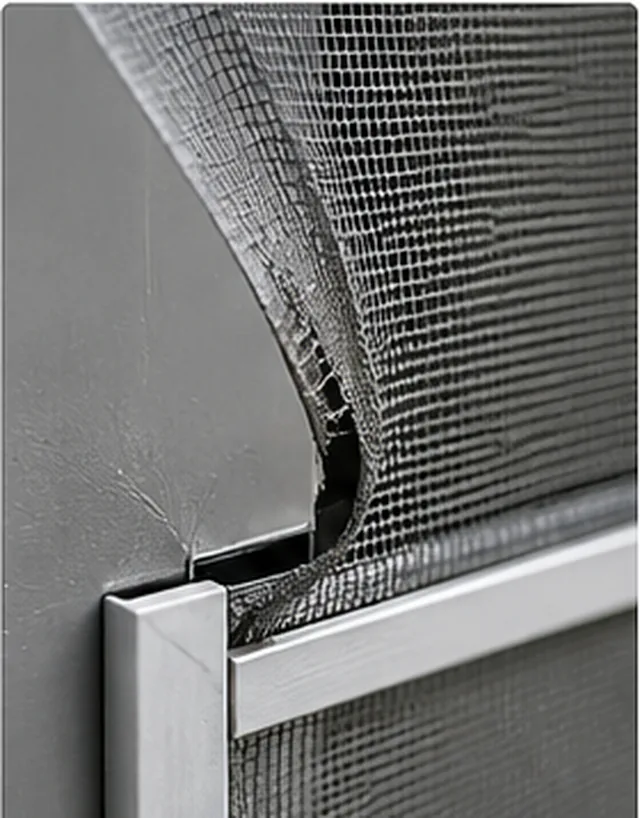 Mesh
Mesh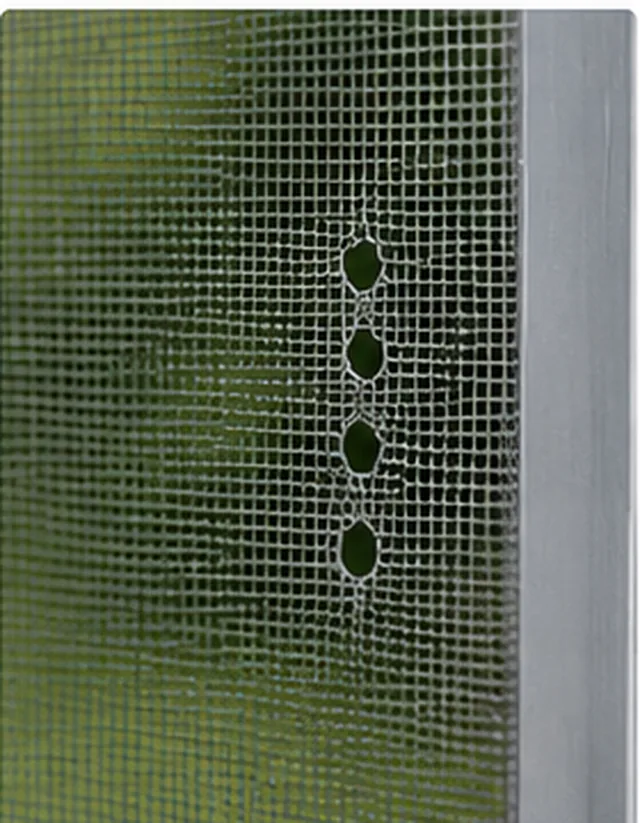 Mesh
Mesh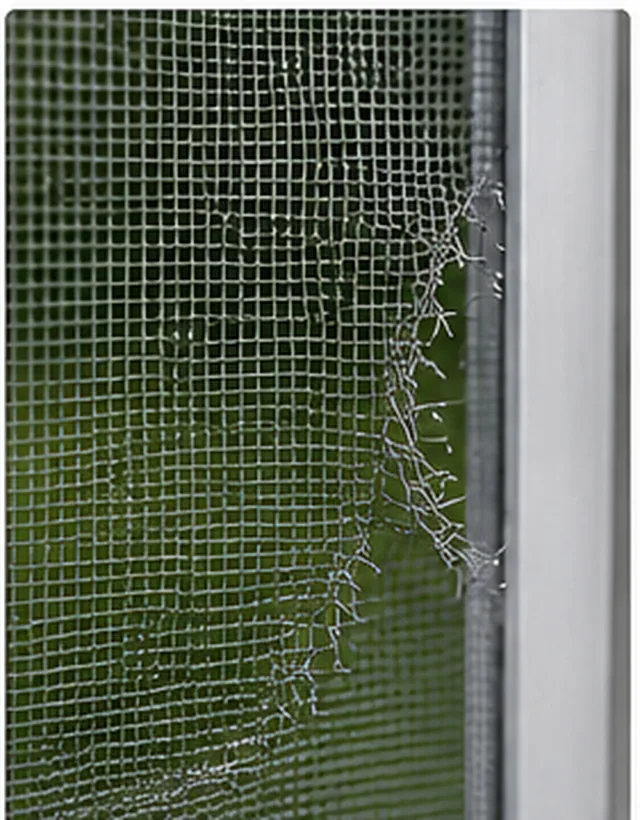 Mesh
Mesh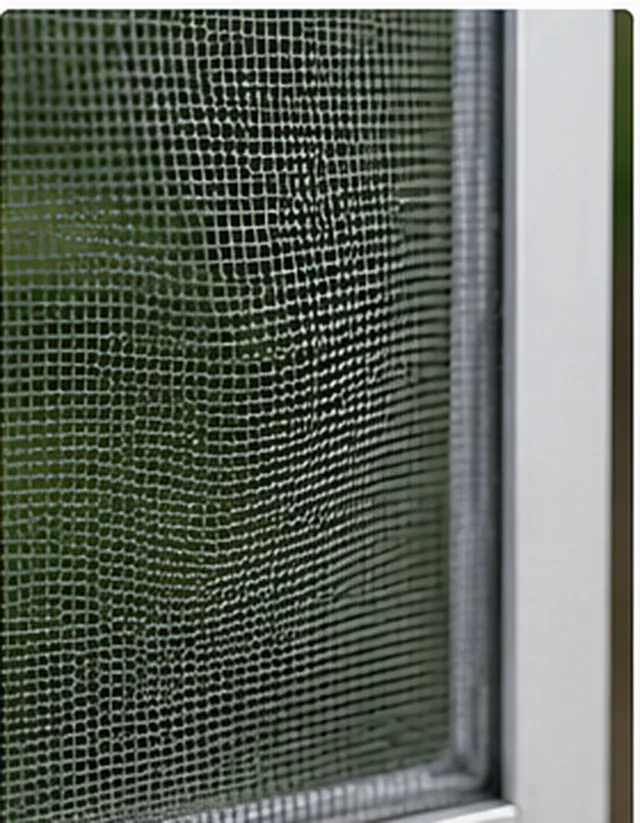 Mesh
Mesh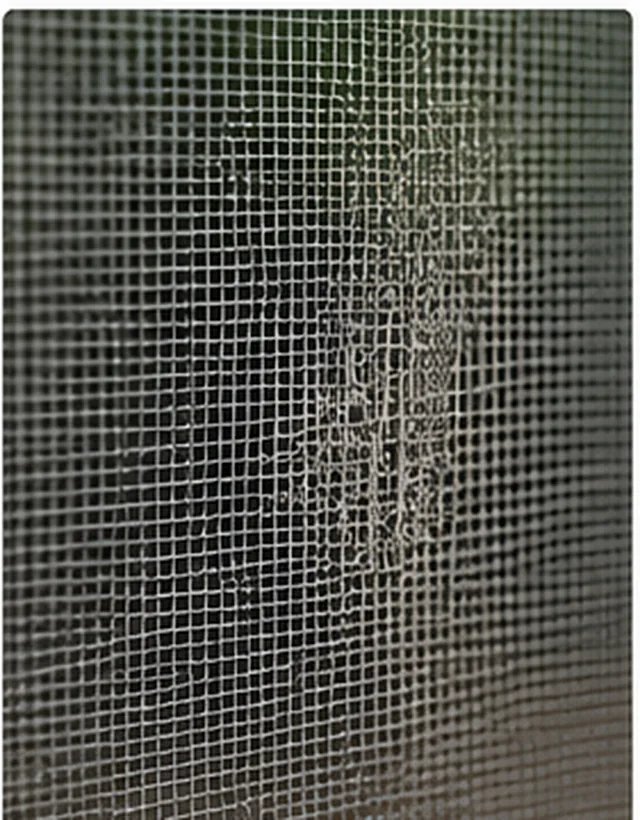 Mesh
Mesh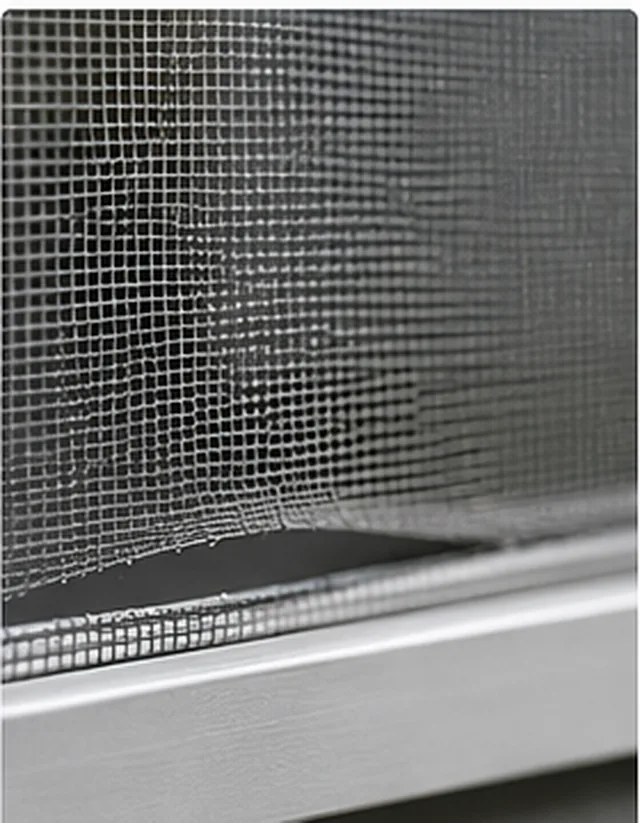 Frame
FrameThree steps
By phone or through the form. A photo helps but is not required.
We give you a time window for Pointe-Claire, not a whole day.
We remove, repair and reinstall. You pay once you have seen and approved the work.
Do you manage a building or a business in Pointe-Claire?
Why us
The workshop is in the vehicle: no trips to a store.
5.0from 143 Google reviews
Public and verifiable, on our Google listing.
No windows or doors to sell: we repair what you own.
6 a.m. to 8 p.m., April to October, in French and English.
7+years in the trade
Mesh taut without a ripple, frame square, rollers set.
1 yrwritten warranty
Workmanship and installation. If our work fails, we come back.
« Ludovic replaced my screen in record time. Professional, and with a great sense of humour. I recommend his services — don’t hesitate to contact him, he’ll come to your home and do beautiful work. »
« Excellent service. Clear explanations of the work to be done. I really appreciated his dedication: despite the rain he insisted on finishing the job, soaked through and still smiling. The work was very well done. »
« Great service! He was at my neighbour’s and agreed to fix my back screen even though we had no appointment. Very successful repair, and inexpensive! »
Straight answers
It is the norm on this stock, not an exception. We measure the opening at all four corners rather than assuming a rectangle, and the screen is built to the real shape. A quarter inch of discrepancy at the top is enough to let insects through all season — that detail is exactly what on-site measuring is looking for.
Usually yes. On a casement the screen is interior and lifts out on clips; its frame takes neither direct sun nor driving rain, so it is generally in better shape than the mesh it carries. It comes out, gets rescreened, goes back in. We only replace when a rail is split, warped or softened by moisture.
Yes, and it is the most common repair on this kind of door. We clean the track, check that it is still straight and level, replace the worn rollers and rescreen or re-tension the fabric. Cleaning without changing the rollers, or the reverse, only settles it for a few weeks.
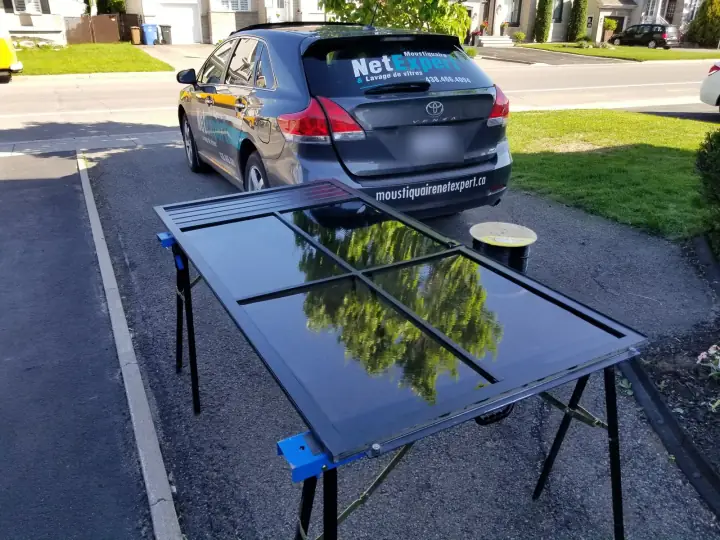
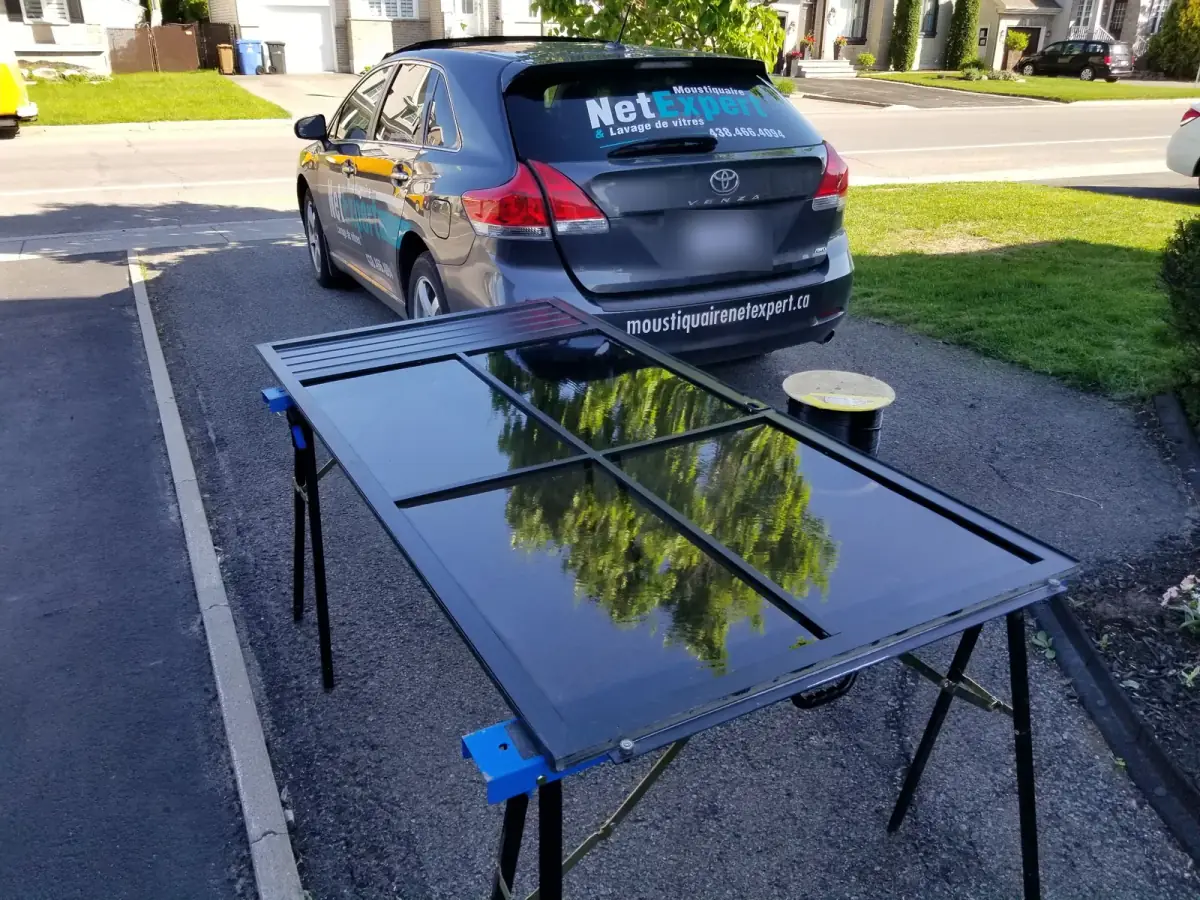
Yes. We are a mobile business: we come to your home in Pointe-Claire, remove the screens, repair them on site and reinstall them before we leave.
Replacing the mesh of a window screen, in its existing frame, starts from $30. The exact amount depends on size, mesh type and how many units you have, and the quote sets it. The more screens in the same visit, the lower the price of each. A $125 travel fee applies to every visit, whatever the number of screens — it is shared across all your items, which is why grouping them pays.
Yes: one year on fabrication and installation. If our work fails, we come back at no charge. Damage caused afterwards is not covered.
Written for Pointe-Claire
Pointe-Claire has two ages, and they are not repaired the same way. The old village core, on the shore of Lac Saint-Louis, holds older houses whose openings were cut long before the word standard meant anything in construction. On those houses an opening is almost never truly square: the frame has moved over time, the angles opening on one side and closing on the other. A rectangular screen dropped in there leaves one corner open, and one open corner cancels the whole screen. This is exactly where custom fabrication earns its keep, with measurements taken on site at all four corners rather than just top and bottom. On an older house that is the only method that produces a screen which actually closes, and it is why the age of the building is the first thing worth mentioning. None of that can be estimated honestly over the phone.
The rest of the city is post-war: the broad bungalow and split-level neighbourhoods of Cedar Park, Valois and Lakeside Heights, built as the west end of the island filled in. In many cases these houses still carry their original wooden casements and double-hungs — a detail that changes everything, because a wood or thin-aluminum screen from the 1950s and 1960s no longer exists in any retail size. Here again the frame is often the soundest part of the assembly: straight, solid, simply carrying mesh that has gone brittle. Rescreening in the existing frame is the repair that makes the most sense on this stock. Add to that the patio doors fitted later at the back, almost always in an aluminum frame newer than the house itself — and one that, unlike the rest of the house, repairs with hardware that is still in current production.
The casement is the most common type in the post-war neighbourhoods, and that is good news: its screen is interior, held by clips, and lifts out in seconds without touching the window. Out it comes, rescreened in its own frame, back it goes. The double-hung asks for more care: the screen sits between the two sashes, and on seventy-year-old wood the rabbet has rarely stayed parallel. Mesh pulled too tight bows the frame; mesh left slack leaves a gap along one side. These screens cover only the operating half of the window, which is normal and not unfinished work. When a wood frame does have to go, aluminum holds tension better and does not swell in waterfront humidity — the swelling being what most people mistake for a badly built screen.
The patio door, added at the back of most of these houses, is wear point number one. Three things fail, in this order: the mesh goes slack because the door is pushed with a full hand, the slack mesh rubs the frame, and the rubbing finishes the rollers. Then the door gets stiff, people force it, and the frame bows. Caught before that last stage it is mesh, two rollers and a cleaned track. Caught after, it is straightening or fabrication. On an old-core house where a patio door was cut into an older wall, there is one more thing to check: whether the track is still level. A track that has followed the movement of the house wears new rollers as fast as it wore the old ones, and the problem is back within a season.
The constraint in Pointe-Claire is two housing stocks coexisting in the same city, and sometimes in the same house. A village-core property extended later can carry out-of-square original openings at the front and a standard-format patio door at the back: two methods, two mesh types, two ways of pricing. That is why nothing is seriously assessed without an on-site measurement. The second constraint is quieter: wood. Many original windows have been kept, which is a quality, but a wood frame that has spent seventy years in lakeside humidity can be sound on three sides and spongy on the fourth. We check that before stretching new mesh over it — mesh tensioned on a rail that no longer holds will not last the season.
Lac Saint-Louis borders the city, and you feel it on the screens. Breeze off the open water works the patio-door mesh of exposed properties: mesh that has already gone slack slaps its frame until it tears, while properly tensioned mesh takes the same season without moving. Waterfront humidity, meanwhile, swells wood frames and binds screens that fit perfectly back in May. And near the shore as under the big trees of the post-war neighbourhoods, no-see-ums pass straight through standard fibreglass: a tight weave is the right compromise wherever you want to eat outside.
Many Pointe-Claire homeowners prefer English: we serve you in whichever language you choose.